 1 citations
,
July 2024 in “Skin Research and Technology”
1 citations
,
July 2024 in “Skin Research and Technology” Patients with androgenetic alopecia have thinner subcutaneous fat layers in their frontal scalp compared to healthy individuals.
September 2025 in “Skin Research and Technology”  September 2017 in “Journal of Investigative Dermatology”
 Aging causes sweat glands to shrink and move upward, leading to less elastic skin and more wrinkles.
35 citations
,
January 2006 in “Dermatology Online Journal” Lipedematous scalp may be underdiagnosed and doesn't improve with finasteride.
 7 citations
,
April 2014 in “Cell biology international”
7 citations
,
April 2014 in “Cell biology international” Melatonin treatment helps improve skin health in postmenopausal rats.
4 citations
,
January 2011 in “European journal of dermatology/EJD. European journal of dermatology” A boy had a rare scalp condition with thickened skin and different-colored hair.
 2 citations
,
January 2011 in “Dermatologica Sinica”
2 citations
,
January 2011 in “Dermatologica Sinica” Taiwan reported its first case of a rare scalp condition with no clear cause or treatment.
Lactobacillus and fermented Korean berry can help hair grow faster.
 September 2022 in “The American journal of dermatopathology/American journal of dermatopathology”
 A patient with a thick scalp and hair loss was correctly diagnosed with alopecia areata and a thick scalp fat layer, not lipedematous alopecia, and regrew hair after treatment.
 May 2021 in “Our Dermatology Online”
 A woman with a rare scalp condition causing a thick scalp and hair loss didn't improve with steroid treatment.
 January 1994 in “Nihon Chikusan Gakkaiho”
 Collagen fibrils in mink skin change structure during hair growth, becoming looser and thicker in the active phase.
 9 citations
,
July 2020 in “Biomedicine & Pharmacotherapy”
9 citations
,
July 2020 in “Biomedicine & Pharmacotherapy” Mitochondrial therapy and platelet-rich plasma therapy both stimulated hair regrowth in aging mice, with mitochondrial therapy showing similar effectiveness to plasma therapy.
 17 citations
,
October 2013 in “Plastic and reconstructive surgery. Global open”
17 citations
,
October 2013 in “Plastic and reconstructive surgery. Global open” Male pattern baldness may be caused by scalp pressure on hair follicles, which increases with age and leads to a cycle of hair loss. This process is not directly determined by genes.
December 2022 in “Biochemical and Biophysical Research Communications” HtrA2 activity is crucial for normal hair growth by regulating fat cell development.
 41 citations
,
May 2018 in “Nutrition and healthy aging”
41 citations
,
May 2018 in “Nutrition and healthy aging” Skin aging is largely due to differences in stiffness and elasticity between skin layers, leading to wrinkles.
6 citations
,
October 2020 in “Frontiers in cell and developmental biology” WWOX deficiency in mice causes skin and fat tissue problems due to disrupted cell survival signals.
 18 citations
,
August 2021 in “PLoS ONE”
18 citations
,
August 2021 in “PLoS ONE” Melanocyte progenitor cells are found in human fat tissue and can become mature melanocytes, which may help treat skin issues.
 18 citations
,
August 2017 in “PLOS ONE”
18 citations
,
August 2017 in “PLOS ONE” Skin and its underlying fat layer act together to resist mechanical stress, and reinforcing this composite structure may help more with anti-aging than just strengthening the skin alone.
26 citations
,
January 2022 The skin is essential for protection, temperature control, and immune defense.
 16 citations
,
December 2004 in “Aesthetic surgery journal”
16 citations
,
December 2004 in “Aesthetic surgery journal” The hand rejuvenation method makes hands look younger by improving skin and filling out tissues.
 218 citations
,
May 2014 in “Experimental Dermatology”
218 citations
,
May 2014 in “Experimental Dermatology” Skin fat cells help with skin balance, hair growth, and healing wounds.
 March 2019 in “Journal der Deutschen Dermatologischen Gesellschaft”
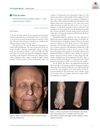
 Rothmund-Thomson syndrome type 2 can cause chronic, poorly healing wounds.
 June 2023 in “British journal of dermatology/British journal of dermatology, Supplement”
 Two sisters with lipoedematous scalp suggest a genetic influence in the condition.
 11 citations
,
May 2009 in “Medical Hypotheses”
11 citations
,
May 2009 in “Medical Hypotheses” Male pattern baldness is an unintended side effect of the body's use of androgens for muscle growth, especially in those genetically prone to it.
 4 citations
,
November 2023 in “Biological and Pharmaceutical Bulletin”
4 citations
,
November 2023 in “Biological and Pharmaceutical Bulletin” The serum reduced thigh fat and improved skin firmness.
 2 citations
,
September 2019 in “Dermatologic Surgery”
2 citations
,
September 2019 in “Dermatologic Surgery” The two-step procedure of fat grafting followed by hair grafting improves scalp and facial scar correction.
 18 citations
,
December 2010 in “The Journal of Steroid Biochemistry and Molecular Biology”
18 citations
,
December 2010 in “The Journal of Steroid Biochemistry and Molecular Biology” Increased HSD11B1 enzyme expression is linked to higher body fat and insulin resistance.
 62 citations
,
October 2017 in “JAMA facial plastic surgery”
62 citations
,
October 2017 in “JAMA facial plastic surgery” Condensed nanofat with fat grafts effectively improves atrophic facial scars.
 59 citations
,
February 2012 in “Journal of Dermatological Science”
59 citations
,
February 2012 in “Journal of Dermatological Science” Environmental factors at different levels control hair stem cell activity, which could lead to new hair growth and alopecia treatments.
 49 citations
,
March 2019 in “Journal of Investigative Dermatology”
49 citations
,
March 2019 in “Journal of Investigative Dermatology” Skin fat plays a key role in immune defense and healing beyond just storing energy.