 13 citations
,
July 2022 in “Frontiers in cell and developmental biology”
13 citations
,
July 2022 in “Frontiers in cell and developmental biology” Tiny natural vesicles from cells might help treat hair loss.
105 citations
,
April 2017 in “International Journal of Nanomedicine” Ethosomes are effective for delivering drugs through the skin by penetrating deeply and targeting hair follicles.
 8 citations
,
April 2010 in “JEADV. Journal of the European Academy of Dermatology and Venereology/Journal of the European Academy of Dermatology and Venereology”
8 citations
,
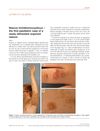
April 2010 in “JEADV. Journal of the European Academy of Dermatology and Venereology/Journal of the European Academy of Dermatology and Venereology” The first pediatric case of naevus trichilemmocysticus was documented.
2 citations
,
May 2023 in “Biology” New mouse models of Pemphigus show severe symptoms and need better treatments.
28 citations
,
May 1998 in “Journal of the American Academy of Dermatology” Scalp inflammation can cause multiple hairs to grow from one follicle.
April 2024 in “International Journal For Multidisciplinary Research” Natural permeation enhancers help emulgels deliver drugs through the skin more effectively.
 50 citations
,
September 2014 in “Stem cell reports”
50 citations
,
September 2014 in “Stem cell reports” BLIMP1 is essential for skin maintenance but not for defining sebaceous gland progenitors.
2 citations
,
January 1989 Researchers developed a method to grow skin-like tissue from hair cells.
July 2026 in “Acta Biomaterialia” A method was developed to create early-stage hair structures in lab-grown skin.
18 citations
,
November 2007 in “Acta Veterinaria Hungarica” The ovine interdigital sinus has a complex structure with three layers and various skin-like features.
 June 2020 in “Journal of Investigative Dermatology”
 The technique effectively shows how human skin and hair cells form into ball-like structures.
9 citations
,
June 2017 in “The journal of allergy and clinical immunology/Journal of allergy and clinical immunology/The journal of allergy and clinical immunology” Local inflammation worsens autoimmune skin conditions by increasing antibody buildup.
 January 2026 in “Zenodo (CERN European Organization for Nuclear Research)”
 Ethosomal gels improve drug delivery through the skin, enhancing treatment effectiveness.
22 citations
,
July 1998 in “Journal of Investigative Dermatology” The 4C32 gene may help in mouse skin development and differentiation.
13 citations
,
May 2017 in “Current Protocols in Stem Cell Biology” A method was developed to isolate and study hair follicle stem cells from mouse skin.
3 citations
,
January 2020 in “Journal of Cutaneous and Aesthetic Surgery” A new treatment using skin and hair cells may help heal stubborn leg ulcers effectively and safely.
July 2026 in “bioRxiv (Cold Spring Harbor Laboratory)” Acne starts with a cell change in skin, leading to inflammation and blocked pores.
7 citations
,
January 2020 in “Dermatology online journal” An adult with a rare skin condition improved with tazarotene treatment.
 2 citations
,
November 2018 in “Cell Stem Cell”
2 citations
,
November 2018 in “Cell Stem Cell” The research found a new way to heal chronic skin ulcers by turning certain cells into skin tissue using specific factors.
 December 2024 in “Biomaterials Research”
 Delivering specific cell clusters into the skin can help regrow hair in mice.
 151 citations
,
November 2018 in “International Journal of Pharmaceutics”
151 citations
,
November 2018 in “International Journal of Pharmaceutics” Nanoparticles improve drug delivery through the skin but more research is needed on their long-term effects and skin penetration challenges.
9 citations
,
December 1996 in “Cell Biology and Toxicology” Hair follicle cells produce VEGF, which can promote blood vessel cell growth and movement.

Bio-nanovesicles could improve hair and skin regeneration by delivering important molecules to repair and heal.
65 citations
,
August 2013 in “Acta Biomaterialia” The new matrix improves skin regeneration and graft performance.
October 2024 in “International Journal of Comprehensive Veterinary Research.” Neonate rabbits have consistent skin layers and no sweat glands.
January 2007 in “Bristol Research (University of Bristol)” Epidermolysis bullosa in UK calves is not caused by mutations in keratin genes.
December 2005 in “Dermatologic surgery” Er:YAG laser therapy is ineffective for treating facial eruptive vellus hair cysts due to early recurrence and side effects.
96 citations
,
April 2017 in “Oncotarget” Smaller nanoemulsions can penetrate skin and hair follicles better, which may be useful for delivering drugs and vaccines through the skin.
 April 2016 in “The journal of investigative dermatology/Journal of investigative dermatology”
 RPGRIP1L helps skin cells stick together by blocking PKCβII, which can prevent skin blistering like in pemphigus.
85 citations
,
January 1991 in “Journal of Investigative Dermatology”