 211 citations
,
June 2012
211 citations
,
June 2012 The skin is a complex barrier for drug penetration, but understanding its structure and interactions can improve drug delivery methods.
4 citations
,
December 2014 in “Indian Journal of Dermatology” A rare skin condition with cysts was found on a 5-year-old boy's scalp.
98 citations
,
July 1968 in “Archives of Dermatology” Human sebum can cause acne by clogging pores.
 1 citations
,
December 2019 in “American journal of ophthalmology. Case reports”
1 citations
,
December 2019 in “American journal of ophthalmology. Case reports” A rare skin condition caused droopy and outward-turning eyelids in a patient.
 10 citations
,
January 2016 in “Dermatology”
10 citations
,
January 2016 in “Dermatology” Psoriasis lesions have fewer and smaller oil glands, which might affect the condition's development.
57 citations
,
August 1997 in “Microscopy Research and Technique” New molecules involved in skin and hair growth were identified, improving understanding and future treatments.
19 citations
,
August 2024 in “Journal of Translational Medicine” Epidermal stem cells are vital for skin healing and have potential for treating skin disorders.
1 citations
,
September 2019 in “Journal of Investigative Dermatology” Anti-Desmocollin 3 antibodies can cause pemphigus-like symptoms in mice.
1 citations
,
March 2006 in “Journal of Cosmetic Dermatology” The woman's forehead lesion was caused by ointment use and resolved with treatment.
March 2026 in “Frontiers in Bioengineering and Biotechnology” Stem cell-derived fibroblasts can effectively repair skin wounds.
 3 citations
,
May 2017 in “British journal of dermatology/British journal of dermatology, Supplement”
3 citations
,
May 2017 in “British journal of dermatology/British journal of dermatology, Supplement” Certain cells around hair follicles help improve skin regeneration for potential use in skin grafts.
 363 citations
,
March 2017 in “Nature Communications”
363 citations
,
March 2017 in “Nature Communications” Stem cells help heal wounds by rapidly dividing and migrating to the wound edge.
178 citations
,
April 2011 in “Journal of Clinical Investigation” Basal cell carcinomas in mice can start from hair follicle stem cells and other skin cell types, depending on signaling levels.
 19 citations
,
December 2016 in “PLOS ONE”
19 citations
,
December 2016 in “PLOS ONE” Early-stage skin cells help regenerate hair follicles, with proteins SDF1, MMP3, biglycan, and LTBP1 playing key roles.
82 citations
,
January 2006 in “International review of cytology” Vertebrate skin evolved to be more specialized and complex, especially in land animals.
July 2025 in “Indian Dermatology Online Journal” Switching insulin brands caused skin lesions in a diabetic woman, resolved by changing to oral medication.
 5 citations
,
January 2011 in “Journal of the Korean Association of Oral and Maxillofacial Surgeons”
5 citations
,
January 2011 in “Journal of the Korean Association of Oral and Maxillofacial Surgeons” A woman developed a cyst in her parotid gland after a botox injection, which was successfully removed with surgery.
 5 citations
,
February 2010 in “Drug development and industrial pharmacy”
5 citations
,
February 2010 in “Drug development and industrial pharmacy” Vesicles made of behenyltrimethylammonium chloride and stearic acid can triple the skin absorption of hinokitiol, which may help with hair growth.
EGF and EGFR are essential for goat fetal skin development.
 56 citations
,
September 2013 in “Experimental Dermatology”
56 citations
,
September 2013 in “Experimental Dermatology” The guide explains how to study human and mouse sebaceous glands using various staining and imaging techniques, and emphasizes the need for standardized assessment methods.
38 citations
,
June 2005 in “International Journal of Dermatology” A man with nevus comedonicus syndrome had multiple skin issues, including basal cell carcinomas, which improved with treatment.
 February 2023 in “International Journal of Molecular Sciences”
 Exosomes from skin cells can boost hair growth by stimulating a gene called LEF1.
22 citations
,
June 1994 in “Journal of Investigative Dermatology”  43 citations
,
December 2008 in “Molecular biology of the cell”
43 citations
,
December 2008 in “Molecular biology of the cell” Disrupting Smad4 in mouse skin causes early hair follicle stem cell activity that leads to their eventual depletion.
 December 2020 in “Dermatología argentina”
 A patient got a skin reaction on their hands and feet after using secukinumab for psoriasis.
13 citations
,
December 2021 in “Journal of Cellular and Molecular Medicine” Exosome-enriched vesicles from placental cells improved skin condition in a patient with chronic graft-versus-host disease.
 January 2024 in “Surgical & Cosmetic Dermatology”
 Exosomes may help treat skin diseases and improve skin rejuvenation.
March 2024 in “International journal of molecular sciences” Three specific genetic variants cause severe skin issues in children with EBS, highlighting the need for early genetic screening.
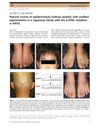 3 citations
,
January 2019 in “Journal of Dermatology”
3 citations
,
January 2019 in “Journal of Dermatology” The p.P25L mutation in the KRT5 gene causes a rare skin condition that worsens over time and may lead to hair loss starting in young adulthood.
November 2022 in “bioRxiv (Cold Spring Harbor Laboratory)” Researchers identified new cell types and genes in early hair follicle development.