 25 citations
,
June 2018 in “Journal of The American Academy of Dermatology”
25 citations
,
June 2018 in “Journal of The American Academy of Dermatology” Genes linked to fibrosis are more active in people with central centrifugal cicatricial alopecia.
23 citations
,
May 2019 in “Stem cell research & therapy” iPSC-derived stem cells on a special membrane can help repair full-thickness skin defects.
9 citations
,
October 2015 in “Journal of Cutaneous Pathology” Erythematous papulopustular eruptions in cancer patients using EGFR inhibitors show specific skin changes that vary with severity and treatment type.
21 citations
,
June 2017 in “Case Reports in Dermatology” Reducing gefitinib dosage improved hair loss, but scarring remained.
 1 citations
,
April 2017 in “Journal of Investigative Dermatology”
1 citations
,
April 2017 in “Journal of Investigative Dermatology” D-OCT shows increased blood vessel growth in response to tissue damage in Frontal Fibrosing Alopecia and is useful for diagnosis and monitoring.
August 2024 in “Skin Research and Technology” TAF can be identified by excessive skin thickening and clogged hair follicles, helping distinguish it from similar skin conditions.
 168 citations
,
August 2000 in “American Journal of Pathology”
168 citations
,
August 2000 in “American Journal of Pathology” Fibromodulin might help reduce scarring if increased in adult wounds like in fetal skin that heals without scars.
 April 2026 in “Research Square”
 E13 fetal mouse fibroblast vesicles may help reduce scarring.
January 2001 in “Chinese Journal of Reparative and Reconstructive Surgery” EGF aids skin development and healing, while bFGF absence in embryos may allow scar-free healing.
85 citations
,
January 1991 in “Journal of Investigative Dermatology” 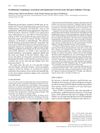 17 citations
,
January 2010 in “Acta Dermato Venereologica”
17 citations
,
January 2010 in “Acta Dermato Venereologica” EGFR inhibitors can cause yellowish skin eruptions.
20 citations
,
July 1987 in “Development Genes and Evolution” 323 citations
,
November 1984 in “Journal of Investigative Dermatology” 3 citations
,
April 2018 in “Journal of Investigative Dermatology” CCCA may be a fibroproliferative disorder, and anti-fibrotic therapies could help.
Combining anti-androgenic, anti-inflammatory, and anti-fibrotic treatments may improve hair loss outcomes.
 January 2025 in “International Journal of Dermatology”
 Consider TFI in facial hypopigmentation diagnoses and confirm with a biopsy.
Dissecting cellulitis and folliculitis keloidalis cause intense inflammation without bacterial infection.
3 citations
,
July 2025 in “Acta Biomaterialia” Murine skin wounds become less stiff over time as they heal.
10 citations
,
July 1984 in “British Journal of Dermatology” Epidermal cysts come from the skin, while pilar cysts come from hair follicles.
53 citations
,
July 2009 in “Cancer Research” Blocking certain proteins can reduce skin inflammation caused by cancer treatment.
19 citations
,
November 1985 in “Archives of Dermatology” The newborn's skin blisters healed without scarring, leaving some light spots, and stopped forming after four months.
May 2026 in “Cell Reports Medicine” FR-1 reduces skin scarring and promotes healing without harmful effects.
11 citations
,
January 1988 in “PubMed” Epidermal cell extracts improve skin healing and reduce scarring.
Epimorphin helps shape and develop epithelial cells, like those in hair follicles.
2 citations
,
January 2023 in “Biomedicines” The treatment combining laser and fetal fibroblasts effectively reduces scarring.
 52 citations
,
September 2020 in “Cell Death and Disease”
52 citations
,
September 2020 in “Cell Death and Disease” Overactive sonic hedgehog signaling worsens uterine scarring by reducing cell recycling.
 16 citations
,
December 2006 in “International Journal of Dermatology”
16 citations
,
December 2006 in “International Journal of Dermatology” A woman died from cancer that spread from a long-standing cyst on her abdomen.
 March 2026 in “Mendeley Data”
 Basement membrane-like ECM supports fibroblast aggregation and cohesion.
Combining anti-androgenic, anti-inflammatory, and anti-fibrotic treatments may improve hair loss outcomes, but more testing is needed.
 13 citations
,
February 2017 in “Science”
13 citations
,
February 2017 in “Science” Turning scar-forming cells into fat cells can reduce scarring.