January 2005 in “日本機械学會論文集. C編” Minoxidil sulfate and pinacidil promote hair growth likely by increasing blood flow, not by activating K channels.
January 1995 in “대한피부과학회지” Higher hormone levels may be linked to female hair loss.
February 1990 in “PubMed” Higher DHEA-S levels in hirsute females affect hair growth phases.
 January 1986 in “Journal of Steroid Biochemistry”
 Women with severe acne, hirsutism, and androgenic alopecia often have higher levels of certain androgens, but the specific pattern can't be predicted just by looking at symptoms.
 January 1977 in “Case Reports in Medicine”
 Steroid cell tumors in the ovary are rare, can produce testosterone causing symptoms, and are mainly treated with surgery.
June 1958 in “Mycopathologia” Selective chemical epilation effectively treats tinea capitis without harmful side effects.
September 2020 in “bioRxiv (Cold Spring Harbor Laboratory)” Finasteride may help reduce opioid use.
August 2017 in “DOAJ (DOAJ: Directory of Open Access Journals)” Androgenetic alopecia in males is linked to hormone levels and the enzyme 5-alpha reductase.
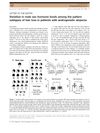 March 2017 in “Journal of Dermatology”
 Different hair loss patterns may be linked to varying male hormone levels.
 December 2015 in “Vestnik dermatologii i venerologii”
 People with hair loss have different hormone levels, and these hormones can affect hair growth.
 41 citations
,
August 1988 in “Journal of The American Academy of Dermatology”
41 citations
,
August 1988 in “Journal of The American Academy of Dermatology” A woman with subacute cutaneous lupus erythematosus had widespread skin symptoms triggered by medication and sunlight, which improved with specific treatments.
16 citations
,
January 2000 in “Dermatology” Men with X-linked recessive ichthyosis can still experience male-pattern baldness.
13 citations
,
May 2010 in “Dermatologic Clinics” Recurrent furunculosis can be managed with antibiotics, decolonization, and decontamination, with potential future use of vaccines and bacteriophage therapy.
11 citations
,
January 2023 in “World Journal of Clinical Cases” Idiopathic hirsutism might not be truly idiopathic but could be an early stage of hyperandrogenic disorders.
9 citations
,
January 1999 in “Dermatology” Men with X-linked recessive ichthyosis may not experience typical male-pattern baldness.
 4 citations
,
December 2001 in “Endoscopy”
4 citations
,
December 2001 in “Endoscopy” Prednisolone and Bactrim improved symptoms in a woman with Cronkhite-Canada syndrome.
 December 2023 in “Sains Malaysiana”
 The enzyme Rand protease works well for leather dehairing and its stability is important, with Leu75 playing a key role.
 August 2022 in “Case reports”
 Isotretinoin effectively treated a rare scalp condition, but careful drug monitoring and a dairy-free diet were important.
 130 citations
,
January 2017 in “International journal of nanomedicine”
130 citations
,
January 2017 in “International journal of nanomedicine” Silver nanoparticles coated with substances like PEG showed strong antibacterial effects and improved wound healing when used in hydrogels.
 112 citations
,
July 2008 in “Dermatologic Therapy”
112 citations
,
July 2008 in “Dermatologic Therapy” Folliculitis decalvans is a rare scalp condition causing scarring hair loss, treated with long-term antibiotics and other medications, but it often comes back and is hard to manage.
 50 citations
,
December 1999 in “British Journal of Dermatology”
50 citations
,
December 1999 in “British Journal of Dermatology” Finasteride improves hidradenitis suppurativa but not for child-bearing women.
 28 citations
,
September 2008 in “Current Pharmaceutical Design”
28 citations
,
September 2008 in “Current Pharmaceutical Design” Allergic reactions to blood thinners are rare but can be serious, requiring careful management and alternative treatments.
 24 citations
,
November 2009 in “Pharmaceutical Development and Technology”
24 citations
,
November 2009 in “Pharmaceutical Development and Technology” Transcutol P best increases Finasteride absorption for hair loss treatment.
16 citations
,
November 2008 in “Journal of the American Academy of Dermatology” Consider necrolytic acral erythema in similar cases and treat with oral zinc sulfate.
 15 citations
,
February 1999 in “The anatomical record”
15 citations
,
February 1999 in “The anatomical record” Some mutant mice have hair with abnormal cross-linking, mainly in the cuticle, not affecting other hair parts.
 13 citations
,
March 1998 in “Journal of Biomedical Materials Research”
13 citations
,
March 1998 in “Journal of Biomedical Materials Research” Island grafts can help study skin regeneration separately from other healing processes.
 11 citations
,
February 2018 in “Amino acids”
11 citations
,
February 2018 in “Amino acids” Copper and iron cause keratin damage in hair by converting methionine to homocysteine.
10 citations
,
April 2020 in “Journal of surfactants and detergents” Shampoos with sugar-derived surfactants clean hair well and are gentler than those with SLES.
10 citations
,
June 2019 in “International Journal of Pharmaceutics” Hair removal methods damage the skin barrier and affect substance penetration.
10 citations
,
January 1985 in “PubMed” Trace elements like calcium, iron, and zinc are unevenly distributed in hair, while sulfur is even, and increased phosphorus and potassium levels are linked to skin reactions.