 April 2012 in “Journal of IMAB”
 Men with male pattern baldness don't necessarily have high levels of Dehydroepyandrosterone-sulfate, and there's no link between its levels and the severity of hair loss.

Blocking 11β-HSD1 reduces stress hormone damage in hair growth cells.
 11 citations
,
May 1996 in “The Journal of clinical endocrinology and metabolism/Journal of clinical endocrinology & metabolism”
11 citations
,
May 1996 in “The Journal of clinical endocrinology and metabolism/Journal of clinical endocrinology & metabolism” The main enzyme found in pubic skin that could be targeted to treat excessive hair growth is 5 alpha-R2.
 2 citations
,
November 2018 in “Indian Journal of Pharmaceutical Education”
2 citations
,
November 2018 in “Indian Journal of Pharmaceutical Education” The developed model can predict effective 5-alpha-reductase enzyme inhibitors.
 September 2017 in “Journal of Investigative Dermatology”
 The study found that sweat glands normally suppress immune responses, but this is disrupted in certain skin diseases, possibly contributing to their development.
 3 citations
,
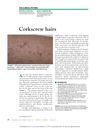
April 2015 in “Cleveland Clinic Journal of Medicine”
3 citations
,
April 2015 in “Cleveland Clinic Journal of Medicine” The woman has scurvy and needs more vitamin C.
 140 citations
,
April 2004 in “The journal of investigative dermatology/Journal of investigative dermatology”
140 citations
,
April 2004 in “The journal of investigative dermatology/Journal of investigative dermatology” The enzyme 25 Hydroxyvitamin D 1 α-Hydroxylase is essential for healthy skin and recovery after skin damage.
 3 citations
,
January 2009 in “Sen'i Gakkaishi”
3 citations
,
January 2009 in “Sen'i Gakkaishi” Using both TGA and DTDG in hair straightening reduces hair damage compared to using TGA alone.
 April 2026 in “Open MIND”
 Microbes in the small intestine may cause Post-Finasteride Syndrome symptoms.
3 citations
,
December 2022 in “Russian Journal of General Chemistry” CoCr2O4 catalysts effectively and sustainably produce diaminopyrimidine oxides with high yield.
March 2026 in “ACS Applied Materials & Interfaces” MCP@G improves diabetic wound healing by reducing stress and promoting tissue repair.
 53 citations
,
October 2014 in “Free radical biology & medicine”
53 citations
,
October 2014 in “Free radical biology & medicine” Defective mitochondrial DNA replication causes aging symptoms and increased oxidative damage in mice.
56 citations
,
November 2007 in “Molecular and cellular endocrinology” Two enzymes regulate androgen receptor activity, affecting treatments for androgen insufficiency and benign prostatic hyperplasia.
 2 citations
,
August 2019 in “Turkish Journal of Chemistry”
2 citations
,
August 2019 in “Turkish Journal of Chemistry” Researchers made minoxidil efficiently using cobalt ferrite nanoparticles as a reusable catalyst.
January 2020 in “Korean journal of ophthalmology/Korean Journal of Ophthalmology” Minoxidil increases cell layer permeability by reducing tight junction proteins and raising ROS levels.
 1 citations
,
April 2022 in “Cell Death Discovery”
1 citations
,
April 2022 in “Cell Death Discovery” Increasing Smurf2 hinders hair follicle stem cell differentiation and wound healing.
December 2016 in “University of Birmingham Institutional Research Archive (University of Birmingham)” Glucocorticoids reduce fat production in liver cells, while androgens increase it in females; manipulating certain enzymes can influence these effects.
24 citations
,
February 2007 in “Hormone and metabolic research” The substance MK386 effectively blocked testosterone conversion and reduced cell growth in certain skin cells, but inhibiting 5α-reductase alone may not greatly improve acne.
39 citations
,
September 2018 in “American Journal of Medical Genetics Part A” A new genetic mutation in the ODC1 gene causes developmental delay and other symptoms in a young girl.
 June 2023 in “Antioxidants”
 Lipids from Schizochytrium sp. help prevent hair loss by protecting hair cells from damage and promoting hair growth.
October 2024 in “Biomedical Reports” Superoxidized electrolyzed solution (SES) is more effective for burn healing than common antiseptics.
 50 citations
,
May 2019 in “BioFactors”
50 citations
,
May 2019 in “BioFactors” Pollution increases a compound in the skin that can lead to faster aging and more inflammation.
30 citations
,
January 2013 in “Human Mutation” A mutation in the HOXC13 gene causes hair and nail problems in a Syrian family.
Transglutaminases help form strong hair by linking proteins, and can potentially alter hair properties.
1 citations
,
March 2003 in “Journal of Investigative Dermatology” Early sunburn treatment with certain inhibitors may reduce skin cancer risk.
36 citations
,
August 2022 in “Frontiers in Cell and Developmental Biology” Sebaceous glands age due to genetic and environmental factors, affecting sebum production and composition.
 August 2016 in “The journal of investigative dermatology/Journal of investigative dermatology”
 The hexosamine pathway helps protect skin cells from stress and may improve skin and hair health.
January 2006 in “Chinese Journal of Aesthetic Medicine” Zinc improves skin flap survival in rats.
 1 citations
,
December 2022 in “Middle East Journal of Science”
1 citations
,
December 2022 in “Middle East Journal of Science” Permanent hair dyes use chemicals that react with hydrogen peroxide to create color.
2 citations
,
August 2023 in “Molecules” SH-340 may improve skin barrier and help treat atopic dermatitis.