 66 citations
,
February 2010 in “CrystEngComm”
66 citations
,
February 2010 in “CrystEngComm” Made 8 minoxidil samples; 1 cocrystal, 7 salts formed.
 7 citations
,
June 2020 in “Journal of The European Academy of Dermatology and Venereology”
7 citations
,
June 2020 in “Journal of The European Academy of Dermatology and Venereology” Genetic variants affect minoxidil hair loss treatment success.
 1 citations
,
June 2021 in “Journal of Cosmetic Dermatology”
1 citations
,
June 2021 in “Journal of Cosmetic Dermatology” Enzyme booster SULT1A1 greatly enhances hair regrowth with minoxidil.
 October 2024 in “International Journal of Research in Medical Sciences”
 The SULT1A1 enzyme booster improves minoxidil effectiveness in treating hair loss, especially in females.
Certain genetic variations are linked to hair loss in Mexican men.
5 citations
,
January 2024 in “Crystals” The salts have diverse molecular packing with significant hydrogen interactions.
 4 citations
,
February 2019 in “Biological Trace Element Research”
4 citations
,
February 2019 in “Biological Trace Element Research” Chromium salts may help with insulin sensitivity in PCOS, but more research is needed to confirm their overall effectiveness and safety.

Folate salts penetrate skin well and improve wound healing, suggesting potential for skin treatments.
 November 2020 in “Postepy Dermatologii I Alergologii”
 Sulfotransferase SULT1A1 activity may predict minoxidil treatment success for hair loss.
 19 citations
,
January 2000 in “Biological and Pharmaceutical Bulletin”
19 citations
,
January 2000 in “Biological and Pharmaceutical Bulletin” Diclofenac salt delivery through skin varies based on the salt's counterions.
 2 citations
,
December 2024 in “Bulletin of Rehabilitation Medicine”
2 citations
,
December 2024 in “Bulletin of Rehabilitation Medicine” Chitosan glycolate and lactate sponges are promising for wound healing, while chitosan ascorbate sponges are less effective.
 5 citations
,
June 2015 in “Journal of dermatology”
5 citations
,
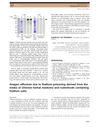
June 2015 in “Journal of dermatology” A woman and her daughter had thallium poisoning from a herbal drink and rodenticide, causing hair loss and other symptoms.
 1 citations
,
July 2024 in “Journal of Cosmetic Dermatology”
1 citations
,
July 2024 in “Journal of Cosmetic Dermatology” Low SULT activity in hair follicles leads to better response to oral minoxidil for hair loss.
 September 2017 in “The journal of investigative dermatology/Journal of investigative dermatology”
 The reconstructed skin model from hair follicles functions like human skin in processing chemicals and can be used to test ingredient safety.
 27 citations
,
November 2013 in “Dermatologic Therapy”
27 citations
,
November 2013 in “Dermatologic Therapy” New test predicts if hair loss treatment will work.
 18 citations
,
January 2020 in “Acta dermato-venereologica”
18 citations
,
January 2020 in “Acta dermato-venereologica” Over 67 genes linked to ichthyosis help improve diagnosis and treatment.
March 2026 in “Mini-Reviews in Medicinal Chemistry” Oral minoxidil can be improved for hair loss treatment with personalized strategies and new technologies.
September 2025 in “Cosmetics” Genetic profiling can improve androgenetic alopecia treatment by predicting drug response and minimizing side effects.
August 2025 in “International Journal of Molecular Sciences” Topical minoxidil 5% is the most effective over-the-counter treatment for male hair loss.
 April 2024 in “Journal of cosmetic dermatology”
 Minoxidil is less effective on eyebrows and eyelashes than scalp hair because these areas have lower enzyme activity needed to activate the drug.
 December 2023 in “Journal of Trace Elements in Medicine and Biology”
 Molybdenum nanoparticles could be a new treatment for hair loss, working differently than minoxidil.
 October 2023 in “International Journal of Pharmaceutics”
 Using minoxidil with tocopherol acetate in ethosomes improves hair regrowth in hair loss treatment.
 September 2023 in “Medicina-lithuania”
 The study suggests that analyzing DNA can help treat hair loss, but more research is needed.
 August 2023 in “Journal of Cosmetic Dermatology”
 Some plants like spinach, broccoli, and matcha may boost the effectiveness of the hair growth drug minoxidil.

DNA analysis can help tailor alopecia treatment.

Hair coloring and bleaching can permanently break down hair protein and temporarily change its properties.
March 2023 in “Медицинский совет” Minoxidil works better for hair regrowth if you have higher SULT1A1 enzyme activity and ATP concentration.
12 citations
,
September 2021 in “Journal of molecular structure” The MXD/24HA salt is more effective for hair growth than raw MXD.
 1 citations
,
December 2022 in “The journal of investigative dermatology/Journal of investigative dermatology”
1 citations
,
December 2022 in “The journal of investigative dermatology/Journal of investigative dermatology” Choosing the right method to separate skin layers is key for good skin cell research.
 1 citations
,
March 2018 in “bioRxiv (Cold Spring Harbor Laboratory)”
1 citations
,
March 2018 in “bioRxiv (Cold Spring Harbor Laboratory)” The hair treatment made hair grow faster and thicker and strengthened the hair roots.