 8 citations
,
March 2018 in “Cosmetics”
8 citations
,
March 2018 in “Cosmetics” UV radiation damages hair by creating holes and peeling cuticle layers.
April 2024 in “JEADV Clinical Practice” Guidelines for full-body skin exams, including hidden areas, are needed to guide doctors and inform patients.
 March 2026 in “DergiPark (Istanbul University)”
 Pregnant women need better awareness and education on sun protection and safe cosmetic use.
Synthetic hair implants may pose health risks, including cancer, and require careful monitoring.
 30 citations
,
November 1996 in “Archives of Dermatology”
30 citations
,
November 1996 in “Archives of Dermatology” UV rays can cause a type of hair loss known as telogen alopecia.
Finasteride is more stable in sunlight than Diclofenac and Naproxen.
 January 2022 in “Przegla̧d dermatologiczny”
 The exact cause of frontal fibrosing alopecia is unknown, but it's not likely due to sunscreen.
 November 2021 in “Research Square (Research Square)”
 Older men and those with outdoor jobs are at higher risk for skin cancer; early full-body skin checks are recommended for early detection.
 26 citations
,
June 2018 in “Australasian Journal of Dermatology”
26 citations
,
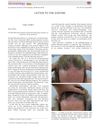
June 2018 in “Australasian Journal of Dermatology” Stopping sunscreen use on the forehead led to hair regrowth in a woman with frontal fibrosing alopecia.
September 1998 in “Journal of the European Academy of Dermatology and Venereology” PUVA-turban therapy can help some people with severe alopecia areata regrow hair.
 September 2009 in “Pediatric Dermatology”
 UVB is good for a skin condition in Asian kids, a lotion works for head lice, a drug helps with a skin blistering disorder, a foam reduces itchiness in skin inflammation, birthmarks can be more widespread, and criteria for a neurocutaneous disorder were agreed upon.
 January 2024 in “Journal of tissue engineering”
 Sunlight exposure damages hair follicles, but certain stem cell-derived particles can reduce this damage and help with hair regeneration.
9 citations
,
December 2015 in “Journal of Dermatological Case Reports” Narrowband UVB therapy significantly improved a child's rare skin condition.
31 citations
,
January 2014 in “The Scientific World JOURNAL” Eclipta prostrata extract protects skin cells from UVB damage and has strong antioxidant properties.
 53 citations
,
January 2009 in “Journal of Investigative Dermatology”
53 citations
,
January 2009 in “Journal of Investigative Dermatology” UVB radiation harms hair growth and health, causing cell death and other changes in human hair follicles.
2 citations
,
January 2014 in “Photochemical & photobiological sciences” Grasp protein helps maintain skin health after UVB exposure.
3 citations
,
January 2015 in “Journal of the Egyptian Womenʼs Dermatologic Society”  27 citations
,
January 2002 in “Exogenous Dermatology”
27 citations
,
January 2002 in “Exogenous Dermatology” Chronic exposure to sunlight may worsen male pattern baldness and protecting the scalp from the sun could slow it down.
 21 citations
,
January 2013 in “Annals of dermatology/Annals of Dermatology”
21 citations
,
January 2013 in “Annals of dermatology/Annals of Dermatology” The combination of cyclosporine and PUVA might help treat severe alopecia areata.
13 citations
,
October 2000 in “International Journal of Dermatology” A 6-year-old boy in India was diagnosed with Bloom's syndrome, showing growth and developmental issues, and skin problems worsened by sunlight.
4 citations
,
October 2013 in “PLoS ONE” Vemurafenib causes significant skin side effects, requiring regular dermatologist care and sun protection.
April 2024 in “International journal of molecular sciences” Light-based treatment, Photobiomodulation, shows promise for non-invasive skin therapy with few side effects.
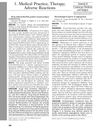 July 2003 in “Journal of Cutaneous Medicine and Surgery”
 Treating psoriasis with UVB light three times a week is faster than twice a week, and certain medications and lifestyle factors affect psoriasis treatment outcomes.
 1 citations
,
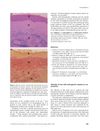
November 2004 in “Clinical and Experimental Dermatology”
1 citations
,
November 2004 in “Clinical and Experimental Dermatology” Most bald men don't protect their scalp from the sun, and doctors should encourage prevention.
 March 2026 in “BioScience Trends”
 UV radiation causes skin aging by damaging cells and triggering harmful processes.
8 citations
,
July 2020 in “Clinical, cosmetic and investigational dermatology” Excessive sun protection might cause frontal fibrosing alopecia by disrupting skin immune balance.
July 2025 in “Journal of Investigative Dermatology” High-dose UVA-1 therapy improves symptoms and skin condition in sclerosing skin disease.
 20 citations
,
December 2013 in “Journal of Dermatology”
20 citations
,
December 2013 in “Journal of Dermatology” UV-B light increases inflammation-related substances in acne-related skin cells.
37 citations
,
November 2011 in “Photodermatology Photoimmunology & Photomedicine” Narrowband UVB phototherapy alone is not very effective for treating alopecia areata.
 66 citations
,
September 2005 in “Photochemical & photobiological sciences”
66 citations
,
September 2005 in “Photochemical & photobiological sciences” We don't fully understand how sunlight damages different types of hair.