 September 2016 in “British Journal of Dermatology”
 Doctors need more training in skin cancer screening, a new treatment is effective for a skin condition, better diagnosis methods for skin cancer are available, hair loss in women may be linked to hormones and cholesterol, certain skin care products might cause hair loss, babies' skin gets weaker after birth, and a gene mutation might be linked to eczema.
 January 2016 in “Dermatology Online Journal”
 Pregnant women with blisters should be checked for bullous impetigo.
September 2012 in “대한피부과학회지” Desmocollin 1 helps maintain skin structure during fetal development.
April 2011 in “Annals of Internal Medicine” Rivaroxaban and fondaparinux are effective for certain blood conditions, and hydroxyurea helps in sickle cell disease.
 April 2009 in “Dermatologic Surgery”
 The document concludes that the first book on mesotherapy lacks convincing evidence, the second book is good for beginners in facial rejuvenation, and the third book is valuable for understanding complications in skin surgery.
 February 2004 in “Plastic and Reconstructive Surgery”
 The book gives a basic overview of cosmetic surgery topics but lacks depth and innovation, especially in hair restoration.
 February 2004 in “Dermatologic Surgery”
 Deep Plane Fixation in scalp surgeries allows for more tissue removal with less tension and minimal scarring.
 January 1989 in “Journal of The American Academy of Dermatology”
 Dr. Hanke acknowledges the success of CO₂ laser for less severe blast tattoos and suggests dermabrasion for more extensive injuries, while also discussing dermatology's media presence and issues with minoxidil research.
 March 2008 in “Journal of Clinical Dermatology”
 Micropigmentation is a good and safe method to improve the look of scalp and eyebrow scars.
 January 2008 in “대한피부과학회지”
 Micropigmentation is a safe procedure that effectively improves the appearance of scars on the scalp and eyebrows, with most patients showing excellent or good results.
 February 2002 in “Dermatologic Surgery”
 Best hair transplant results happen when tissues are least damaged.
9 citations
,
January 2023 in “Indian Dermatology Online Journal” Medical aesthetics now helps treat medical conditions, expanding options for dermatologists.
 8 citations
,
January 1989 in “Journal of The American Academy of Dermatology”
8 citations
,
January 1989 in “Journal of The American Academy of Dermatology” CO2 laser treatment successfully removed traumatic tattoos with minimal scarring.
 1 citations
,
January 2010 in “Serbian Journal of Dermatology and Venereology”
1 citations
,
January 2010 in “Serbian Journal of Dermatology and Venereology” The document concludes that effective acne treatment requires a personalized combination of therapies and long-term commitment, with retinoids being important for maintenance.
 August 2019 in “Journal of Investigative Dermatology”
 The study found that tight junctions reach the top layer of the skin's stratum granulosum, not just the second top layer as previously thought.
 35 citations
,
January 1996 in “Dermatologic clinics”
35 citations
,
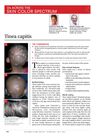
January 1996 in “Dermatologic clinics” Tinea capitis is a common scalp infection causing hair loss, mostly in young children.
November 2021 in “CRC Press eBooks” Tinea capitis is a fungal infection of the scalp that mainly affects children and can cause symptoms from mild itching to severe inflammation.
 October 2022 in “The Journal of Family Practice”
 Tinea capitis is a scalp fungal infection in children that can cause hair loss, scaling, and other symptoms.
1 citations
,
May 2002 in “AAP Grand Rounds” Tinea capitis, though rare in infants, should be considered for hair loss or scalp issues, with oral griseofulvin as the recommended treatment.
May 2020 in “The Journal of Pediatrics” Tinea capitis can be quickly diagnosed and treated using dermoscopy to prevent hair damage.
 38 citations
,
July 2010 in “Clinical, cosmetic and investigational dermatology”
38 citations
,
July 2010 in “Clinical, cosmetic and investigational dermatology” To treat tinea capitis in children, oral antifungal medication is necessary, with newer drugs offering shorter treatment times than the traditional griseofulvin.
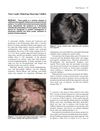
Griseofulvin is still the best treatment for tinea capitis.
 9 citations
,
October 2013 in “Pediatric dermatology”
9 citations
,
October 2013 in “Pediatric dermatology” Proper antifungal treatment is crucial to avoid misdiagnosis and prevent scarring alopecia.
Visible lesions are not always needed to diagnose tinea capitis.
March 2024 in “Clinical Case Reports” Early detection of tinea capitis is possible by spotting specific hair patterns like comma or corkscrew hairs.
24 citations
,
July 2009 in “Mycoses” A scalp infection was treated successfully, leading to full hair regrowth.
 1 citations
,
July 2023 in “Clinical case reports”
1 citations
,
July 2023 in “Clinical case reports” Tinea capitis should be considered for scalp infections in infants.
16 citations
,
March 1991 in “International Journal of Dermatology” Tinea capitis is rare in healthy adults but should be considered in scalp issues.
1 citations
,
November 2009 in “Nurse prescribing” Oral griseofulvin for 6-12 weeks cures most scalp fungal infections in children.
July 2024 in “Journal Archives of Health” Adults can get scalp fungal infections, needing quick treatment to prevent spread and hair loss.