 April 2021 in “MEDICINUS”
 Acrodermatitis enteropathica can occur even with normal zinc levels, and zinc supplements can improve symptoms.
January 2021 in “Zenodo (CERN European Organization for Nuclear Research)” Natural remedies like essential oils are preferred for safe and beneficial hair growth support.
 December 2020 in “Vestnik dermatologii i venerologii”
 Combining iron supplements with physiotherapy could better treat women's hair loss linked to iron deficiency.
 December 2020 in “Vestnik dermatologii i venerologii”
 Iron supplements and physiotherapy together can better treat hair loss in women with iron deficiency.
December 2020 in “Dermatology practical & conceptual” Trichoscopy helped diagnose a teenage girl's hair loss as monilethrix.

Bilateral Orchiectomy effectively reduces the need for anti-androgen medication in most transgender females.

Different types of hair loss can be caused by hormones, stress, autoimmune disorders, illness, or nutritional deficiencies, and can be treated with medication, nutritional supplements, or hair transplantation.
 January 2020 in “Journal of Clinical Biochemistry and Nutrition”
 Low zinc levels in chronic liver disease patients are linked to more severe symptoms like taste issues and skin problems, and zinc supplements might help.
November 2019 in “European journal of internal medicine” A Laotian man with unusual skin changes and multiple growths in his gut was diagnosed with Cronkhite-Canada Syndrome and improved with nutritional and immune-based treatments.
 January 2019 in “Archives of dermatology and skin care”
 Microneedling with oral collagen improves wrinkles better than microneedling alone.
 November 2018 in “Springer eBooks”
 Children need early diagnosis and treatment for iron-deficiency anemia to prevent learning problems and promote health.
 June 2018 in “Disease-a-Month”
 Remove inflamed cysts surgically, avoid topical antibiotics on wounds, treat skin and mouth conditions with specific medications, and address underlying causes of hair loss.
March 2018 in “The journal of applied laboratory medicine” The rash on the infant indicated a serious underlying condition.
 January 2018 in “The Egyptian Family Medicine Journal”
 Iron deficiency anemia is significantly linked to hair loss in childbearing women, and taking iron improves the condition.
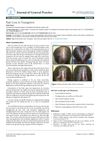 January 2018 in “Journal of general practice”
 Young people are losing hair due to stress, poor diet, pollution, and lack of sleep, but it can be treated with supplements and scalp treatments.
 December 2017 in “Journal of the American Academy of Dermatology”
 The patient accepted her hair loss and adapted by wearing a wig and tattooing her eyebrows.
September 2017 in “Hair transplant forum international” Biotin is popular for hair loss, but there's little scientific proof it works.
Many hair loss myths lack strong evidence, but some treatments are proven to work.
Zinc supplements and genetic analysis help treat acrodermatitis enteropathica in children.
 September 2016 in “Princeton University Press eBooks”
 The document concludes that understanding health requires considering evolutionary perspectives on reproductive fitness, and recognizing the complexity of factors like diet, testosterone, and sexual orientation.
 August 2016 in “Journal of Investigative Dermatology”
 Zinc deficiency disrupts hair growth and cycle, but zinc supplements can fix this.
April 2016 in “Journal of Investigative Dermatology” Iron deficiency causes hair loss by affecting hair differentiation and cycling.
The chapter concludes that diet and lifestyle changes can help manage PCOS symptoms and improve fertility.
 March 2016 in “Reactions Weekly”
 A woman experienced hair loss, nail changes, bone marrow suppression, and low blood protein after taking azathioprine.
April 2015 in “Our Dermatology Online” Zinc supplements and diet changes can effectively treat zinc deficiency and prevent complications.
January 2015 in “Iraqi Journal of Hematology” Iron supplements can help reduce hair loss in women with low iron levels.
January 2014 in “Astrocyte” Some drugs may cause hair loss in women.
 November 2013 in “John Wiley & Sons, Ltd eBooks”
 Skin symptoms can indicate endocrine disorders and have various treatments.

Iron supplements may reverse premature graying in iron-deficient individuals; ingrown nails are common in diabetics with certain risk factors; topical finasteride may reduce scalp DHT as effectively as oral finasteride; monilethrix treatment is challenging but some medications can help.
 March 2013 in “Journal für Kardiologie (Krause & Pachernegg GmbH)”
 Hormones significantly affect hair growth and loss, with potential for new treatments.