 62 citations
,
January 2004 in “The journal of investigative dermatology/Journal of investigative dermatology”
62 citations
,
January 2004 in “The journal of investigative dermatology/Journal of investigative dermatology” A second domain of high sulfur KAP genes on chromosome 21q23 is crucial for hair structure.
 1 citations
,
May 2019 in “Journal of The American Academy of Dermatology”
1 citations
,
May 2019 in “Journal of The American Academy of Dermatology” Mobile app ImageMeter calculates scalp area faster and reliably for alopecia treatment.
 May 2026 in “Journal of Asia Pacific Aesthetic Sciences”
 Low-dose intralesional corticosteroid treatment led to rapid hair regrowth in localized alopecia areata.
 January 2026 in “MDPI (MDPI AG)”
 The hairy ear mutation in mice is linked to changes in gene expression affecting hair growth.
 12 citations
,
December 2018 in “Dermatologic Therapy”
12 citations
,
December 2018 in “Dermatologic Therapy” Small Botox dose effectively treats hair loss in Chinese men.
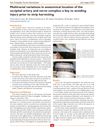 1 citations
,
July 2010 in “International Society of Hair Restoration Surgery”
1 citations
,
July 2010 in “International Society of Hair Restoration Surgery” Recognizing racial differences in anatomy helps make hair transplants safer.
 July 2023 in “GLOBAL JOURNAL FOR RESEARCH ANALYSIS”
 The new treatment showed promise in managing eyebrow hair loss.
 September 2024 in “South Eastern European Journal of Public Health”
 Alopecia areata patients have higher IgE and IL-13 levels, suggesting immune involvement.
1 citations
,
November 2018 in “immuneACCESS” Expanded CD8+ T cells are linked to Alopecia Areata and may cause relapse after treatment.
 7 citations
,
January 2017 in “International Journal of Trichology”
7 citations
,
January 2017 in “International Journal of Trichology” Hair transplant can cause hard-to-treat keloids in some patients.
86 citations
,
December 2002 in “Tissue Antigens” A specific gene change is linked to severe hair loss.
February 2026 in “Australasian Journal of Dermatology” A new tool simplifies alopecia areata severity scoring but needs validation.
 6 citations
,
June 2018 in “Journal of Stomatology, Oral and Maxillofacial Surgery”
6 citations
,
June 2018 in “Journal of Stomatology, Oral and Maxillofacial Surgery” Nanofat grafting is better for delicate areas and combining it with lipofilling might improve hair loss treatment.
 33 citations
,
September 2007 in “Veterinary dermatology”
33 citations
,
September 2007 in “Veterinary dermatology” Topical 0.1% tacrolimus significantly improved ear infections in cats.
June 2017 in “Mechanisms of development” Hox genes control hair follicle stem cell regeneration in different body regions.
14 citations
,
June 2022 in “British Journal of Dermatology” A SALT score of ≤ 20 indicates meaningful improvement in alopecia areata treatment.
November 2022 in “Indian Journal of Dermatology” Azole antifungals can cause skin reactions like EAC, requiring careful management.
August 2023 in “Clinical and Experimental Dermatology” Direct patients with alopecia areata to Alopecia UK, the National Alopecia Areata Foundation, and Health Talk for the best online psychological support.
7 citations
,
March 2021 in “Journal of Investigative Dermatology” Lipases, especially gehB, are crucial for Staphylococcus aureus to enter and colonize hair follicles.
 January 2023 in “Journal of Cutaneous Pathology”
 The study found certain scalp biopsy features can help tell apart alopecia areata from pattern hair loss even when typical immune cells are not seen.
 June 2024 in “Skin Research and Technology”
 Botulinum toxin treatment improves hair follicle width and length in androgenetic alopecia.
8 citations
,
January 2013 in “International journal of trichology” Two people had unusual ring-shaped hair loss due to an autoimmune disorder.
 March 2018 in “Journal of Pakistan Association of Dermatology”
 Vibration anesthesia effectively reduces pain during hair restoration surgery.
2 citations
,
June 2025 in “Journal of Investigative Dermatology” CD8+ T cells re-expressing CD45RA may predict treatment resistance in severe alopecia areata.
35 citations
,
October 2017 in “JAMA dermatology” Children with alopecia areata should only have thyroid screening if they have Down syndrome, a history of atopy, family history of thyroid disease, or signs of thyroid problems.
February 2026 in “Biophysical Journal” 34 citations
,
January 2004 in “Genomics” A cluster of 21 keratin-associated protein genes important for hair growth was found on human chromosome 21.
8 citations
,
January 2003 in “Journal of Immunology Research” Changing the pin and cupola setup reduced hair loss in Orthodox Jews using skull-caps.
February 2026 in “Advanced Sensor Research” Advanced technologies can improve understanding and monitoring of skin-brain interactions.
 77 citations
,
June 2007 in “PLoS ONE”
77 citations
,
June 2007 in “PLoS ONE” Birds can regenerate inner ear cells using specific gene pathways, unlike mammals.