July 2021 in “Veterinary record/The veterinary record” A calf in Scotland likely had Schmallenberg virus from its mother.
January 2014 in “The Journal of Dermatology” Korean adolescents with androgenetic alopecia often have a family history, milder symptoms than adults, and normal hormone levels.
 August 2025 in “Frontiers in Pharmacology”
 [6]-Gingerdiol 3-monoacetate shows promise for treating T. whipplei infections.
 April 2026 in “International Journal of Clinical Case Reports and Reviews”
 A new non-invasive laser system improves chronic disease management and metabolic health.
1 citations
,
February 2024 HPV6/11 is often found in hair of men with anogenital warts, especially pubic hair, and can lead to recurrent warts.
February 2014 in “PubMed” Modified rat hair follicle stem cells can help create artificial hair follicles, blood vessels, and skin.
133 citations
,
November 2018 in “Aging” Azithromycin and Roxithromycin can remove aging cells and may help with anti-aging.
14 citations
,
March 2006 in “TSpace” 27 citations
,
January 2018 in “Drug Delivery” GC10/DOX hydrogel shows promise as an effective thyroid cancer treatment.
Scalp med(R) effectively and safely improves hair count and thickness in men with androgenetic alopecia.
 April 2026 in “Frontiers in Medicine”
 Enfortumab vedotin can cause skin issues, especially in older males, needing early monitoring.
The agouti gene may help understand and treat obesity.
 February 2018 in “The Journal of Sexual Medicine”
 DA-9401 protects against hair loss, improves organ function, and prevents infertility caused by finasteride.
January 2004 in “中国组织化学与细胞化学杂志” 40 citations
,
July 2018 in “European Journal of Pharmaceutical Sciences” Melatonin vitamin C-based nanovesicles improved hair growth and reduced hair loss in androgenic alopecia patients.
October 1984 in “Immunology Today”  September 1980 in “PubMed”
 Using selenium disulfide on guinea pigs increased hair loss.
 56 citations
,
September 2013 in “Journal of Biochemistry and Molecular Biology”
56 citations
,
September 2013 in “Journal of Biochemistry and Molecular Biology” Androgens increase a growth factor in hair cells by creating reactive oxygen species, and antioxidants might help treat hair loss.
 June 2015 in “한국화장품미용학회지”
 AT-Grow, a natural product, might help with a common type of hair loss by reducing DHT levels.
1 citations
,
December 2022 in “PubMed” The lncRNA LOXL1-AS1 may help diagnose and treat androgenic alopecia.
September 1941 in “The Science News-Letter” 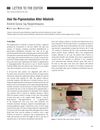 April 2025 in “Turkish Journal of Hematology”
 Nilotinib may cause gray hair to return to its original color.
January 2007 in “Edward Elgar eBooks” TSPO might help treat anxiety and depression.
 August 2019 in “Regenerative Medicine”
 In June 2019, the stem cell research field saw major progress, including new clinical trials, FDA approvals, and industry collaborations.
 17 citations
,
December 2004 in “Bioorganic & Medicinal Chemistry Letters”
17 citations
,
December 2004 in “Bioorganic & Medicinal Chemistry Letters” Scientists found new, better-working inhibitors for a hormone-related enzyme.
1 citations
,
January 1985 in “Protides of the biological fluids” Injecting monocyto-angiotropin into hare skin increases hair growth by forming new blood vessels.
The 0.05% dutasteride topical solution effectively promotes hair growth with fewer side effects than oral treatments.
December 2012 in “http://isrctn.org/>”