 4 citations
,
October 2022 in “Journal of Imaging”
4 citations
,
October 2022 in “Journal of Imaging” An intelligent system can classify hair follicles and measure hair loss severity with reasonable accuracy.
3 citations
,
January 2025 in “BMC Medical Informatics and Decision Making” Machine learning can help find new ways to treat alopecia areata.
3 citations
,
August 2024 in “Applied Sciences” A web platform was created to help diagnose scalp conditions accurately and easily.
Machine learning can accurately predict hair loss early, improving treatment options.
January 2025 in “Communications in computer and information science” HairLossMultinet accurately classifies hair damage with 98% accuracy but needs a more diverse dataset for broader use.
 July 2023 in “Dermatology practical & conceptual”
 The machine learning model effectively assesses the severity of hair loss and could help dermatologists with treatment decisions.
 June 2022 in “Frontiers in Genetics”
 Machine learning is effective in predicting gene functions and their relationships with diseases.
Reviewers criticized the study for assuming drugs with similar side-effects work the same way and questioned the validity of its findings due to potential biases and data quality issues.

Reviewers criticized the study's methods and suggested focusing on drug mechanisms instead of repositioning due to social media data quality concerns.

The peer review highlighted the need for clearer data handling, questioned the study's validity, and recognized improvements from the original version.
Reviewers criticized the study for its assumptions, social media data collection issues, and lack of comparison to existing methods.
 34 citations
,
January 2020 in “IEEE Access”
34 citations
,
January 2020 in “IEEE Access” A model called PM-DBiGRU was developed for analyzing sentiments in drug reviews, and it performed better than other models, but struggled with complex sentences and situations requiring background knowledge.
February 2026 in “American Journal of Case Reports” AS-OCT is crucial for diagnosing VZV interstitial keratitis and avoiding unnecessary treatments.
 1 citations
,
March 2015 in “Journal of the European Academy of Dermatology and Venereology”
1 citations
,
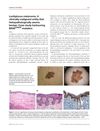
March 2015 in “Journal of the European Academy of Dermatology and Venereology” A clinically suspected melanoma appeared benign under the microscope but was confirmed by specific tests and a rare mutation.
3 citations
,
March 2023 in “bioRxiv (Cold Spring Harbor Laboratory)” Neurospectrum effectively analyzes neural signals to predict and identify brain activity patterns better than traditional methods.
28 citations
,
May 2000 in “Proceedings of the National Academy of Sciences” The Walleye dermal sarcoma virus cyclin causes excessive skin cell growth in mice.
1 citations
,
July 2018 in “Dermatologic Surgery” Different tumor cells in one basal cell carcinoma can cause mixed treatment responses, suggesting personalized treatment is needed.
11 citations
,
August 2023 in “Regenerative Therapy” SVF is safe and effective, but research quality is low; new guidelines are proposed to improve future studies.
108 citations
,
October 2005 in “Journal of Ultrasound in Medicine” Ultrasonography improves pilomatricoma diagnosis accuracy.
2 citations
,
July 2025 in “Analytical Chemistry” The method effectively images and correlates elements and metabolites in tissue samples at a micron scale.
2 citations
,
August 2002 in “British Journal of Ophthalmology” Tangent screens help detect visual field defects from vigabatrin.
2 citations
,
September 2019 in “Journal of the American Academy of Dermatology” USB videodermatoscopes are a practical and affordable alternative for diagnosing skin conditions.
 November 2022 in “bioRxiv (Cold Spring Harbor Laboratory)”
 Using deep learning to predict gene expression from images could help assess colorectal cancer metastasis.

The document concludes that the FOLLYSIS© system improves hair transplant processes and patient monitoring with high accuracy and less skin trauma.
30 citations
,
January 1997 in “ILAR Journal” The SAM model helps understand aging and related diseases.
August 2020 in “OPAL (Open@LaTrobe) (La Trobe University)”  April 2023 in “Journal of Investigative Dermatology”
 The AI model somewhat predicts lymph node status in melanoma patients using skin sample images.
SL-HyDE improves medical information retrieval accuracy without needing labeled data.
June 2007 in “Taiwan Journal of Ophthalmology” Young patients with Vogt-Koyanagi-Harada syndrome may have poor vision outcomes despite treatment due to frequent recurrences.