 13 citations
,
June 2020 in “Scientific reports”
13 citations
,
June 2020 in “Scientific reports” Melatonin stimulates the skin components of ram's scrotum during their non-breeding season.
 12 citations
,
January 2005 in “Pediatric Dermatology”
12 citations
,
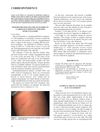
January 2005 in “Pediatric Dermatology” Fox Fordyce disease might be more common in prepubertal girls than thought and can be managed with treatment.
1 citations
,
December 2024 in “The Journal of Dermatology” The study developed mouse models to help research and treat hair and sweat gland issues.
133 citations
,
July 2020 in “Cells” Creating fully functional artificial skin for chronic wounds is still very challenging.
20 citations
,
November 2021 in “Frontiers in cell and developmental biology” Skin organoids from stem cells could better mimic real skin but face challenges.
15 citations
,
July 2024 in “Current Issues in Molecular Biology” Understanding molecular processes in skin development is key to creating targeted treatments for skin disorders.
 10 citations
,
September 2022 in “Advanced Healthcare Materials”
10 citations
,
September 2022 in “Advanced Healthcare Materials” Current methods can't fully recreate skin and its features, and more research is needed for clinical use.
7 citations
,
January 2020 in “Dermatology online journal” An adult with a rare skin condition improved with tazarotene treatment.
 March 2026 in “Dermatopathology”
 Different types of skin gland tumors have unique genetic traits, which can guide personalized treatments.
 January 2023 in “Burns & Trauma”
 The study concluded that the new wound model can be used to evaluate skin regeneration and nerve growth.
April 2021 in “Indian Journal of Animal Research” Goat skin has collagen, elastic, and reticular fibers, with hair follicles increasing in depth as goats age.
 November 2024 in “Burns & Trauma”
 Skin organoids help improve wound healing and tissue repair.
1 citations
,
February 2025 in “Journal of Anatomy” Gray short-tailed opossums' skin shifts from helping with breathing to regulating body temperature as they grow.
December 2014 in “Actas dermo-sifiliográficas/Actas dermo-sifiliográficas” Hair removal with intense pulsed light can cause rare skin lesions that are hard to fully treat.
7 citations
,
March 2020 in “Journal of King Saud University. Science/Maǧallaẗ ǧāmiʹaẗ al-malik Saʹūd. al-ʹUlūm” AiQingHua oil improves blood flow and promotes hair growth in mice.
2 citations
,
October 1992 in “PubMed” WHV infection does not affect woodchuck skin anatomy.
June 2023 in “International journal of molecular sciences” Heat stress changes goats' skin and hair at the microscopic level and affects their genes and skin bacteria.
2 citations
,
November 2022 in “Veterinary sciences” The interdigital gland of Vembur sheep shows sex-based differences in size and chemical makeup, possibly affecting communication and disease protection.
 April 2025 in “Ukrainian Journal of Veterinary and Agricultural Sciences”
 Adding a water-soluble fatty acid complex to sheep diets improves wool growth by increasing primary hair follicle size and density.
 18 citations
,
August 2018 in “The FASEB journal”
18 citations
,
August 2018 in “The FASEB journal” Rabbits lacking the Hoxc13 gene show similar hair and skin issues to humans with ECTD-9, making them good for research on this condition.
 September 2017 in “Journal of Investigative Dermatology”
 Aging causes sweat glands to shrink, leading to skin issues, and blue light can help hair grow.
 238 citations
,
July 2003 in “British Journal of Plastic Surgery”
238 citations
,
July 2003 in “British Journal of Plastic Surgery” Hidradenitis suppurativa, a chronic skin disease, can be managed with antibiotics, lifestyle changes, and in severe cases, surgery. Early diagnosis and careful planning are key, and laser treatment can be an efficient solution for mild to severe cases.
 82 citations
,
January 2000 in “Hormone Research in Paediatrics”
82 citations
,
January 2000 in “Hormone Research in Paediatrics” DHEA stimulates skin oil glands and could help postmenopausal women, with potential for acne and excessive hair growth treatments.
 96 citations
,
June 2017 in “Nature Communications”
96 citations
,
June 2017 in “Nature Communications” A WNT10A gene mutation leads to ectodermal dysplasia by disrupting cell growth and differentiation.
 53 citations
,
October 1984 in “Endocrine reviews”
53 citations
,
October 1984 in “Endocrine reviews” Excessive hair growth in women often has no known cause and is not linked to race or other hormonal symptoms.
16 citations
,
September 2019 in “Journal of biological chemistry/The Journal of biological chemistry” Mice without certain skin enzymes have faster hair growth and bigger eye glands.
 August 2018 in “Journal of The American Academy of Dermatology”
 A 16-year-old girl's skin rash was likely caused by an infection and improved with topical steroids.
 94 citations
,
August 1975 in “Journal of Cutaneous Pathology”
94 citations
,
August 1975 in “Journal of Cutaneous Pathology” Male pattern baldness involves smaller hair follicles, larger oil glands, and other tissue changes, but not major blood supply issues.
 10 citations
,
April 2017 in “PLoS ONE”
10 citations
,
April 2017 in “PLoS ONE” White rhinoceroses have a unique skin structure with thick epidermis and no hair or oil glands.
 3 citations
,
January 2010 in “Elsevier eBooks”
3 citations
,
January 2010 in “Elsevier eBooks” The document describes various skin conditions, their features, and treatments but lacks detailed study size information.