 April 2023 in “bioRxiv (Cold Spring Harbor Laboratory)”
 Sweat gland development involves two unique skin cell programs and a temporary skin environment.
Low vitamin D3 is not linked to different levels of thyroid hormones in people with autoimmune thyroid disease.
 January 2023 in “International journal of homoeopathic sciences”
 Homeopathy helped a 30-year-old man regrow his hair.
 January 2023 in “Acta historiae medicinae stomatologiae pharmaciae medicinae veterinariae”
 Stag parts were historically used in medicine for various health issues.
 January 2023 in “International journal of homoeopathic sciences”
 The document says homoeopathic treatments are good for hair regrowth in alopecia areata but doesn't give proof.
Lifestyle changes can improve skin health and reduce disease symptoms.
 January 2023 in “International Journal of Indian Medicine”
 Ayurveda offers holistic treatments for hair fall, including therapies and lifestyle changes.
 September 2022 in “Curēus”
 The removed ovarian tumor was a rare type of blood vessel tumor that improved the patient's symptoms and hormone levels after surgery.
 September 2022 in “bioRxiv (Cold Spring Harbor Laboratory)”
 A new staining method shows a special area in the hair's skin layer with lots of proteoglycans.
Clinical signs don't match inflammation levels in lichen planopilaris and frontal fibrosing alopecia.
 March 2022 in “Journal of Clinical Case Studies Reviews & Reports”
 COVID-19 can cause or worsen skin conditions and might show early signs of infection.
 January 2022 in “International journal of research in medical sciences and technology”
 Ayurveda offers a safer and effective way to manage Seborrheic dermatitis without severe side effects.
 January 2022 in “International Journal of Biology Pharmacy and Allied Sciences”
 Autoimmune diseases cause the immune system to attack the body, and management varies as some are curable and others are not.
 December 2021 in “International Journal of Biology Pharmacy and Allied Sciences”
 Autoimmune diseases cause the immune system to attack the body, and management varies as some are curable and others are not.
 December 2021 in “International Journal of Science and Research (IJSR)”
 Ayurveda links hair loss to imbalances in body energies, offering insights beyond modern treatments.
 September 2021 in “International Ayurvedic Medical Journal”
 Bhringraj capsule and oil with Nasya effectively reduce hair fall and related symptoms.
The guide suggests using keratin fibers and wigs to help hair look thicker or hide hair loss.
 February 2021 in “PDEAS International Journal of Research in Ayurved and Allied Sciences”
 Ayurveda views hair health as a reflection of overall well-being and uses herbal treatments for hair care.
 April 2020 in “International journal of research in dermatology”
 An 8-year-old girl has a rare, irreversible hair loss condition caused by a genetic mutation.
 January 2020 in “Revista da Sociedade Portuguesa de Dermatologia e Venereologia”
 Frontal fibrosing alopecia in Brazil mostly affects postmenopausal women, often linked with hypothyroidism and eyebrow hair loss.
 October 2018 in “Ayurlog: national journal of research in ayurveda science”
 The review suggests that lifestyle, diet, and environment affect hair loss, and Ayurveda offers ways to maintain hair health.
The combination therapy effectively improved acne keloidalis nuchae.
 March 2017 in “Trichology and cosmetology:”
 Cosmetic procedures can improve skin appearance and boost confidence.
 January 2017 in “Nasza Dermatologia Online”
 Both treatments helped hair regrowth in alopecia areata, with isopropanol being better tolerated.
Cosmetics can help with mild skin problems and daily care but must be used carefully to avoid skin irritation.
 December 2016 in “John Wiley & Sons, Ltd eBooks”
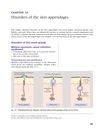
 The document concludes that proper recognition and treatment of skin appendage disorders are important for management.
 January 2016 in “Dermatology Review”
 Endocrine disorders can cause various skin and hair issues.
 May 2015 in “Journal of Dermatological Science”
 Researchers found a new area on chromosome 2 linked to a genetic hair loss condition.
 December 2014 in “Endocrinología y nutrición”
 The woman's rare combination of diseases suggests an unknown factor may predispose individuals to multiple endocrine diseases.
Skin changes throughout life, from development before birth to aging effects like wrinkles, influenced by both genetics and environment.