65 citations
,
September 2014 in “Orphanet Journal of Rare Diseases” Different STUB1 gene mutations cause varied symptoms in autosomal recessive ataxias.
5 citations
,
July 1999 in “Journal of Anatomy” Methylene blue staining effectively reveals detailed nerve structures in rat snouts.
 March 2024 in “Cancer Research”
 Eliminating senescent cells can prevent and reverse chemotherapy-induced peripheral neuropathy.
 June 2024 in “The American journal of psychiatry”
 Schizophrenia risk genes may affect early brain development, contributing to the disease.
13 citations
,
August 2020 in “Nutrients” Ginseng extracts protect brain cells and reduce damage in diabetic rats.
 3 citations
,
June 2015 in “Serbian Journal of Dermatology and Venereology”
3 citations
,
June 2015 in “Serbian Journal of Dermatology and Venereology” The conclusion is that cerebrovascular diseases can cause seizure-like activity in stroke patients, which can be improved with antiepileptic drugs.
2 citations
,
September 2017 in “Journal of Investigative Dermatology” Notch1 signaling is impaired in hidradenitis suppurativa, affecting skin and hair cells.
 286 citations
,
April 2009 in “The journal of neuroscience/The Journal of neuroscience”
286 citations
,
April 2009 in “The journal of neuroscience/The Journal of neuroscience” TRPA1 is crucial for mechanical sensitivity in skin sensory neurons.
 January 2005 in “Seibutsu Butsuri/Seibutsu butsuri”
 Chemical treatments damage hair more than UV exposure, making it thinner and less flexible.
7 citations
,
March 2024 in “Journal of Neuroendocrinology” Reduced neurosteroid production increases fear in mice, suggesting potential PTSD treatments.
December 2015 in “PLOS ONE” 14 citations
,
March 2014 in “Experimental and Molecular Pathology” Sulfur mustard damages hair follicles and sebaceous glands in mice.
 16 citations
,
March 2019 in “Experimental dermatology”
16 citations
,
March 2019 in “Experimental dermatology” Injury changes how hair follicle stem cells behave, depending on the hair growth stage.
 February 2024 in “International Journal of Dermatology”
 Cryptococcoid Sweet syndrome can be linked to hydralazine use and multiple autoantibodies, requiring high clinical suspicion and more research.
6 citations
,
April 2012 in “Muscle & nerve” Recognizing the link between certain autoimmune disorders and neurological conditions can improve diagnosis and treatment.
122 citations
,
June 1998 in “PubMed” Neurotrophins regulate nerve growth by balancing promotion and suppression.
 May 2026 in “The Journal of Headache and Pain”
 Inhibiting certain brain neurons may reduce pain and anxiety in trigeminal neuralgia.
April 2023 in “Journal of clinical and translational science” May 2021 in “The journal of investigative dermatology/Journal of investigative dermatology” Nicastrin deficiency may cause skin cell damage and pigmentation disorders in humans, similar to effects seen in fish.
10 citations
,
January 2020 in “Acta Neurobiologiae Experimentalis” Valproic acid and crocin together boost cell growth and may help treat nerve injuries.
 April 2024 in “Skin health and disease”
 Injecting fillers in the temple can cause serious complications, but the damage can be treated if managed properly.
 1 citations
,
August 2021 in “Movement disorders clinical practice”
1 citations
,
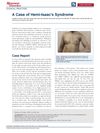
August 2021 in “Movement disorders clinical practice” A man with Isaac's syndrome affecting only one side of his body improved after immune system-targeted treatment.
March 2024 in “European Journal of Neuroscience” Dopaminergic neurons in the gut have diverse subtypes with different neurotransmitter contents.
 April 2024 in “BMB Reports”
 Lack of Cisd2 disrupts calcium balance in cells, leading to poorly functioning neutrophils.
January 2001 in “Zhongguo linchuang jiepouxue zazhi” Human hair keratin may help repair spinal cord injuries.
2 citations
,
April 2014 in “PubMed” Epidermal neural crest stem cells from hair follicles can help repair nerve injuries.
5 citations
,
July 1999 in “Journal of Anatomy” Methylene blue staining effectively highlights detailed nerve structures in rat fur.
 April 2023 in “The journal of investigative dermatology/Journal of investigative dermatology”
 The TRPV3 channel structure changes linked to severe itch and hyperkeratosis were identified using cryo-EM.
1 citations
,
June 2024 in “Skin Research and Technology” Human dermal fibroblast proteins help restore nerves during healing.
 February 2011 in “Journal of Clinical Investigation”
 Genetically repaired stem cells may treat certain genetic diseases, Th17 cells are key in fighting systemic fungal infections, hair loss in AGA is due to progenitor cell loss, and α-synuclein transfer might contribute to Parkinson's disease progression.