 July 2016 in “American Journal of Dermatopathology”
 The meeting showcased rare skin disease cases, highlighting the need for accurate diagnosis and treatment.
 May 2009 in “The American Journal of Dermatopathology”
 Mast cells play a significant role in hair loss conditions like male pattern hair loss and alopecia areata.
 March 1998 in “Journal of dermatological science”
 Diphencyprone initially increases mouse hair growth, then slows it, possibly due to changes in specific protein levels.
 October 1961 in “Archives of Dermatology”
 Reassurance is important for postpartum hair shedding as it likely won't cause complete baldness.
36 citations
,
January 1994 in “Cell and Tissue Research”  3 citations
,
January 2022 in “Medical Mycology Journal”
3 citations
,
January 2022 in “Medical Mycology Journal” Malassezia fungi in healthy noses can form a "spaghetti-and-meatballs" structure.
Two new mite species were found in a monkey's hair follicles, leading to a new genus and family proposal.
 September 2017 in “Journal of Investigative Dermatology”
 The study found that sweat glands normally suppress immune responses, but this is disrupted in certain skin diseases, possibly contributing to their development.
2 citations
,
June 2012 in “American Journal of Dermatopathology” A rare neck cyst in a 47-year-old man showed diverse skin cell types and was not linked to HPV.
4 citations
,
October 2001 in “Mycoses” A young cat had a rare fungal infection caused by Microsporum gypseum.
57 citations
,
February 2006 in “Journal of Investigative Dermatology” Cylindromas likely originate from hair follicle stem cells, not sweat glands.
December 2022 in “Laboratory Animal Research” Trichoblastomas in aged house musk shrews show unique features and may involve serum amyloid A in inflammation.
October 2023 in “Clinical and Experimental Dermatology” Syphilitic alopecia can look like alopecia areata, so careful diagnosis is important.
2 citations
,
May 2011 in “International Journal of Dermatology” A 12-year-old boy in rural south India had a rare skin condition causing hair loss and inability to sweat.
 22 citations
,
December 2003 in “Veterinary clinical pathology”
22 citations
,
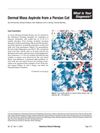
December 2003 in “Veterinary clinical pathology” The Persian cat has a skin infection caused by a fungus, treatable with antifungal medication.
January 2005 in “Journal of Cutaneous Pathology” A unique type of complex cyst was found on a man's scrotum.
 April 2018 in “The journal of investigative dermatology/Journal of investigative dermatology”
 Samcyprone ointment is effective for treating common warts if a sensitization reaction occurs first.
18 citations
,
June 2014 in “Anais Brasileiros de Dermatologia” Clouston Syndrome can be linked to rare sweat gland tumors.
21 citations
,
August 2002 in “British Journal of Ophthalmology” Intralesional cidofovir may be a viable alternative treatment for SCC.
2 citations
,
October 2001 in “Mycoses” A cat had a rare fungal infection caused by Microsporum gypseum.
January 1994 in “Memorial University Research Repository (Memorial University)” Oleosomes help cell growth in Sesbania rostrata nodules but don't aid nitrogen fixation.
December 2024 in “Veterinary Dermatology” A sugar glider had a rare skin cancer that worsened despite treatment, highlighting the need for thorough checks in exotic pets.
2 citations
,
October 1931 in “Archives of Dermatology and Syphilology” A rare scalp infection in a child developed into a kerion with additional skin symptoms.
2 citations
,
August 2014 in “Journal of the American Academy of Dermatology” A rare case of scleredema in a diabetic woman showed loss of sweat glands, causing heat strokes, with treatment only slightly improving symptoms.
 February 2025 in “Veterinary Clinical Pathology”
 The ferret had a malignant apocrine gland tumor and did not survive surgery.
January 2025 in “NATIONAL BOARD OF EXAMINATIONS JOURNAL OF MEDICAL SCIENCES” Dermoscopy is useful for accurately diagnosing syphilitic alopecia.
4 citations
,
August 2002 in “British Journal of Ophthalmology” Surgical excision is the best treatment for SCC.
 August 2018 in “Journal of The American Academy of Dermatology”
 A 54-year-old man with painful skin blisters and fever was diagnosed with Sweet syndrome and successfully treated with corticosteroids.
4 citations
,
January 2011 Phenylpropanoid sucrose esters show potential as anticancer agents.
September 2020 in “Advances in anatomic pathology” A woman's large nose growth was initially misdiagnosed, but later confirmed to be giant rhinophyma after full removal and examination.