 October 2008 in “Australasian Journal of Dermatology”
 Medical practitioners need to understand basic statistics to properly evaluate clinical trials and avoid unethical designs.
 7 citations
,
January 2016 in “Laboratory Investigation”
7 citations
,
January 2016 in “Laboratory Investigation” TR3 is mainly found in hair follicle stem cells and may be involved in hair loss.

Ovol2 is crucial for hair growth and skin healing by controlling cell movement and growth.
 11 citations
,
March 2014 in “Journal of Investigative Dermatology”
11 citations
,
March 2014 in “Journal of Investigative Dermatology” Genetic mutation and carcinogen treatment are both needed for skin cancer to develop in these specific mice.
 8 citations
,
January 2016 in “Annals of Dermatology”
8 citations
,
January 2016 in “Annals of Dermatology” A complex of 5-aminolevulinic acid and glycyl-histidyl-lysine peptide may help increase hair count in male pattern hair loss without side effects.
 December 2025 in “Italian Journal of Anatomy and Embryology”
 Understanding embryologic layers improves skin disorder diagnosis and supports developing targeted therapies.
 September 2025 in “Archives of Dermatological Research”
 Basal cell carcinoma is more common than squamous cell carcinoma on the scalp, especially along the part line.
 June 2008 in “British Journal of Dermatology”
 Herpes gestationis is linked to certain antigens, atopic eczema affects T cell populations and may be eased by breastfeeding, higher doses of anti-androgen treatment can improve androgenic alopecia, topical minoxidil increases hair thickness, long-term methotrexate therapy can cause liver fibrosis in psoriasis patients, and Lichen Sclerosus et Atrophicus patients aren't at higher risk for autoimmune disorders.
 192 citations
,
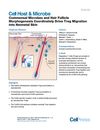
March 2017 in “Cell host & microbe”
192 citations
,
March 2017 in “Cell host & microbe” Hair follicle development and microbes help regulatory T cells gather in newborn skin.
43 citations
,
October 2006 in “Journal of Cell Science” Keratin 10 end domains may increase skin cancer risk by reducing cell death.
 December 2024 in “Cell Communication and Signaling”
 Fat tissue vesicles protect skin from UV damage better than stem cell vesicles.
 January 2019 in “Georg Thieme Verlag eBooks”
 Platelet-Rich Plasma (PRP) therapy can effectively treat various hair loss conditions, improve hair count, thickness, and density, and potentially speed up results when combined with surgical techniques.
4 citations
,
May 2023 in “Cells” Baricitinib and its combination with lonafarnib improve fat cell formation in certain genetic disorders.
 1 citations
,
March 2023 in “International Journal of Trichology”
1 citations
,
March 2023 in “International Journal of Trichology” Platelet-rich plasma didn't increase hair length but may help keep hair follicles alive.
 February 2025 in “International Journal of Molecular Sciences”
 RIPK1 inhibitors may help prevent alopecia areata by reducing immune cell activity.
21 citations
,
December 2005 in “The journal of investigative dermatology/Journal of investigative dermatology” T-cells in alopecia areata scalp show abnormal regulation, leading to less inflammation.
 14 citations
,
January 2016 in “Experimental Dermatology”
14 citations
,
January 2016 in “Experimental Dermatology” Hair regrowth doesn't convert thin hairs to thick hairs, but increases overall hair density.
10 citations
,
April 2020 in “Journal of Mind and Medical Sciences” Excimer laser therapy can be an alternative for treating superficial morphea when topical steroids don't work.
3 citations
,
July 2023 in “International journal of molecular sciences” Stress may contribute to hair loss in alopecia areata by affecting immune responses and cell death in hair follicles.
3 citations
,
January 2021 in “Journal of dermatology & cosmetology” Current alopecia treatments manage symptoms but don't cure, and better treatments are needed.
July 2025 in “Microscopy and Microanalysis” Intermittent compression therapy is safe and doesn't harm tissue.
May 2025 in “International Journal of Women’s Dermatology” 5-alpha reductase inhibitors and spironolactone don't increase gynecological tumor risk, glucagon-like-peptide-1 receptor agonists may increase alopecia risk, sanitary pads can cause dermatitis, early hidradenitis suppurativa intervention is crucial for Hispanic patients, community education boosts skin cancer awareness, metformin may improve skin cancer survival, LNG-IUDs can increase acne risk, machine learning accurately detects basal cell carcinoma, JAK-inhibitors may raise miscarriage risk, inclusive skincare ads affect those with darker skin, and CCCA in Black women might involve autoimmunity.
55 citations
,
October 2019 in “The journal of allergy and clinical immunology/Journal of allergy and clinical immunology/The journal of allergy and clinical immunology” The review suggests that other immune cells besides CD8+ T cells may contribute to alopecia areata and that targeting regulatory cell defects could improve treatment.
24 citations
,
March 2022 in “Genome biology” scINSIGHT accurately identifies cell clusters and gene patterns in complex data.

A stable sheep ovarian cell line was created for studying reproduction and hormones.
17 citations
,
May 2019 in “Molecules” These temporary hair dyes may be harmful to human health.
 January 2025 in “PLoS ONE”
 ING5 is crucial for stem cell maintenance and preventing certain cancers.
 May 2023 in “BMC Women's Health”
 Many women who have used performance-enhancing drugs in Finland show high rates of mental health and substance use issues, and most have normal red blood cell counts.
 1 citations
,
January 2015 in “Side effects of drugs annual”
1 citations
,
January 2015 in “Side effects of drugs annual” The document concludes that various dermatological treatments and drugs can cause skin reactions and side effects.
 32 citations
,
April 2017 in “Scientific Reports”
32 citations
,
April 2017 in “Scientific Reports” Platelet-rich plasma can help grow more mouse hair follicles, but it doesn't work for human hair follicles yet.