35 citations
,
October 2021 in “Journal of the European Academy of Dermatology and Venereology” COVID-19 vaccination may trigger recurrence of cutaneous T-cell lymphoma in some patients.
July 2024 in “Journal of Investigative Dermatology” Targeting TCR-Vβ2 in cutaneous T cell lymphoma shows promise for safer, more specific treatment.
245 citations
,
October 2015 in “Nature medicine” Hair follicle-derived IL-7 and IL-15 are crucial for maintaining skin-resident memory T cells and could be targeted for treating skin diseases and lymphoma.
 209 citations
,
March 1989 in “Journal of The American Academy of Dermatology”
209 citations
,
March 1989 in “Journal of The American Academy of Dermatology” Interferon alfa-2a is effective for treating cutaneous T cell lymphoma but has significant side effects.
 107 citations
,
December 2003 in “Dermatologic Therapy”
107 citations
,
December 2003 in “Dermatologic Therapy” Interferon, especially alfa interferon, is an effective treatment for cutaneous T-cell lymphoma with manageable side effects.
 39 citations
,
May 2004 in “Clinics in Dermatology”
39 citations
,
May 2004 in “Clinics in Dermatology” The document concludes that treatment for cutaneous T-cell lymphoma should be customized to each patient's disease stage, balancing benefits and side effects, with no cure but many patients living long lives.
28 citations
,
September 2014 in “Journal of Veterinary Internal Medicine” VDC-1101 shows potential as a treatment for canine cutaneous T-cell lymphoma.
 15 citations
,
January 2014 in “Dermatology”
15 citations
,
January 2014 in “Dermatology” Some patients with a type of skin lymphoma can experience a rare, non-scarring hair loss that looks like another hair loss condition but has distinct features.
 11 citations
,
October 2001 in “Dermatologic Clinics”
11 citations
,
October 2001 in “Dermatologic Clinics” The document concludes that DAB389-IL2 is promising for treating refractory cutaneous T-cell lymphoma, but more research is needed on its effectiveness and side effect management.
 9 citations
,
October 2008 in “British Journal of Dermatology”
9 citations
,
October 2008 in “British Journal of Dermatology” The growth of the Epstein-Barr virus in the patient's cells was linked to the worsening of her lymphoma.
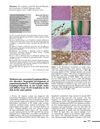 6 citations
,
July 2015 in “European Journal of Dermatology”
6 citations
,
July 2015 in “European Journal of Dermatology” Stopping methotrexate might reverse lymphoma-like conditions in some patients.
2 citations
,
September 2017 in “Journal of Zoo and Wildlife Medicine” An addax had skin cancer that spread to lymph nodes and was euthanized.
July 2025 in “Journal of Investigative Dermatology” Three molecular subtypes of advanced skin T-cell lymphoma were identified, with potential biomarkers for predicting treatment response and disease progression.
April 2025 in “The Journal of Dermatology” Janus kinase inhibitors may help treat cutaneous T-cell lymphoma, but more research is needed.
September 2024 in “Journal of the American Academy of Dermatology” Lighter skin types respond better to narrowband UVB therapy for cutaneous T-cell lymphoma than darker skin types.
September 2021 in “Journal of the American Academy of Dermatology” CTCL patients can safely continue treatment during COVID-19 with proper safety measures.
5 citations
,
June 2015 in “The Journal of Dermatology” HTLV-1-associated lichenoid dermatitis (HALD) is linked to an immune response against HTLV-1-infected cells.
23 citations
,
February 2003 in “British Journal of Dermatology” A rare type of skin lymphoma was identified, affecting hair follicles and sweat glands.
 6 citations
,
July 2009 in “Veterinary dermatology”
6 citations
,
July 2009 in “Veterinary dermatology” Vesiculobullous lesions should be considered part of canine cutaneous epitheliotropic T-cell lymphoma.
December 2024 in “Veterinary Dermatology” A sugar glider had a rare skin cancer that worsened despite treatment, highlighting the need for thorough checks in exotic pets.
October 2021 in “European journal of cancer” Repeated biopsies are crucial for managing lupus panniculitis when initial treatments fail.
February 2020 in “Central Plains Medical Journal” Thalidomide with CHOP is more effective for peripheral T-cell lymphoma than CHOP alone.
3 citations
,
September 2016 in “The Journal of Dermatology” A patient with leukemia/lymphoma also had multiple autoimmune diseases, suggesting a link between them.
Deleting the MAD2L1 gene is tolerated in certain mouse cancer models.
Deleting the MAD2L1 gene in mice led to rapid tumor growth despite chromosomal instability.
6 citations
,
May 2013 in “The Journal of Dermatology” Autoimmune reactions may cause both alopecia areata and HAM.
Scalp involvement in primary cutaneous lymphomas is common and can be aggressive, requiring careful attention.
 April 2023 in “The journal of investigative dermatology/Journal of investigative dermatology”
 Folliculotropic mycosis fungoides has unique molecular features and cell interactions that could guide targeted therapy.
14 citations
,
July 2004 in “Australasian Journal of Dermatology” Follicular mycosis fungoides can look like a B-cell lymphoma, making diagnosis difficult.
April 2018 in “Veterinary Pathology” Tigers had a skin condition causing hair loss and inflammation, but the cause is unknown and treatment didn't work.