 6 citations
,
June 2008 in “Journal of the European Academy of Dermatology and Venereology”
6 citations
,
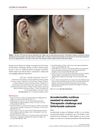
June 2008 in “Journal of the European Academy of Dermatology and Venereology” A man with Acrodermatitis continua did not get better with etanercept treatment, and his condition worsened, suggesting treatment effectiveness may vary by genetics and race.
3 citations
,
January 2023 in “Indian Dermatology Online Journal” COVID-19 vaccines can cause mild to moderate skin reactions, mostly after the first dose.
September 2023 in “Journal of the American Academy of Dermatology” Increased Treg cells and IL-10 may help quick recovery in acute diffuse and total alopecia.
 16 citations
,
January 2017 in “Acta dermatovenerologica Alpina, Pannonica et Adriatica (Tiskana izd.)”
16 citations
,
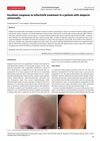
January 2017 in “Acta dermatovenerologica Alpina, Pannonica et Adriatica (Tiskana izd.)” A patient with complete hair loss regrew all her hair using tofacitinib.
 82 citations
,
September 2011 in “Quality of Life Research”
82 citations
,
September 2011 in “Quality of Life Research” Choosing the right recall period for patient feedback is important for accurate data and depends on the disease, symptom changes, and patient impact.
 45 citations
,
October 2009 in “Dermatology”
45 citations
,
October 2009 in “Dermatology” Half of the patients treated with a specific drug for skin cancer experienced hair loss not related to the drug's dosage.
52 citations
,
May 2009 in “Human & experimental toxicology” Hair loss and polyneuropathy improved, but severe vision impairment persisted.
Using regulatory T cells and Rapamycin together improves chronic graft-versus-host disease treatment outcomes in mice.
July 2024 in “Journal of Investigative Dermatology” Expanding regulatory T cells may help treat alopecia areata by reducing harmful immune cells.
 37 citations
,
October 2017 in “Clinical and Experimental Dermatology”
37 citations
,
October 2017 in “Clinical and Experimental Dermatology” Oral tofacitinib shows promise in treating atopic dermatitis and alopecia areata, but only slight improvement in vitiligo.
 May 2025 in “Life Studies”
 Lung cancer patients on immunotherapy and chemotherapy often experience severe fatigue, drowsiness, and appetite loss.
 March 2025 in “Indian Journal of Dermatology Venereology and Leprology”
 Tofacitinib is effective for treating alopecia totalis and universalis, with some patients experiencing significant hair regrowth.
 April 2023 in “Journal of Investigative Dermatology”
 Cyclosporin A, a drug, reduces TGF-β2 expression in skin cells, potentially causing excessive hair growth through a process involving the calcineurin/NFAT pathway.
9 citations
,
April 2023 in “Experimental Dermatology” Allergen desensitization reduces hair loss severity in dust-mite allergic alopecia areata patients.
 23 citations
,
January 2012 in “International Food Research Journal”
23 citations
,
January 2012 in “International Food Research Journal” Tofacitinib effectively treated a woman's severe symptoms from a rare autoimmune condition.
2 citations
,
June 2025 in “Journal of Investigative Dermatology” CD8+ T cells re-expressing CD45RA may predict treatment resistance in severe alopecia areata.
60 citations
,
August 2022 in “ESMO Open” Trastuzumab deruxtecan is effective for HER2-positive breast cancer but requires careful management of side effects.
 139 citations
,
November 2016 in “Journal of the American Academy of Dermatology”
139 citations
,
November 2016 in “Journal of the American Academy of Dermatology” Tofacitinib helped regrow hair in most adolescents with alopecia areata, but more research is needed.

COVID-19 can trigger a relapsing form of hair loss, requiring long-term treatment strategies.
 April 2026 in “Zenodo (CERN European Organization for Nuclear Research)”
 Post-exposure syndromes are persistent conditions caused by past exposures, needing unique interventions.
12 citations
,
July 2016 in “Journal of dermatology” Intramuscular triamcinolone acetonide is an effective treatment for severe alopecia areata, especially in males.
May 2025 in “Hormone Research in Paediatrics” Persistent hyperparathyroidism doesn't stop rickets healing or phosphate level normalization in VDDR2A.
 13 citations
,
May 1993 in “International Journal of Dermatology”
13 citations
,
May 1993 in “International Journal of Dermatology” The paper suggests that telogen effluvium, a type of hair loss, may be a long-lasting condition triggered by stress or illness in people whose hair growth is unusually synchronized.

Tofacitinib may effectively treat hair loss and improve symptoms in autoimmune conditions like alopecia areata and Sjögren's syndrome, but long-term treatment might be necessary.
Hair loss can happen after severe H1N1 flu but usually grows back in 4 months.
March 2026 in “Journal of Epidemiology & Community Health” Long-COVID symptoms like fatigue, cognitive issues, and mobility problems can last 6-12 months but are less common after milder illness.
 January 2024 in “Skin Research and Technology”
 Oral tofacitinib may be an effective future treatment for children with severe alopecia areata, but more research is needed.
 20 citations
,
October 2003 in “The Journal of Dermatology”
20 citations
,
October 2003 in “The Journal of Dermatology” DCP therapy causes side effects like weakness, flushing, headaches, and taste changes, but less frequently causes hypertension and diabetes.
 26 citations
,
July 2019 in “JAAD Case Reports”
26 citations
,
July 2019 in “JAAD Case Reports” Dupilumab for atopic dermatitis may cause new or worsen existing alopecia areata.
 64 citations
,
November 2008 in “Journal of The American Academy of Dermatology”
64 citations
,
November 2008 in “Journal of The American Academy of Dermatology” A new type of rapid hair loss called ADTA usually gets better on its own within 6 months.