27 citations
,
March 2006 in “Dermatologic surgery” Medical tattooing is a widely accepted, easy, and permanent treatment with few side effects but carries an infection risk without proper sterilization.
 February 2025 in “JAAD International”
 Five monthly sessions of minoxidil-dutasteride-copper peptide tattooing significantly improve hair regrowth in men with androgenetic alopecia.
August 2021 in “Journal of Investigative Dermatology” The technique effectively promotes hair growth in young men with androgenetic alopecia.
 May 2023 in “JAAD international”
 Minoxidil-dutasteride tattooing can potentially help regrow hair, especially in men who already have some thin hair.
September 2018 in “Dermatologic Surgery” 48 citations
,
March 1997 in “Seminars in Cutaneous Medicine and Surgery” Vitiligo causes white skin patches but can be treated in many ways.
 January 2015 in “Journal of cosmetology & trichology”
 Mesotherapy might help make eyebrows thicker and darker for some people.
71 citations
,
December 2013 in “The journal of investigative dermatology. Symposium proceedings/The Journal of investigative dermatology symposium proceedings” There are no FDA-approved treatments for Alopecia Areata, and current options have varying success and relapse rates.
36 citations
,
August 2012 in “Dermatology online journal” Using wigs, hairpieces, and sprays can help people with hair loss feel better about themselves.
1 citations
,
September 2019 in “Hair transplant forum international” The laser-based microjet injector delivers tattoo pigment accurately with less tissue damage.
November 2025 in “Universal library of medical and health sciences.” Permanent eyebrow correction can improve quality of life for those with eyebrow loss.
July 2021 in “CRC Press eBooks” Healthy scalp is crucial for hair growth and preventing hair loss.
 November 2019 in “Quality in primary care”
 Scalp micropigmentation is a tattooing method that can mimic a full head of hair without surgery and has no healing time.
 May 2023 in “Elsevier eBooks”
 Scalp micropigmentation is a safe way to hide hair loss and scalp scars by tattooing tiny dots that look like hair follicles.
 1 citations
,
May 2016 in “Dermatologic Surgery”
1 citations
,
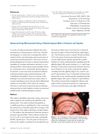
May 2016 in “Dermatologic Surgery” The document concludes that using a phototrichogram with a protractor and tapeline is a reliable and noninvasive way to measure hair loss.
October 2024 in “Věda a perspektivy” Permanent makeup improves appearance and boosts confidence for people with cleft lip.
 1 citations
,
November 2020 in “Journal of Cosmetic Dermatology”
1 citations
,
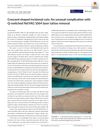
November 2020 in “Journal of Cosmetic Dermatology” A man got unusual crescent-shaped cuts from a laser tattoo removal due to a laser technical issue, but healed without scars.
 May 2017 in “Journal of The American Academy of Dermatology”
 Combining microneedling with Q-switched laser treatment for tattoo removal did not improve results and caused more pain.
 8 citations
,
January 1989 in “Journal of The American Academy of Dermatology”
8 citations
,
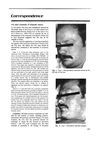
January 1989 in “Journal of The American Academy of Dermatology” CO2 laser treatment successfully removed traumatic tattoos with minimal scarring.
1 citations
,
April 2018 in “Dermatologic Surgery” January 2019 in “Dermatologic Surgery”  19 citations
,
March 2019 in “International Journal of Dermatology”
19 citations
,
March 2019 in “International Journal of Dermatology” The tattoo machine method safely delivers an average of 1,175 µg/cm² of medication into the skin.
 March 2026 in “Portuguese Journal of Dermatology and Venereology”
 Avoid hair dye after microneedling to prevent scalp pigmentation.
 January 2026 in “International Society of Hair Restoration Surgery”
 Tattoo machine-assisted drug delivery may improve hair growth in androgenetic alopecia.
 June 2011 in “International Journal of Dermatology”
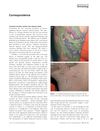
 A man's red tattoo caused a skin reaction and hair loss in his beard, which improved after treatment.
 November 2025 in “Dermatology Reports”
 Microinfusion using tattoo devices effectively treats hair loss and skin conditions with minimal side effects.
1 citations
,
January 1996 in “Aesthetic Plastic Surgery” The tumescent technique makes hair micrografting more comfortable and efficient.
September 2025 in “Наукові інновації та передові технології”  17 citations
,
January 1996 in “Aesthetic Plastic Surgery”
17 citations
,
January 1996 in “Aesthetic Plastic Surgery” The tumescent technique improves hair micrografting by providing lasting anesthesia, reducing bleeding, and increasing patient comfort.
2 citations
,
May 2018 in “Dermatologic Surgery”