 6 citations
,
October 2016 in “Journal of Cellular Physiology”
6 citations
,
October 2016 in “Journal of Cellular Physiology” Human dermal fibroblasts help microvascular endothelial cells grow, but not vice versa.
 1 citations
,
January 2022 in “Cell Biology International”
1 citations
,
January 2022 in “Cell Biology International” Changing CDK4 levels affects the number of stem cells in mouse hair follicles.
 August 2026 in “Bone and Joint Research”
 TTT speeds up diabetic wound healing by mobilizing specific immune cells.
3 citations
,
August 2022 in “International Journal of Molecular Sciences” TSC2-/meth cells can cause skin lesions, hair growth, and lung issues, and may be treated with chromatin remodeling agents.
57 citations
,
July 2000 in “Toxicology Letters” K6/ODC transgenic mice are effective for quickly identifying cancer-causing chemicals.
March 2026 in “Bioengineering & Translational Medicine” PEGylated thymosin β4 shows promise for treating heart attacks effectively.
37 citations
,
December 1995 in “Journal of Cell Science” Nexin 1 may help control hair growth.
2 citations
,
March 2010 in “Acta Biochimica Polonica” Raltitrexed conjugates are less potent than the free drug but more effective at high concentrations.
44 citations
,
January 2017 in “Journal of Investigative Dermatology” Mutations in the KLHL24 gene cause skin blistering in epidermolysis bullosa simplex.
 July 2022 in “The journal of investigative dermatology/Journal of investigative dermatology”
 The early genes of a specific virus can cause abnormal skin cell growth and hair follicle changes.
April 2010 in “The FASEB Journal” Knockout mice showed anemia and hair loss, suggesting other ways exist for iron absorption.
 14 citations
,
September 2018 in “Asian-Australasian Journal of Animal Sciences”
14 citations
,
September 2018 in “Asian-Australasian Journal of Animal Sciences” Rex rabbits' hair follicles develop dynamically in the first 8 weeks, with key genes and proteins changing over time.
 243 citations
,
October 2003 in “Developmental biology”
243 citations
,
October 2003 in “Developmental biology” Ectodin integrates BMP, SHH, and FGF signals in developing ectodermal organs.
August 2025 in “BMC Genomics” Certain genes contribute to stronger hooves in barefoot racing horses.
42 citations
,
June 2002 in “Molecular and Cellular Biology” Keratinocyte gene expression is controlled by multiple modules with specific binding sites.
 November 2022 in “Journal of Investigative Dermatology”
 Low oxygen levels affect the behavior of certain proteins in human skin cells.
May 2014 in “The journal of immunology/The Journal of immunology” Early over-expression of FoxN1 harms immune and skin development.
2 citations
,
September 2024 in “PLoS ONE” Bendamustine combined with tucidinostat may effectively treat adult T-cell leukemia.
Loss of the p53 gene alone causes tumors, and losing both p53 and Rb genes speeds up aggressive skin cancer.
34 citations
,
April 1982 in “BMJ”  April 2023 in “The journal of investigative dermatology/Journal of investigative dermatology”
 Blocking a key energy pathway in human hair follicles can trigger stress responses that stop cell growth.
 November 2023 in “Nature Communications”
 Cells lacking the Bax protein can outcompete others, leading to better tissue repair and hair growth.
36 citations
,
September 1999 in “Journal of Cell Science” Basonuclin may help control ribosomal RNA gene activity in skin cells.
62 citations
,
July 2022 in “Science Immunology” TREM2 macrophages and unsaturated lipids contribute to acne inflammation.
September 2019 in “The journal of investigative dermatology/Journal of investigative dermatology” New RIPK4 gene mutations were found to cause a type of skin and limb birth defect.
November 2006 in “評価・診断に関するシンポジウム講演論文集” KSR1 is crucial for certain skin tumor formation and could be a cancer therapy target.
November 2013 in “Faculty Opinions – Post-Publication Peer Review of the Biomedical Literature” Keratin 79 cells help form and regenerate hair canals.
 97 citations
,
March 2002 in “Molecular and cellular biology”
97 citations
,
March 2002 in “Molecular and cellular biology” Mutant CDP/Cux protein causes hair defects and reduced male fertility in mice.
 2 citations
,
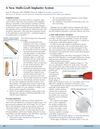
May 2018 in “International Society of Hair Restoration Surgery”
2 citations
,
May 2018 in “International Society of Hair Restoration Surgery” The new system makes hair transplants faster and more precise.
 February 2024 in “Planta”
 TRM21 helps control flavonoid production and root hair growth in Arabidopsis thaliana.