 July 2025 in “Pakistan Journal of Intensive Care Medicine”
 Clobetasol propionate 0.05% ointment is more effective than tacrolimus 0.1% ointment for treating alopecia areata.
 April 2025 in “Otorhinolaryngology Clinics - An International Journal”
 Histopathological examination is crucial to avoid misdiagnosis and ensure proper treatment for skin lesions.
 January 2025 in “Bright Sky Publications eBooks”
 Aesthetic medicine is rapidly advancing with new technologies for safer, personalized, and less invasive treatments.
 January 2025 in “Scripta Medica”
 PDO, PLLA, and PCL threads increase collagen in ageing skin but don't change MMP1 gene expression.
 September 2023 in “Clinical, cosmetic and investigational dermatology”
 A patient with a rare form of lupus improved after treatment for skin ulcers and hair loss on the face and scalp.
 July 2023 in “Dermatology practical & conceptual”
 Some lung cancer patients treated with EGFR inhibitors may develop a hair loss condition similar to folliculitis decalvans.
 February 2023 in “Cosmoderma”
 Combining red LED therapy with beta-carotene is more effective for treating photoaging than red LED therapy alone.
 January 2023 in “Frontiers in bioscience”
 Artemis protein may help control hair growth and health by influencing cell processes.
 April 2022 in “Research Square (Research Square)”
 The combination of laser and topical steroids is more effective for treating alopecia areata than topical steroids alone.
 November 2021 in “Chattagram Maa-O-Shishu Hospital Medical College Journal”
 Most patients with Cutaneous Lupus Erythematosus are young females, and dermatologists play a key role in diagnosis.
 August 2018 in “Journal of The American Academy of Dermatology”
 Children with alopecia areata should only get thyroid screening if they have Down syndrome, a family history of thyroid disease, atopy, or signs of thyroid problems.
 August 2018 in “Journal of The American Academy of Dermatology”
 The study concluded that a new method can effectively assess scalp sun damage in balding men, which increases with age and sun exposure.
 August 2018 in “Journal of The American Academy of Dermatology”
 Older men's scalp damage increases with age and sun exposure, a baby girl in the Philippines has Schimmelpenning syndrome, and thyroid screening is advised for children with hair loss and certain risk factors.
 June 2017 in “Journal of evolution of medical and dental sciences”
 Most lupus patients in coastal Kerala had skin-specific lesions that could help diagnose the disease, and non-specific skin issues were linked to more severe, systemic lupus.
 April 2017 in “Australasian Journal of Dermatology”
 Most patients with Lichen planopilaris improved with acitretin, but treatments often didn't work well; preventing infection in skin surgery is important, and bupivacaine might be a better anesthetic.
 April 2017 in “Our Dermatology Online”
 Using cosmetics made elderly people feel more comfortable and attractive.
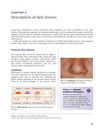
The document explains different types of skin lesions and their characteristics, causes, and related conditions.
 June 2016 in “Journal of Evolution of Medical and Dental Sciences”
 Young women with lupus often have oral ulcers.
 May 2013 in “Springer eBooks”
 Skin problems in the elderly are unique and may indicate other diseases, involving changes in skin, hair, nails, and increased cancer risk.
 December 2012 in “Drugs & Therapy Perspectives”
 Doctors use their experience to choose treatments for scarring hair loss because it's hard to diagnose and treat.
 March 2012 in “Pathy's Principles and Practice of Geriatric Medicine”
 Older adults often have skin problems due to aging, and treating these conditions requires attention to both physical and mental health.
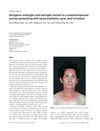 August 2009 in “International Journal of Dermatology”
 A postmenopausal woman's facial redness, acne, and excess hair were caused by too much hormone therapy for insomnia, but improved after stopping the treatment.
 February 2009 in “Journal of The American Academy of Dermatology”
 Fractional infrared technology is effective and safe for treating cervical laxity.
 February 2009 in “Journal of The American Academy of Dermatology”
 Fractional infrared technology is effective and safe for treating cervical laxity.
 February 2009 in “Journal of The American Academy of Dermatology”
 Fractional infrared technology is effective and safe for treating cervical laxity.
 February 2009 in “Journal of The American Academy of Dermatology”
 Pulsed dye laser treatment was effective for a skin condition resistant to other treatments.
 December 2004 in “Medicine”
 Pregnancy can cause skin changes and may affect pre-existing skin conditions, with some treatments not safe for use during pregnancy.
 September 1999 in “The Journal of The British Menopause Society”
 The document concludes that skin aging in women can be caused by UV exposure and hormonal changes, and treatments like hormone replacement therapy and various skin therapies can help.
 May 1991 in “Current problems in dermatology”
 Skin issues can indicate immune system problems.
 December 1989 in “The Journal of Dermatologic Surgery and Oncology”
 New techniques and findings in dermatologic surgery show improved pain management, safer liposuction, better hair transplantation, and effective treatments for skin conditions.