 March 2023 in “Journal of Cosmetic Dermatology”
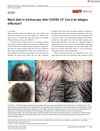
 Dilated scalp capillaries might be a sign of hair loss related to COVID-19.
November 2025 in “Emergency Medicine News” Use correct terms and show sensitivity to improve transgender care in emergency departments.
1 citations
,
February 2026 in “ACS Nano” The TLMG hydrogel improves wound healing and monitoring with strong adhesion and conductivity.
 4 citations
,
March 2021 in “International Journal of Dermatology”
4 citations
,
March 2021 in “International Journal of Dermatology” COVID-19 and related stress may increase hair loss known as Telogen effluvium.
Nurses play a crucial role in caring for hyperthyroid patients by managing symptoms and educating them and their families.
 September 2024 in “Journal of Health and Rehabilitation Research”
 COVID-19 is linked to temporary hair loss, especially in women.
April 2019 in “Journal of the Endocrine Society” Care for gender-dysphoric Veterans can be improved with a consistent, team-based approach.
 September 2022 in “Journal of The American Academy of Dermatology”
 A woman's COVID-19 related hair loss improved after using a specific hair care routine for 30 days.
 3 citations
,
December 1962 in “Australasian Journal of Dermatology”
3 citations
,
December 1962 in “Australasian Journal of Dermatology” The current state and future directions of the field that studies the connection between the mind and skin are discussed.
 1 citations
,
January 2022 in “MedieKultur: Journal of Media and Communication Research”
1 citations
,
January 2022 in “MedieKultur: Journal of Media and Communication Research” YouTube is changing the way health-related advice is shared, altering traditional roles of experts and patients.
 2 citations
,
August 2022 in “Clinical Case Reports”
2 citations
,
August 2022 in “Clinical Case Reports” A 17-year-old girl had severe, on-and-off hair loss, likely due to COVID-19. She was treated with Vitamin D3, biotin, and other supplements, and saw some improvement within a month.
1 citations
,
October 2025 in “Micromachines” Portable point-of-care testing can improve quick and accurate genetic disorder detection.
February 2024 in “Neurophotonics” Light therapy on the brain shows promise for treating brain diseases and improving brain function.
 February 2024 in “PubMed”
 More people experience hair loss after recovering from COVID-19 in hospitals than in outpatient settings.
14 citations
,
June 2020 in “Journal of the American Academy of Dermatology” Global collaboration in dermatology improved data sharing and patient care during COVID-19.
 2 citations
,
December 2022 in “Journal of the European Academy of Dermatology and Venereology”
2 citations
,
December 2022 in “Journal of the European Academy of Dermatology and Venereology” More people are seeing dermatologists for hair and scalp problems now than in the past.
 March 2024 in “Advancements in Homeopathic Research”
 Homoeopathy has helped treat hair loss after Covid-19, considering the patient's overall condition.
May 2024 in “International journal of medicine and psychology.” Transcranial electrical stimulation may help reduce certain immune markers in COVID-19 patients.
 September 2013 in “Hair transplant forum international”
 The conclusion cannot be provided because the document is not accessible.
 January 2025 in “Repository of the Academy's Library (Library of the Hungarian Academy of Sciences)”
 Robotic surgery improves patient safety and surgical quality.
September 2023 in “Journal of the American Academy of Dermatology”  December 2025 in “Aesthetic Cosmetology and Medicine”
 Personalized hair care is essential for healthy hair and scalp.
 November 2023 in “Italian journal of dermatology and venereology”
 Telogen effluvium is a common, often temporary hair loss caused by stress and other factors, and it's hard to pinpoint and treat.
 December 2025 in “Ekonomia/Acta Universitatis Wratislaviensis. Ekonomia”
 Elderly demand for hair care services is rapidly increasing.
 2 citations
,
July 2021 in “Dermatologic Therapy”
2 citations
,
July 2021 in “Dermatologic Therapy” A woman's hair loss after COVID-19 was likely due to a mix of pressure-induced alopecia and acute telogen effluvium.
 1 citations
,
January 2018 in “Indian journal of dermatopathology and diagnostic dermatology”
1 citations
,
January 2018 in “Indian journal of dermatopathology and diagnostic dermatology” Trichoscopy helps diagnose and monitor hair and scalp problems without needing many biopsies.
 October 2022 in “Respiratory Medicine”
 Patients treated in Respiratory Intensive Care Units for COVID-19 are more likely to get mood disorders than those in other care settings.
 8 citations
,
November 2020 in “Optics and Laser Technology”
8 citations
,
November 2020 in “Optics and Laser Technology” LED light therapy is effective for skin and hair treatments but requires careful use to minimize risks.
February 2016 in “PubMed” Properly administered testosterone therapy is safe and effective but often not covered by insurance.
 January 2024 in “Wiadomości Lekarskie”
 Structured prevention strategies and Brain Health Clinics can help prevent Alzheimer's.