 May 2025 in “Animal Bioscience”
 Inhibiting prolactin reduces hair follicle activation in cashmere goats.
May 2025 in “International Journal of Trichology” The supplement improved hair health and reduced shedding in people with telogen effluvium.
 January 2025 in “Indian Journal of Unani Medicine”
 Unani medicine effectively reduced hair loss in a 24-year-old woman without side effects.

Telogen Effluvium causes increased hair shedding and can be challenging to diagnose and treat.
 December 2024 in “Ukrainian Journal of Dermatology Venerology Cosmetology”
 "Alpenta" effectively reduces hair loss and improves hair growth in women with telogen effluvium.
 August 2024 in “Journal of Animal Science and Technology”
 Angora goat hair growth is influenced by gene expression, sex hormones, and breed differences.
 August 2024 in “Journal of Cosmetic Dermatology”
 Telogen effluvium is linked to deficiencies in iron, vitamin B12, and thyroid function.
 January 2024 in “Annals of Agricultural and Environmental Medicine”
 Red LED light therapy helps reduce hair loss and improves hair regrowth in long COVID patients.
 January 2024 in “International Journal of Applied Research”
 COVID-19 may cause hair loss, especially in young adults.

N793 may improve hair density in people with mild hair thinning.
 July 2023 in “Frontiers in veterinary science”
 Certain long non-coding RNAs are important for controlling hair growth cycles in sheep.
 May 2023 in “Journal of The American Academy of Dermatology”
 Most lab tests for patients with Telogen effluvium, a type of hair loss, show no or mild abnormalities; only a few specific tests are useful.
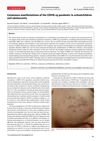 January 2023 in “Acta dermatovenerologica Alpina, Pannonica et Adriatica (Tiskana izd.)”
 The article concludes that schoolchildren and adolescents experienced various skin issues during the COVID-19 pandemic, including acne from masks and other skin reactions from the virus and vaccines.

Quality of life improved after COVID-19, but ongoing health support is needed.
 January 2023 in “Book of Abstracts”
 COVID-19 can cause different types of hair loss, with telogen effluvium being the most common.
 November 2022 in “Research Square (Research Square)”
 Seasonal changes affect hair growth genes in Angora goats, possibly influencing mohair quality.

Hair loss after weight loss surgery can improve over time.
The document concludes that diagnosing female hair loss requires careful examination, with treatments varying by condition and psychological support often necessary.
 January 2019 in “Elsevier eBooks”
 Different hair disorders have specific treatments and outcomes, with some resolving on their own and others requiring medication or emotional support.
 January 2019 in “Springer eBooks”
 Some chemicals and drugs can cause hair loss, which usually grows back after stopping the treatment.
 October 2018 in “Springer eBooks”
 The document concludes that various hair disorders have different treatments, including medication, surgery, and addressing underlying causes.
 July 2018 in “Journal of College of Medical Sciences-nepal”
 Women with certain types of hair loss may have low iron levels.
 January 2018 in “Springer eBooks”
 Congenital triangular alopecia is a harmless, non-spreading hair loss condition often seen in young children.
 June 2017 in “Journal of evolution of medical and dental sciences”
 About 22% of cancer patients had skin-related side effects from chemotherapy, but these were usually not severe enough to halt treatment.
 April 2017 in “Journal of dermatology & cosmetology”
 The marine protein complex, Viviscal®, was found to effectively reduce hair loss and improve hair, skin, and nails quality in women.
 March 2014 in “Journal of The American Academy of Dermatology”
 Mycophenolic acid may help hair grow by activating pathways important for hair growth.

Chrysanthemum zawadskii extract may help treat hair loss by promoting hair growth and affecting growth factors.
 January 2014 in “Journal of Pigmentary Disorders”
 Women's hair gets thinner and grayer as they age, with treatments available for hair loss and graying.

Millet extract, wheat germ oil, L-cystine, and calcium pantothenate reduced hair loss and improved hair growth in women with diffuse alopecia.
 March 2004 in “Journal of The American Academy of Dermatology”
 Women with lupus experienced non-scarring hair loss with fewer hair follicles, and the test for lupus in hair was not helpful.