9 citations
,
January 2021 in “Biomolecules” Infrared spectral imaging can map hair growth proteins and sugars without staining.
11 citations
,
December 2011 in “International journal of pharmaceutics” Ultrasound increases skin permeability but blocks hair follicles.
 February 2023 in “Journal of Advanced Research”
 A new method using Platelet-rich Plasma (PRP) in a microneedle can promote hair regrowth more efficiently and is painless, minimally invasive, and affordable.
 6 citations
,
January 2012 in “Hair transplant forum international”
6 citations
,
January 2012 in “Hair transplant forum international” Best solution for storing hair grafts is saline with ATP at 4 degrees Celsius, but no definitive best method was confirmed.
179 citations
,
November 2022 in “Frontiers in Plant Science” WRKY transcription factors help plants manage stress and support growth.
 April 2026 in “Dove Medical Press (Taylor and Francis Group)”
 Myrtus communis leaf extract may help with hair loss and wound healing.
51 citations
,
May 1996 in “American journal of physiology. Regulatory, integrative and comparative physiology/American journal of physiology. Regulatory, integrative, and comparative physiology” Gray seals use more energy and have higher hormone levels during their annual fur-shedding period.
 1 citations
,
August 2023 in “Military Medical Research”
1 citations
,
August 2023 in “Military Medical Research” Smart hydrogel dressings could improve diabetic wound healing by adjusting to wound conditions and controlling drug release.
January 2026 in “International Journal of Biological Macromolecules” Small KP peptide improves hair without reducing agents, while larger proteins need them for better results.
 July 2023 in “Pharmacognosy Magazine”
 Cerasus serrulata flower extracts have strong antibacterial and antioxidant effects and may help prevent hair loss.
 May 2024 in “Proteome science”
 Bleaching damages hair by reducing the quality of keratin and keratin-associated proteins.
May 2015 in “HAL (Le Centre pour la Communication Scientifique Directe)” APIs' stability is influenced by crystalline forms, pressure, and water.
 3 citations
,
January 2015 in “Mathematical problems in engineering”
3 citations
,
January 2015 in “Mathematical problems in engineering” Hair damage increases significantly with higher temperatures and longer heating times.
 12 citations
,
January 1981 in “Springer eBooks”
12 citations
,
January 1981 in “Springer eBooks” Environmental factors like temperature and nutrition affect hair growth, with humans showing seasonal hair growth differences.
June 2023 in “International journal of molecular sciences” Heat stress changes goats' skin and hair at the microscopic level and affects their genes and skin bacteria.
 10 citations
,
June 2014 in “Journal of Pharmacy and Pharmacology”
10 citations
,
June 2014 in “Journal of Pharmacy and Pharmacology” Germacrone in Curcuma aeruginosa extract degrades at high temperatures but is stable in certain solutions and unaffected by pH levels.
 4 citations
,
November 2014
4 citations
,
November 2014 The skin protects the body, regulates temperature, senses touch, and makes vitamin D.
 January 2024 in “Archives of pharmacy practice”
 The skin is vital for protection, temperature control, fluid balance, immunity, and sensing, with damage affecting daily life and mental health.
 72 citations
,
December 2009 in “Organic and Biomolecular Chemistry”
72 citations
,
December 2009 in “Organic and Biomolecular Chemistry” Mercuric triflate is an effective catalyst for various organic reactions, working well at room temperature with high yields.
 January 2019 in “Applied Organometallic Chemistry”
 The compound (NH4)2Mn0.17Cu0.83Cl4.2H₂O has a specific structure, shows weak magnetism at low temperatures, and undergoes phase changes at high temperatures.
 February 1938 in “Journal of the American Medical Association”
 Washing can prevent cancer from lubricating oils, extreme body temperatures need more study, Sulfomid is not recognized, no reliable diphtheria carrier treatment except surgery, eyelid injuries should heal before repair, heterophile antibody test is specific for mononucleosis, chlorine inhalations for colds are outdated, and wheat germ is safe.
 44 citations
,
February 2016 in “Science”
44 citations
,
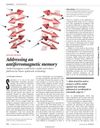
February 2016 in “Science” Researchers developed a new type of memory using antiferromagnets that is stable, not disrupted by magnets, and works at room temperature.
 40 citations
,
January 2016 in “Elsevier eBooks”
40 citations
,
January 2016 in “Elsevier eBooks” The skin is the largest organ, protecting the body, regulating temperature, and producing hormones.
 12 citations
,
October 1954 in “Textile Research Journal”
12 citations
,
October 1954 in “Textile Research Journal” Hair absorbs alkali bromide salts and water, affecting its structure, with absorption decreasing at higher temperatures.
 6 citations
,
January 2009 in “Elsevier eBooks”
6 citations
,
January 2009 in “Elsevier eBooks” The skin has multiple layers and cells, serves as a protective barrier, helps regulate temperature, enables sensation, affects appearance, and is involved in vitamin D synthesis.
2 citations
,
January 1981 High temperatures and certain chemicals can significantly change the amino acid content in human hair.
 98 citations
,
June 2001 in “Journal of biological chemistry/The Journal of biological chemistry”
98 citations
,
June 2001 in “Journal of biological chemistry/The Journal of biological chemistry” A cluster of sulfur-rich hair protein genes was found on chromosome 17.
1 citations
,
February 2025 in “Journal of Anatomy” Gray short-tailed opossums' skin shifts from helping with breathing to regulating body temperature as they grow.
18 citations
,
February 2025 in “Macromolecular Rapid Communications” Thermo-responsive polymers in nanoparticles enable targeted drug delivery and advanced therapies by releasing drugs at specific temperatures.
 1 citations
,
March 2025 in “Archivos Argentinos de Pediatria”
1 citations
,
March 2025 in “Archivos Argentinos de Pediatria” Exposure to certain chemicals in food and containers may increase the risk of early breast development in young girls.