 December 2020 in “Skin appendage disorders”
 A young man with an unusual type of scarring hair loss suggests a possible new variant of a known scalp condition.
 November 2022 in “The journal of investigative dermatology/Journal of investigative dermatology”
 YAP1 is important for skin regeneration and may affect skin disorder treatments.
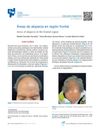 January 2025 in “Revista del Centro Dermatológico Pascua”
 Early diagnosis and treatment can help manage fibrosing alopecia in older women.
Four transcription factors can convert mouse cells into hair cell-like cells, aiding hearing loss research and treatment.
21 citations
,
April 2000 in “Journal of Cutaneous Pathology” The hamartoma is an abnormal hair growth with limited development in the upper hair follicle.
 41 citations
,
July 2017 in “Journal of The American Academy of Dermatology”
41 citations
,
July 2017 in “Journal of The American Academy of Dermatology” Men with Frontal fibrosing alopecia typically lose hair on the front scalp and sometimes on sideburns and upper lip, with treatments showing varied success.
37 citations
,
January 2010 in “Human Molecular Genetics” FTase and GGTase-I are essential for skin keratinocyte health.
1 citations
,
April 2024 in “Lasers in Surgery and Medicine” The model helps improve medical devices by showing how skin deforms under pressure.
8 citations
,
June 2010 in “Plastic & Reconstructive Surgery” Complete removal of scalp tumors is crucial, but malignant cases may recur or metastasize, requiring a multidisciplinary approach and close follow-up.
13 citations
,
August 2023 in “Developmental Cell” Mechanosensory neurons adapt to different skin types after birth.
 62 citations
,
January 2000 in “Developmental dynamics”
62 citations
,
January 2000 in “Developmental dynamics” Notch-related genes play a key role in the development and cycling of hair follicles.
 December 2017 in “Journal of the Portuguese Society of Dermatology and Venereology”
 A sutura tricofítica melhora a aparência de cicatrizes em transplantes de cabelo e outras áreas pilosas.
 4 citations
,
December 1992 in “The American Journal of Cosmetic Surgery”
4 citations
,
December 1992 in “The American Journal of Cosmetic Surgery” The modified S pattern for scalp reduction is effective for removing more bald scalp and hiding scars in hair restoration.
April 2026 in “Development” Hemidesmosomes and Notch signaling help skin cells mature by moving them to the outer layer.
 17 citations
,
December 2010 in “Journal of Investigative Dermatology”
17 citations
,
December 2010 in “Journal of Investigative Dermatology” Flightless I protein affects hair growth, with low levels delaying it and high levels increasing hair length in rodents.
8 citations
,
March 2004 in “Mammalian genome” KAP genes are crucial for hair development and show both shared and unique traits in humans, chimpanzees, and baboons.
 May 2006 in “Dermatologic Surgery”
 Most nonbald men's multi-hair follicles are naturally positioned perpendicular to a line from the scalp's crown, which is important for natural-looking hair transplants.
18 citations
,
January 1992 in “Dermatology” A 4-year-old girl has a rare condition causing hairlessness and skin bumps, but normal teeth and sweating.
 March 2012 in “Journal of The American Academy of Dermatology”
 Dermoscopy helps diagnose different hair loss conditions, and characteristics vary among ethnicities and individual cases.
4 citations
,
July 2010 in “International Journal of Cosmetic Science” Curved human hair has different structures on its convex and concave sides.
 January 2008 in “Hair transplant forum international”
 Improving the way we use our bodies during dissection can help prevent discomfort and injury.
 8 citations
,
September 1993 in “British journal of dermatology/British journal of dermatology, Supplement”
8 citations
,
September 1993 in “British journal of dermatology/British journal of dermatology, Supplement” A new method helps isolate key hair components to study hair growth and loss.
December 2016 in “Anales del sistema sanitario de Navarra” Frontal fibrosing alopecia is increasing, especially in postmenopausal women, and treatment with finasteride can improve it.
Par3–mInsc and Gαi3 work together to ensure proper cell division orientation in skin development.
 5 citations
,
November 2017 in “Dermatologica Sinica”
5 citations
,
November 2017 in “Dermatologica Sinica” Transverse scalp biopsies are more accurate for diagnosing non-cicatricial alopecia, but examining both types is best for accuracy.
 12 citations
,
September 2020 in “Stem cell research & therapy”
12 citations
,
September 2020 in “Stem cell research & therapy” Adult skin cell-based early-stage skin substitutes improve wound healing and hair growth in mice.
 January 2024 in “Archives of pathology & laboratory medicine”
 New findings may help diagnose and understand scarring alopecia better.
 68 citations
,
August 2014 in “Stem Cells Translational Medicine”
68 citations
,
August 2014 in “Stem Cells Translational Medicine” Dermal papilla cells help wounds heal better and can potentially grow new hair.
74 citations
,
April 2017 in “JEADV. Journal of the European Academy of Dermatology and Venereology/Journal of the European Academy of Dermatology and Venereology” Researchers found three patterns of Frontal fibrosing alopecia, with Pattern III having the best prognosis after treatment.
19 citations
,
November 2012 in “Cell Communication and Signaling” FGF-9 speeds up the early development of certain organs, showing potential for organ regeneration.