 4 citations
,
October 2014 in “Journal of Integrative Agriculture”
4 citations
,
October 2014 in “Journal of Integrative Agriculture” Researchers found 24 genes that change significantly and affect cashmere growth in goats; this could help increase cashmere production.
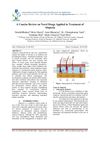
New therapies like JAK inhibitors, PRP, and stem cell treatments show promise for better alopecia management.
 September 2022 in “Institutional Repositories DataBase (IRDB)”
 3D-oxy exosomes may significantly boost hair growth, offering new treatment options for hair loss.
 April 2021 in “Advances in Cosmetic Surgery”
 Hair restoration can be achieved through non-surgical treatments like minoxidil, antiandrogens, phototherapy, and PRP procedures, or through surgical methods like hair transplantation. Continued treatment is needed to maintain results, and full results are visible after 12-18 months.
 31 citations
,
December 2010 in “International Journal of Andrology”
31 citations
,
December 2010 in “International Journal of Andrology” Men with testicular cancer were less likely to experience baldness and severe acne.
August 2024 in “Cosmetics” Personalized treatments for hair loss are becoming more effective by using genetic information.
25 citations
,
March 2021 in “Australasian Journal of Dermatology” Ustekinumab successfully treated a man's resistant skin condition when other treatments failed.
 January 2023 in “Operative Techniques in Otolaryngology-Head and Neck Surgery”
 Hair transplants help transgender patients look more like their gender identity, with different procedures for trans women and men.
 4 citations
,
January 2023 in “Frontiers in Immunology”
4 citations
,
January 2023 in “Frontiers in Immunology” Shorter telomeres in white blood cells may increase the risk of a common type of hair loss.
 June 2025 in “International Journal of Computational Intelligence Systems”
 The TPAP method effectively categorizes androgenetic alopecia patients with high accuracy, but needs real-world validation.

Different genes cause Female Pattern Hair Loss compared to male hair loss, and treatments vary, but more research is needed to understand it fully.
 5 citations
,
March 2018 in “Dermatologic Surgery”
5 citations
,
March 2018 in “Dermatologic Surgery” The study found that most donor sites are good for hairline restoration in Southeast Asian women, but hair characteristics should match for a natural look, and aging can reduce hair density and diameter.
 19 citations
,
August 2013 in “Facial Plastic Surgery Clinics of North America”
19 citations
,
August 2013 in “Facial Plastic Surgery Clinics of North America” Children's hairlines change shape as they grow, with women often developing a widow's peak and men's hairlines becoming more convex and possibly balding at the temples, influenced by genetics and hormones.
 4 citations
,
May 2002 in “Dermatologic Surgery”
4 citations
,
May 2002 in “Dermatologic Surgery” The method improves natural appearance in hair restoration by properly evaluating and treating the temporal peak region.
 May 2002 in “Dermatologic Surgery”
 The method improves natural appearance in hair restoration by properly evaluating and treating the temporal peak region.
 6 citations
,
April 2018 in “Facial Plastic Surgery”
6 citations
,
April 2018 in “Facial Plastic Surgery” Treating the temple area carefully with combined methods improves facial youthfulness.
 September 2017 in “Springer eBooks”
 Older East and Southeast Asian men need less hair density for hair restoration satisfaction, and natural hairline features should guide surgery plans.

Hair transplantation in women needs a personalized approach due to unique hair loss patterns and societal pressures.
 3 citations
,
September 2016 in “Hair transplant forum international”
3 citations
,
September 2016 in “Hair transplant forum international” Southeast and East Asian men typically have straighter hairlines with less recession and lower hair density, which is important to consider in hair restoration surgery.
 2 citations
,
January 2014 in “Archives of Aesthetic Plastic Surgery”
2 citations
,
January 2014 in “Archives of Aesthetic Plastic Surgery” The procedure effectively created natural-looking hairlines and improved facial balance in female patients.
 April 2025 in “Scholars International Journal of Anatomy and Physiology”
 Straight-lined hairlines are most common among Etche people.
 February 2024 in “Cosmoderma”
 Low-dose oral minoxidil can help treat male and female pattern hair loss, especially in those who can't use topical treatments or have heart health issues.
 24 citations
,
May 2018 in “Journal of Molecular Endocrinology”
24 citations
,
May 2018 in “Journal of Molecular Endocrinology” The spiny mouse is a unique menstruating rodent that can help us understand menstruation and reproductive disorders.
 89 citations
,
January 2001 in “Dermatologic Surgery”
89 citations
,
January 2001 in “Dermatologic Surgery” Hair loss in women is common, starts in late 20s, and affects 30% of women over 50.
 25 citations
,
November 2008 in “Facial Plastic Surgery”
25 citations
,
November 2008 in “Facial Plastic Surgery” Dr. Michael Beehner recommends a personalized, careful approach to hairline design in hair replacement surgery for a natural look.
 6 citations
,
January 2001 in “Dermatologic Surgery”
6 citations
,
January 2001 in “Dermatologic Surgery” Female pattern alopecia is common, starts in late 20s, and is not androgen dependent.
 2 citations
,
May 2023 in “bioRxiv (Cold Spring Harbor Laboratory)”
2 citations
,
May 2023 in “bioRxiv (Cold Spring Harbor Laboratory)” Stem cells help remove dead cells to keep tissues healthy by balancing cell replacement and clearance.

Blocking autophagy worsens lipid buildup and dysfunction in brain cells after injury.
 11 citations
,
January 1980 in “Southern Medical Journal”
11 citations
,
January 1980 in “Southern Medical Journal” Minoxidil effectively treats severe hypertension but has notable side effects.
 1 citations
,
May 2017 in “InTech eBooks”
1 citations
,
May 2017 in “InTech eBooks” Hair loss in Androgenetic alopecia (AGA) is due to altered cell sensitivity to hormones, not increased hormone levels. Hair growth periods shorten over time, causing hair to become thinner and shorter. This is linked to miscommunication between cell pathways in hair follicles. There's also a change in gene expression related to blood vessels and cell growth in balding hair follicles. The exact molecular causes of AGA are still unclear.