October 2023 in “BMJ Case Reports” Thyroid hormone therapy effectively treated the man's rare muscle and heart issues.
 20 citations
,
February 1991 in “Archives of dermatology”
20 citations
,
February 1991 in “Archives of dermatology” High doses of tryptophan may cause eosinophilic fasciitis.
 10 citations
,
June 2011 in “Movement Disorders”
10 citations
,
June 2011 in “Movement Disorders” THAP1 gene changes do not affect DYT1 dystonia; finasteride may help reduce tics and OCD in Tourette syndrome.
47 citations
,
November 1966 in “Archives of Dermatology” Trichorrhexis nodosa is mainly caused by hair trauma, not a metabolic defect.
 28 citations
,
February 2010 in “British journal of dermatology/British journal of dermatology, Supplement”
28 citations
,
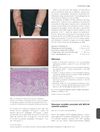
February 2010 in “British journal of dermatology/British journal of dermatology, Supplement” WNT10A mutations cause varied symptoms in patients with odonto-onycho-dermal dysplasia.
 October 2025 in “Clinical Cosmetic and Investigational Dermatology”
 Targeting specific cell interactions may help treat skin fibrosis.

Skin tumor cells in patients with tuberous sclerosis have higher levels of a protein called cathepsin B.
Giant axonal neuropathy changes the structure of keratin in human hair, making it stiffer and stronger.
 December 2007 in “Röntgenpraxis”
 Popliteal Artery Entrapment Syndrome (PAES) is a rare but possible cause of leg pain during walking, even in untrained women.
7 citations
,
December 2015 in “Turkish Journal of Osteoporosis” Vitamin D deficiency is common in adults with muscle and bone pain, especially women.
15 citations
,
April 2025 in “Journal of Clinical Medicine” Higher platelet doses in PRP therapy improve outcomes for musculoskeletal issues.
 6 citations
,
February 2010 in “Journal of The American Academy of Dermatology”
6 citations
,
February 2010 in “Journal of The American Academy of Dermatology” A woman had a rare skin condition with recurring painful nodules that heal in 6 weeks, often without needing treatment.
33 citations
,
December 1982 in “Developmental Medicine & Child Neurology” Hair-shaft abnormalities can indicate neurological disorders, some of which are treatable.
11 citations
,
January 1989 Two patients had a unique form of trichothiodystrophy with reduced high-sulfur proteins in their hair.
64 citations
,
May 1981 in “Clinical and Experimental Dermatology” A possible link exists between hair follicle abnormalities, hair loss, and muscle weakness.
13 citations
,
July 2012 in “International Journal of Trichology” TTD symptoms vary widely, requiring thorough evaluations.
March 2025 in “The Scientific Issues of Ternopil Volodymyr Hnatiuk National Pedagogical University Series pedagogy” Primary mitochondrial cytopathies often cause skin, endocrine, vision, and blood issues, needing careful diagnosis.
3 citations
,
January 2021 in “Molecular genetics & genomic medicine” The study found two new mutations in a Chinese patient with severe biotinidase deficiency.
 January 2025 in “Journal of the European Academy of Dermatology and Venereology”
 Trichophyton mentagrophytes genotype VII is a sexually transmitted fungus causing skin issues, mainly among men who have sex with men in Europe, and requires quick treatment.
 17 citations
,
December 2009 in “Journal of Pediatric Orthopaedics”
17 citations
,
December 2009 in “Journal of Pediatric Orthopaedics” Two babies needed surgery to remove hair tightly wrapped around their toes to prevent serious injury.
 2 citations
,
March 2022 in “Modern Rheumatology Case Reports”
2 citations
,
March 2022 in “Modern Rheumatology Case Reports” A medicine called tofacitinib worked to treat a hair loss condition linked with a muscle and skin disease.
January 2026 in “Cellular and Molecular Bioengineering” A 3D model of Dupuytren’s disease was developed for better drug testing.
13 citations
,
February 2017 in “Clinical rheumatology” Tofacitinib may help treat nail dystrophy, especially when other treatments fail.
62 citations
,
March 2017 in “Journal of Investigative Dermatology” Mutations in the ACTB gene cause Becker’s nevi and may lead to muscle issues in Becker’s nevus syndrome.
 4 citations
,
December 2013 in “The Journal of Dermatology”
4 citations
,
December 2013 in “The Journal of Dermatology” A new mutation in the K6b gene caused a girl's late-appearing nail condition.
 June 2026 in “Frontiers in Immunology”
 EMT plays a key role in skin fibrosis and offers new therapy targets.
January 2013 in “International Journal of Trichology” Early diagnosis and a multidisciplinary approach are crucial for children with Trichothiodystrophy and hidden learning disorders.
April 2011 in “www.virtualization.info” Early diagnosis of trachyonychia improves treatment and reduces psychological and cosmetic issues.
 February 2009 in “Journal of The American Academy of Dermatology”
 Most patients with Tuberous sclerosis had neurological or skin issues, and over half had psychiatric problems.
 30 citations
,
June 2021 in “British Journal of Dermatology”
30 citations
,
June 2021 in “British Journal of Dermatology” Mutations in the WNT10A gene can cause skin, hair, teeth, and other disorders, and may also affect other areas like kidney and cancer, with potential for targeted treatments.