 51 citations
,
December 2003 in “The FASEB Journal”
51 citations
,
December 2003 in “The FASEB Journal” The substance AS101 can help hair grow by slowing down hair cell aging and boosting a hair growth protein.
104 citations
,
July 1994 in “The Journal of Cell Biology” Basonuclin helps keratinocytes multiply and prevents them from fully maturing.
April 2021 in “The journal of investigative dermatology/Journal of investigative dermatology” CTCF protein is essential for skin and hair follicle development in mice.
15 citations
,
April 2011 in “Biological Chemistry” Cathepsin E is crucial for normal skin cell differentiation and development.
7 citations
,
October 2024 in “Cells” Autophagy is essential for proper skin cell development and function.
 30 citations
,
April 2017 in “European Journal of Cell Biology”
30 citations
,
April 2017 in “European Journal of Cell Biology” CIP/KIP proteins help stop cell division and support hair growth.
81 citations
,
January 1987 in “Current topics in developmental biology/Current Topics in Developmental Biology” Keratins change and are modified differently in skin layers and body parts.
68 citations
,
December 2010 in “The journal of investigative dermatology/Journal of investigative dermatology” HOXC13 is essential for hair and nail development by regulating Foxn1.
35 citations
,
June 2012 in “PloS one” Keratin 15 expression in skin cells is regulated by two mechanisms involving PKC/AP-1 and FOXM1.
 76 citations
,
June 2015 in “Journal of biomedical science”
76 citations
,
June 2015 in “Journal of biomedical science” Mutations in Gasdermin A3 cause skin inflammation and hair loss by disrupting mitochondria.
 December 2023 in “bioRxiv (Cold Spring Harbor Laboratory)”
 AP-2α and AP-2β proteins are essential for healthy adult skin and hair.
73 citations
,
January 2016 in “International review of cell and molecular biology” Cornification evolved from keratinization in vertebrates, with differences between mammals and sauropsids.
 January 2023 in “Journal of cosmetic dermatology”
 The synthetic retinoid EC23 thickens skin and promotes hair growth more effectively and with a lower dose than natural retinoids.
 253 citations
,
March 1994 in “Developmental dynamics”
253 citations
,
March 1994 in “Developmental dynamics” Apoptosis is essential for human skin development and forming a functional epidermis.
23 citations
,
January 1986 Involucrin is crucial for skin cell maturation and protection.
22 citations
,
September 2001 in “Journal of Investigative Dermatology” S100A8 and S100A9 proteins help form hair shafts during growth.
11 citations
,
June 2001 in “British Journal of Dermatology” c-Myc, Max, and Bin1 help hair follicle cells mature and die.
26 citations
,
May 2007 in “Differentiation” Foxn1 helps skin cells mature by controlling a specific protein's activity.
17 citations
,
November 2000 in “Journal of Investigative Dermatology” ZPK helps skin cells mature and may affect skin health.
 57 citations
,
June 2003 in “American Journal of Physiology-cell Physiology”
57 citations
,
June 2003 in “American Journal of Physiology-cell Physiology” Cyclosporin A helps mice grow hair by blocking a specific protein activity in skin cells.
 25 citations
,
December 1992 in “Seminars in cell biology”
25 citations
,
December 1992 in “Seminars in cell biology” Skin stem cells are maintained by signals from nearby cells and vary in their ability to renew and mature.
 April 2023 in “The journal of investigative dermatology/Journal of investigative dermatology”
 Key skin cell regulators and gene organization changes are crucial for skin cell development and could help treat skin disorders.
12 citations
,
December 2022 in “Frontiers in Bioscience-Landmark” The role of certain genes in skin cell development may be linked to psoriasis, but the connection is unclear.
338 citations
,
April 2001 in “Current Biology” c-Myc activation in mouse skin increases sebaceous gland growth and affects hair follicle development.
41 citations
,
December 2011 in “The journal of investigative dermatology/Journal of investigative dermatology” Deleting MED1 in skin cells causes hair loss and skin changes.
39 citations
,
August 1998 in “FEBS Letters” Two new enzymes, PAD-R11 and PAD-R4, were cloned and showed activity, with PAD-R11 resembling epidermal enzymes.
30 citations
,
February 2010 in “The journal of investigative dermatology/Journal of investigative dermatology” Plet-1 protein helps hair follicle cells move and stick to tissues.
 69 citations
,
August 1999 in “Developmental biology”
69 citations
,
August 1999 in “Developmental biology” The nude gene causes skin cell overgrowth and improper development, leading to hair and urinary issues.
 63 citations
,
October 2011 in “Archives of Dermatology”
63 citations
,
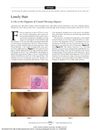
October 2011 in “Archives of Dermatology” Isolated long hairs at the original hairline can help diagnose Frontal Fibrosing Alopecia.
 January 2018 in “Stem cell biology and regenerative medicine”
 The nucleus is key in controlling skin growth and repair by coordinating signals, gene regulators, and epigenetic changes.