 July 2012 in “The Journal of Urology”
 Testosterone increases muscle mass regardless of DHT conversion blocking.
53 citations
,
July 2014 in “American Journal of Physiology-Endocrinology and Metabolism” Testosterone boosts red blood cell production and changes iron metabolism without needing dihydrotestosterone.
 9 citations
,
September 2017 in “Journal of Investigative Dermatology Symposium Proceedings”
9 citations
,
September 2017 in “Journal of Investigative Dermatology Symposium Proceedings” Prostaglandin D2 increases testosterone production in skin cells through a process involving reactive oxygen species, and antioxidants may help treat hair loss.
 1 citations
,
January 2008 in “Proceedings of the 9th World Rabbit Congress, Verona, Italy, 10-13 June 2008”
1 citations
,
January 2008 in “Proceedings of the 9th World Rabbit Congress, Verona, Italy, 10-13 June 2008” Furless male rabbits grew slightly faster and heavier than furred ones, but testosterone levels were not the cause.
66 citations
,
March 1998 in “Mayo Clinic Proceedings” Removing a testosterone-producing tumor cured a woman's sleep apnea and other symptoms.
39 citations
,
May 2002 in “Oral Microbiology and Immunology” Testosterone increases cell growth and reduces IL-6 in gum cells.
29 citations
,
May 1975 in “Clinical Endocrinology” Combination therapy significantly reduces testosterone and moderately reduces hair growth in women with hirsutism.
 124 citations
,
March 2012 in “JAMA”
124 citations
,
March 2012 in “JAMA” Testosterone's muscle-building effects do not require its conversion to DHT.
 10 citations
,
November 1997 in “British Journal of Dermatology”
10 citations
,
November 1997 in “British Journal of Dermatology” RU58841 significantly increases hair growth rate and initiates more hair cycles, but doesn't affect hair thickness, suggesting it could be a new treatment for baldness.
9 citations
,
November 1997 in “British Journal of Dermatology”  72 citations
,
October 1998 in “Baillière's clinical endocrinology and metabolism”
72 citations
,
October 1998 in “Baillière's clinical endocrinology and metabolism” Long-term testosterone therapy can cause hormone suppression, affect prostate and heart health, and alter physical characteristics, but does not increase prostate cancer risk and needs more research for full risk assessment.
 39 citations
,
January 2019 in “The World Journal of Men's Health”
39 citations
,
January 2019 in “The World Journal of Men's Health” Testosterone replacement therapy can prevent men from fathering children and should not be used by those wanting to stay fertile.
8 citations
,
December 2022 in “International journal of molecular sciences” Mice without the enzyme HSD17B3 still produce normal testosterone, suggesting they have different ways to make it compared to humans.
 4 citations
,
January 2015 in “Endocrinology & metabolic syndrome”
4 citations
,
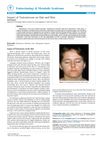
January 2015 in “Endocrinology & metabolic syndrome” Testosterone can cause acne and male-pattern baldness, affects hair growth in men and women, and makes male skin more sensitive.
 37 citations
,
January 2015 in “Evidence-based Complementary and Alternative Medicine”
37 citations
,
January 2015 in “Evidence-based Complementary and Alternative Medicine” An extract from Quercus acutissima bark was found to reduce sebum production and block an enzyme linked to acne.
 9 citations
,
August 1952 in “The Journal of Clinical Endocrinology & Metabolism”
9 citations
,
August 1952 in “The Journal of Clinical Endocrinology & Metabolism” A 17-year-old female with adrenogenital syndrome produces very high levels of androgens, which prevent complete feminization despite high estrogen doses.
 January 2024 in “Al-Ameed journal for medical research and health sciences”
 Testosterone is vital for male health, and its deficiency is linked to aging and common health issues.
 November 2023 in “JAAD case reports”
 Exogenous testosterone use may be linked to developing hidradenitis suppurativa.
 September 2014 in “Springer eBooks”
 Men and women experience skin aging differently due to changes in sex hormone levels with age.
 August 2013 in “Fertility and Sterility”
 High levels of fatty acids are linked to increased androgen production and inflammation in women with PCOS, which may affect IVF outcomes.
Antiandrogens and finasteride may help treat excess hair and hair loss in women.
 54 citations
,
April 2010 in “Baillière's best practice and research in clinical endocrinology and metabolism/Baillière's best practice & research. Clinical endocrinology & metabolism”
54 citations
,
April 2010 in “Baillière's best practice and research in clinical endocrinology and metabolism/Baillière's best practice & research. Clinical endocrinology & metabolism” Impaired androgen production in 46,XY DSDs causes ambiguous genitalia and requires long-term care.
 176 citations
,
August 2000 in “The Journal of clinical endocrinology and metabolism/Journal of clinical endocrinology & metabolism”
176 citations
,
August 2000 in “The Journal of clinical endocrinology and metabolism/Journal of clinical endocrinology & metabolism” Hormone treatments in transsexual individuals reduce hair growth and oil production in male-to-females and increase them in female-to-males.
3 citations
,
November 2021 in “Stress” Girls had higher stress hormone levels during school due to social and emotional issues, while boys had higher overall hormone levels with slight changes when school started.
2 citations
,
January 2017 in “Endocrinology” Testosterone and its metabolites have varied effects on different body systems, especially during puberty.
 2 citations
,
November 2012 in “InTech eBooks”
2 citations
,
November 2012 in “InTech eBooks” The document concludes that sex hormones are crucial for mammalian reproduction, health, and behavior, and require more research for therapeutic use.
 April 2018 in “The journal of investigative dermatology/Journal of investigative dermatology”
 Androgens increase growth factors in skin cells, which may lead to acne.
 September 2008 in “Fertility and Sterility”
 Free fatty acids may increase androgen production, potentially contributing to polycystic ovary syndrome.
 December 2024 in “Journal of Biophotonics”
 Dual wavelength LEDs may help reduce hair loss by lowering DHT levels.
 36 citations
,
August 2011 in “Experimental Dermatology”
36 citations
,
August 2011 in “Experimental Dermatology” Eccrine sweat gland's clear cells likely cause excessive sweating in hyperhidrosis.