 1 citations
,
January 1996 in “Gynecological endocrinology”
1 citations
,
January 1996 in “Gynecological endocrinology” Non-invasive imaging helped diagnose a woman's severe hormone imbalance and diabetes, and medication successfully treated her condition.
April 2020 in “Journal of the Endocrine Society” A rare ovarian tumor caused high male hormone levels, but surgery fixed it.
June 2020 in “AACE clinical case reports” A woman's severe male hormone excess was caused by a small, hard-to-find ovarian tumor.
 352 citations
,
January 2006 in “The Journal of Clinical Endocrinology and Metabolism”
352 citations
,
January 2006 in “The Journal of Clinical Endocrinology and Metabolism” Most women referred for excess male hormone symptoms had polycystic ovary syndrome (PCOS), with other conditions being less common.
October 2025 in “F1000Research” Postmenopausal women with excess male hormones may have ovarian tumors, and surgery usually cures them.
 19 citations
,
July 2013 in “The obstetrician & gynaecologist”
19 citations
,
July 2013 in “The obstetrician & gynaecologist” The document concludes that careful evaluation is needed to diagnose PCOS correctly due to similar symptoms in other conditions, and accurate testosterone level measurement is crucial.
 12 citations
,
May 2005 in “Current obstetrics and gynaecology/Current obstetrics & gynaecology”
12 citations
,
May 2005 in “Current obstetrics and gynaecology/Current obstetrics & gynaecology” Hirsutism is too much hair growth in women like the pattern in men, often caused by high male hormones, and can be treated with hormone control and hair removal methods.
 2 citations
,
May 2006 in “Women's Health Medicine”
2 citations
,
May 2006 in “Women's Health Medicine” PCOS is diagnosed when at least two of these three features are present: polycystic ovaries, irregular ovulation, and high androgen levels.
 56 citations
,
October 2018 in “Journal of The American Academy of Dermatology”
56 citations
,
October 2018 in “Journal of The American Academy of Dermatology” Androgens play a complex role in skin conditions like acne and hair loss in women, and normal blood levels don't always show true androgen status.
 5 citations
,
December 2004 in “Dermatology”
5 citations
,
December 2004 in “Dermatology” Two women with very high androgen levels had only slight skin issues, one due to a non-classical adrenal disorder and the other due to an adrenal tumor.
 3 citations
,
July 2019 in “Case Reports in Obstetrics and Gynecology”
3 citations
,
July 2019 in “Case Reports in Obstetrics and Gynecology” A young woman's rare ovarian tumor was successfully removed, improving her hormonal symptoms.
 16 citations
,
February 2018 in “European Journal of Endocrinology”
16 citations
,
February 2018 in “European Journal of Endocrinology” Diagnosing hyperandrogenism in women is complex and requires accurate testing methods and consideration of SHBG levels.
 11 citations
,
January 2013 in “Indian Journal of Endocrinology and Metabolism”
11 citations
,
January 2013 in “Indian Journal of Endocrinology and Metabolism” A woman with a rare adrenal tumor and hormonal disorder had improved testosterone levels after surgery, but her menstrual irregularities continued.
 January 2023 in “Archives of Disease in Childhood Education & Practice”
 Hirsutism in teens is often due to polycystic ovarian syndrome and needs careful assessment and support.
 1 citations
,
September 2023 in “JCEM case reports”
1 citations
,
September 2023 in “JCEM case reports” GnRH analogues are effective for diagnosing and treating female androgen excess, offering a non-surgical option.
 1 citations
,
January 2006
1 citations
,
January 2006 Hirsutism is mainly caused by high androgen levels or sensitivity, with PCOS being the most common cause.
 2 citations
,
August 2011 in “Revista Medica De Chile”
2 citations
,
August 2011 in “Revista Medica De Chile” A postmenopausal woman's high testosterone levels and symptoms improved after removing a tumor from her ovary.
 9 citations
,
November 2013 in “Presse Medicale”
9 citations
,
November 2013 in “Presse Medicale” The document concludes that managing female hyperandrogenism requires a combination of identifying the cause, lifestyle changes, medication, and cosmetic treatments.
 42 citations
,
April 2013 in “Steroids”
42 citations
,
April 2013 in “Steroids” Non-classic congenital adrenal hyperplasia is a common disorder causing symptoms like acne and infertility, and it's managed based on symptoms, not just test results. Treatment can improve fertility and reduce miscarriage risk.
 4 citations
,
November 2018 in “Endocrinology, Diabetes & Metabolism Case Reports”
4 citations
,
November 2018 in “Endocrinology, Diabetes & Metabolism Case Reports” GnRH analogue can help diagnose ovarian causes of high testosterone in postmenopausal women when scans don't show the cause.
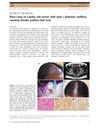 August 2019 in “Journal of Dermatology”
 Woman with diabetes had hair loss due to rare ovarian tumor; surgery improved hair growth.
 November 2022 in “Journal of the Endocrine Society”
 A woman's masculine features were caused by a rare ovarian tumor that produced male hormones.
 2 citations
,
January 2014 in “International Journal of Endocrinology”
2 citations
,
January 2014 in “International Journal of Endocrinology” Women with a certain type of tumor had higher levels of pregnancy hormone and male hormones, which decreased after treatment.
 4 citations
,
December 2012 in “Arquivos Brasileiros De Endocrinologia E Metabologia”
4 citations
,
December 2012 in “Arquivos Brasileiros De Endocrinologia E Metabologia” A postmenopausal woman's masculine symptoms improved after surgery for a hormone-producing ovarian tumor.
 January 2019 in “Skin appendage disorders”
 A woman's hair loss was linked to a rare hormone-secreting ovarian tumor, treated with surgery and hair loss medication.
January 2007 in “Annals of The Royal College of Surgeons of England” Removing a hormone-producing adrenal tumor can stop hair loss in women with high testosterone levels.
June 2002 in “Current obstetrics and gynaecology/Current obstetrics & gynaecology” Hirsutism, excessive hair growth in women, often caused by high androgen levels and polycystic ovary syndrome, can be treated with medication and weight management.
May 2025 in “Journal of the ASEAN Federation of Endocrine Societies” Thorough evaluation is crucial for postmenopausal women with virilization to detect rare ovarian tumors.
 January 2021 in “Case Reports”
 A 71-year-old woman developed male-like features due to high testosterone levels caused by a benign ovarian tumor, which was successfully removed by surgery.
October 2016 in “Journal of Case Reports” A rare ovarian tumor can occur without causing male-like symptoms.