 September 2013 in “Hair transplant forum international”
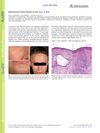
 The document says doctors should identify and treat Frontal fibrosing alopecia medically before considering surgery, as treatments often don't work well.
14 citations
,
January 2014 in “Indian Journal of Dermatology Venereology and Leprology” Frontal fibrosing alopecia can affect men's beards and leads to permanent hair loss.
 August 2021 in “Case Reports”
 A woman thought to have rosacea was actually suffering from Frontal Fibrosing Alopecia, a hair loss condition. Despite treatment, her condition didn't change, showing the importance of accurate early diagnosis.
 July 2026 in “Pharmacological Reports”
 Topical latanoprost acid may help hair growth in women with hair loss.
A new 3D breast tumor model helps test drug effects more accurately than traditional methods.
52 citations
,
June 1991 in “Journal of Virology” The hamster polyomavirus middle T antigen is linked to tumors in hamsters and associates with a specific tyrosine kinase.
January 2013 in “Scholarworks (University of Massachusetts Amherst)” FERONIA regulates plant growth, pollen interactions, and sugar signaling.
April 2018 in “Journal of Investigative Dermatology” Mutations in Far2 mice cause hair loss due to sebaceous gland issues.
 1 citations
,
January 2019 in “Acta dermato-venereologica”
1 citations
,
January 2019 in “Acta dermato-venereologica” The woman's skin and hair symptoms were confirmed as frontal fibrosing alopecia, and while facial papules are common in such cases, there's no effective local treatment, but systemic treatments can help.
1 citations
,
June 2025 in “Journal of Clinical Medicine” Frontal fibrosing alopecia often occurs after menopause, with delayed diagnosis and possible links to certain medications and conditions.
June 2025 in “British Journal of Dermatology” Frontal fibrosing alopecia can occur in men and may be linked to immune triggers like vaccines.
 3 citations
,
February 2022 in “Cureus”
3 citations
,
February 2022 in “Cureus” Frontal fibrosing alopecia can sometimes look like syphilitic hair loss.
April 2016 in “Journal of Investigative Dermatology” Mutations in the TSPEAR gene cause a new form of ectodermal dysplasia affecting hair and tooth development.
 2 citations
,
January 2017 in “Przegla̧d dermatologiczny”
2 citations
,
January 2017 in “Przegla̧d dermatologiczny” Two trichoscopic patterns found in hair loss: diffuse fibrotic and androgenetic alopecia, affecting treatment choice and regrowth chances.
 July 2020 in “CRS 2020 Virtual Annual Meeting”
 Researchers developed a new skin patch that delivers more finasteride into the skin, potentially improving treatment for hair loss and prostate issues.
February 2024 in “Zagazig University Medical Journal” TCF7L2 gene polymorphism is linked to alopecia areata, but it doesn't affect the success of PRP or conventional treatments.
 27 citations
,
February 2017 in “Clinical, Cosmetic and Investigational Dermatology”
27 citations
,
February 2017 in “Clinical, Cosmetic and Investigational Dermatology” New compounds were found to help increase hair growth and decrease hair loss.
 2 citations
,
September 2022 in “Dermatologic Therapy”
2 citations
,
September 2022 in “Dermatologic Therapy” Tofacitinib is a promising treatment for severe alopecia areata, with many patients experiencing complete or partial hair regrowth.
 August 2025 in “Journal of IMAB - Annual Proceeding (Scientific Papers)”
 The A-T advancement flap is a safe and effective method for scalp reconstruction after basal cell carcinoma removal.
1 citations
,
December 2011 in “Arzneimittelforschung” The method accurately measures cyproterone acetate in plasma, showing no significant difference between two formulations.
 August 2015 in “Dermatología Argentina”
 Frontal fibrosing alopecia causes hairline recession and eyebrow loss in postmenopausal women.
1 citations
,
August 2024 in “Anais Brasileiros de Dermatologia” Recognizing skin symptoms helps diagnose and treat frontal fibrosing alopecia.
34 citations
,
June 2020 in “British journal of dermatology/British journal of dermatology, Supplement” Frontal fibrosing alopecia is linked to increased immune system activity and reduced stem cells, suggesting early treatment targeting this pathway might prevent hair follicle damage.
 12 citations
,
January 2005 in “Pediatric Dermatology”
12 citations
,
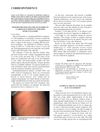
January 2005 in “Pediatric Dermatology” Fox Fordyce disease might be more common in prepubertal girls than thought and can be managed with treatment.
 2 citations
,
April 2018 in “Journal of Investigative Dermatology”
2 citations
,
April 2018 in “Journal of Investigative Dermatology” Frontal fibrosing alopecia shows increased inflammation and JAK-STAT pathway activity without reduced hair proteins.
July 2022 in “Journal of Investigative Dermatology” TRPS1 loss in balding scalp areas contributes to hair loss in androgenic alopecia.
2 citations
,
March 2011 in “International Journal of Dermatology” An 18-year-old man was diagnosed with a rare genetic disorder causing hair loss, severe light sensitivity, and skin issues.
14 citations
,
February 1991 in “FEBS Letters” Introducing the rat OTC gene partially corrected OTC deficiency in mice.
 6 citations
,
September 1995 in “The American Journal of Cosmetic Surgery”
6 citations
,
September 1995 in “The American Journal of Cosmetic Surgery” The new technique PÂTÉ improved the amount of scalp tissue removed in surgeries.
 February 2011 in “Annales de dermatologie et de vénéréologie”
 Tofacitinib shows promise for treating severe alopecia areata with good safety and effectiveness.