 39 citations
,
May 2014 in “Frontiers in Pharmacology”
39 citations
,
May 2014 in “Frontiers in Pharmacology” Special immune cells called Tregs can help prevent lung scarring by blocking a specific growth factor.
 4 citations
,
April 2018 in “Biotechnology Letters”
4 citations
,
April 2018 in “Biotechnology Letters” Human growth factor 20 can boost mouse whisker growth.
 June 2023 in “jurnal veteriner”
 The combination of Typhonium flagelliforme extract and natural interferons effectively reduces tumor growth in mice.
 67 citations
,
January 2020 in “Cellular & Molecular Immunology/Cellular & molecular immunology”
67 citations
,
January 2020 in “Cellular & Molecular Immunology/Cellular & molecular immunology” Tissue-resident memory T cells can protect against infections and cancer but may also contribute to autoimmune diseases.
25 citations
,
April 2008 in “Clinical and experimental dermatology” EFFC might be common but underreported.
 July 2025 in “JOURNAL OF CLINICAL AND DIAGNOSTIC RESEARCH”
 Trichofolliculoma should be considered in children with scalp nodules for accurate diagnosis and treatment.
4 citations
,
February 2023 in “International Journal of Stem Cells” The FTO gene hinders stem cells in hair follicles from becoming pigment cells.
12 citations
,
March 2021 in “Journal of Investigative Dermatology” TRPM5 is crucial for maintaining hair growth.
 August 2022 in “Archives of pediatric surgery”
 Hair-Thread Tourniquet Syndrome is a rare condition where hair or thread tightly wraps around a child's body part, requiring quick treatment to prevent damage.
 March 2012 in “Journal of The American Academy of Dermatology”
 Temporal triangular alopecia usually starts in early childhood and treatment with Minoxidil has limited effectiveness.
 5 citations
,
February 2014 in “Journal of Liquid Chromatography & Related Technologies”
5 citations
,
February 2014 in “Journal of Liquid Chromatography & Related Technologies” Method accurately measures finasteride and tamsulosin in combined drug form.
 May 2024 in “Actas dermo-sifiliográficas/Actas dermo-sifiliográficas”
 Effective treatments for trichotillomania include cognitive-behavioral therapy, certain medications, and alternative support tools.
1 citations
,
January 2024 in “International journal of molecular sciences” TRPV4 helps cells repair tissue and reduce scarring by controlling calcium levels.
7 citations
,
March 2004 in “Journal of the American Academy of Dermatology” Tiger tail banding and hair abnormalities are reliable indicators for diagnosing trichothiodystrophy.
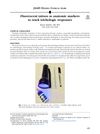 July 2018 in “Journal of The American Academy of Dermatology”
 Fluorescent tattoos are a good way to mark the scalp for hair treatments because they're accurate, invisible in normal light, and have low risk.
 February 2024 in “Skin research and technology”
 The research suggests that immune cells and a specific type of cell death called ferroptosis are involved in Frontal fibrosis alopecia.
 9 citations
,
January 2020 in “Postepy Dermatologii I Alergologii”
9 citations
,
January 2020 in “Postepy Dermatologii I Alergologii” Frontal fibrosing alopecia is a poorly understood condition with increasing cases and unclear treatment effectiveness.
3 citations
,
August 2022 in “International Journal of Molecular Sciences” TSC2-/meth cells can cause skin lesions, hair growth, and lung issues, and may be treated with chromatin remodeling agents.
21 citations
,
May 2014 in “Toxicological Sciences” Toluene diisocyanate exposure can cause immune sensitization by interacting with proteins in hair follicles and sebaceous glands.
188 citations
,
June 1998 in “Molecular cell” Researchers created a mouse with the same mutation as humans with trichothiodystrophy, showing similar symptoms and confirming the condition is due to defects in DNA repair and gene activity.
June 2026 in “Frontiers in Medicine” The excimer laser is a promising and safe treatment for frontal fibrosing alopecia.
 July 2018 in “Elsevier eBooks”
 Frontal Fibrosing Alopecia is a type of hair loss affecting mostly older women, with no agreed best treatment.
 1 citations
,
September 2021 in “CRC Press eBooks”
1 citations
,
September 2021 in “CRC Press eBooks” Frontal Fibrosing Alopecia is a hair loss condition mainly affecting postmenopausal women, with unclear causes and various clinical patterns.
March 2024 in “SVU- International Journal of Veterinary Sciences” Fecal microbiota transplantation effectively reduces symptoms of Feline Hyperesthesia Syndrome in cats.
3 citations
,
August 2023 in “Journal of Investigative Dermatology”  September 2024 in “Cermin Dunia Kedokteran”
 Improving medical training is key to eradicating frambusia by 2030.
July 2022 in “Journal of Cosmetic Dermatology” Isotretinoin with tacrolimus may be more effective short-term for treating frontal fibrosing alopecia than finasteride with tacrolimus.
 November 2024 in “International Society of Hair Restoration Surgery”
 FUT is a hair restoration method that should be chosen based on individual patient needs and preferences.
April 2019 in “The journal of investigative dermatology/Journal of investigative dermatology” Disrupting the Tsc2 gene in certain cells leads to thicker skin, larger hair, and changes in hair growth signaling, which can be partly reversed with specific treatment.