 88 citations
,
August 2019 in “Nature communications”
88 citations
,
August 2019 in “Nature communications” Researchers found a specific immune receptor in patients that causes severe skin reactions to a drug.
Microneedling with Triamcinolone acetonide is an effective, less invasive, and safe alternative to direct injections for treating alopecia areata.
 9 citations
,
October 2021 in “International Journal of Dermatology”
9 citations
,
October 2021 in “International Journal of Dermatology” Tofacitinib is effective and safe for treating severe hair loss in a Saudi population.
 1 citations
,
December 2022 in “Journal of cosmetic dermatology”
1 citations
,
December 2022 in “Journal of cosmetic dermatology” The combination of vitamin D analogues with potent steroids is a favorable treatment for alopecia areata with fewer side effects.
 8 citations
,
April 1990 in “Hormone and Metabolic Research”
8 citations
,
April 1990 in “Hormone and Metabolic Research” The medication combination did not affect glucose tolerance but increased some cholesterol levels due to its estrogen component.
 October 2024 in “Asian Journal of Pharmaceutical and Clinical Research”
 Topical methotrexate is more effective and as safe as betamethasone for treating alopecia areata.
Radiofrequency microneedling improves the absorption of topical triamcinolone acetonide, especially with deeper needle insertion.
 March 2020 in “Section 5: Patient safety and quality assurance”
 Tofacitinib and baricitinib had an acceptable level of side effects in rheumatoid arthritis patients.
61 citations
,
March 2006 in “Colloids and surfaces. B, Biointerfaces” Lecithin microemulsion safely delivers tetracaine hydrochloride through the skin.
 February 2011 in “Annales de dermatologie et de vénéréologie”
 Tofacitinib shows promise for treating severe alopecia areata with good safety and effectiveness.
 July 2025 in “Journal of Cosmetic Dermatology”
 Alternative treatments are needed when Tofacitinib alone fails for alopecia areata.
February 2023 in “Al-Azhar International Medical Journal /Al-Azhar International Medical Journal” Microneedling with triamcinolone is a safe, effective, and less painful treatment for alopecia areata.
22 citations
,
June 2002 in “Journal of Medicinal Chemistry” Compounds 15, 20, and 25 are strong inhibitors of human steroid 5α-reductase type 2.
December 2025 in “Pediatric Dermatology” Trametinib can cause skin issues, but they can often be managed without stopping the drug.
44 citations
,
October 2016 in “Epilepsia” 2-DG reduces seizures by enhancing brain inhibition through specific receptor activation.
 2 citations
,
January 2011 in “Andrologia”
2 citations
,
January 2011 in “Andrologia” Flutamide and a new synthetic steroid affected brain and prostate chemicals and showed potential for treating androgen-related conditions and epilepsy.
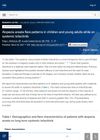 7 citations
,
March 2021 in “Journal of the American Academy of Dermatology”
7 citations
,
March 2021 in “Journal of the American Academy of Dermatology” Tofacitinib can regrow hair in alopecia areata patients, but some may experience flares during treatment.
June 2013 in “Clinical Neurophysiology” Finasteride improved reflexes and motor activity in rats with liver-related brain issues.
 June 2024 in “Indian Dermatology Online Journal”
 Topical tofacitinib is effective and safe for treating alopecia areata.
 October 2004 in “Australian Prescriber”
 Lifestyle changes are more effective than medication for reducing type 2 diabetes risk.
5 citations
,
July 2024 in “Archives of Dermatological Research” 39 citations
,
September 2015 in “Clinical Therapeutics” Teriflunomide effectively reduces relapse rates and disease progression in multiple sclerosis but is not safe for use during pregnancy.
 9 citations
,
May 2021 in “International Journal of Dermatology”
9 citations
,
May 2021 in “International Journal of Dermatology” The trial showed that a new under-the-tongue treatment for severe hair loss was somewhat effective in a small group of people.
October 2016 in “Letters in Drug Design & Discovery” 19 citations
,
April 2019 in “Veterinary dermatology” Oclacitinib effectively treated a skin condition in dogs that didn't respond to other immunosuppressants.
 November 2024 in “Journal of the European Academy of Dermatology and Venereology”
 Cryotherapy with precise temperature control is a promising treatment for alopecia areata.
 January 2023 in “National Journal of Physiology, Pharmacy and Pharmacology”
 Tofacitinib effectively reduced hair loss in alopecia areata patients without adverse effects.
 February 2023 in “International Journal of Medical Arts”
 Trichloroacetic acid is a safe and effective treatment for hair loss in alopecia areata patients.
40 citations
,
September 2014 in “Journal of cosmetic and laser therapy” Transepidermal drug delivery effectively treated areata alopecia with minimal side effects.
3 citations
,
October 2018 in “Journal of cosmetic dermatology” Pentoxifylline alone and combined with triamcinolone acetonide is effective for treating localized alopecia areata, with the combination showing the highest effectiveness.