 1 citations
,
December 2015 in “The Egyptian Journal of Histology”
1 citations
,
December 2015 in “The Egyptian Journal of Histology” Hypothyroidism harms rat skin, but topical triiodothyronine may help improve it.
 June 2025 in “International Medical Case Reports Journal”
 Timely diagnosis and treatment of complex autoimmune diseases like APS2 are crucial to prevent complications and improve life quality.
14 citations
,
January 1998 in “Dermatology” Polythelia pilosa is a type of extra breast tissue with hair and should be classified as such.
 April 2020 in “Journal of the Endocrine Society”
 A 14-year-old girl with no menstrual period was diagnosed with Swyer Syndrome and treated for a related cancer risk.
2 citations
,
August 2020 in “CRC Press eBooks” Tabby mutations in mice affect hair follicle development and help study genetic mapping and certain medical conditions.
 13 citations
,
March 2002 in “Pediatric Dermatology”
13 citations
,
March 2002 in “Pediatric Dermatology” A child was initially wrongly diagnosed with a fungal scalp infection but actually had a non-scarring hair loss condition called Temporal Triangular Alopecia.
1 citations
,
October 2021 in “The journal of investigative dermatology/Journal of investigative dermatology” Removing HIF-P4H-2 from certain skin cells in mice causes hair loss on the body but not the head.
March 2026 in “Tạp chí Da liễu học Việt Nam” Imbalance in immune cells causes hair loss in alopecia areata.
2 citations
,
December 2024 in “Children” Thyroid disorders can cause skin issues in children, so early detection and screening are important.
 15 citations
,
January 2010 in “Experimental Dermatology”
15 citations
,
January 2010 in “Experimental Dermatology” Hair loss in certain young mice is linked to a specific gene and can be caused by lack of iron.
 July 2025 in “Dermatology Practical & Conceptual”
 A 2-year-old boy has a rare hair disorder causing brittle hair and hair loss, which may improve with age.
61 citations
,
April 1969 in “Archives of Dermatology” Skin biopsy is crucial for diagnosing unknown baldness causes.
1 citations
,
August 2016 in “Journal of Investigative Dermatology” Vδ1+ T-cells in the skin contribute to hair loss in alopecia areata and could be targeted for treatment.
4 citations
,
October 2020 in “The journal of investigative dermatology. Symposium proceedings/The Journal of investigative dermatology symposium proceedings” IL-4 and IL-13 might play a role in a type of hair loss similar to alopecia areata.
1 citations
,
March 2022 in “Journal of biological chemistry/The Journal of biological chemistry” Removing a specific gene in certain skin cells causes hair loss in mice by disrupting hair follicle development.
12 citations
,
January 2017 in “PubMed” Gastroparesis can cause persistent TSH elevation in hypothyroidism despite treatment.
2 citations
,
January 2016 in “Gynecological Endocrinology” A hidden autoimmune syndrome was found during a shock, showing thyroid, adrenal, and ovarian issues.
December 2023 in “Journal of Investigative Dermatology” A specific type of immune cell plays a key role in causing alopecia areata and could be a target for treatment.
November 2025 in “The Journal of Immunology” A humanized IL-2 fusion protein boosts T regulatory cells and helps control hair loss in Alopecia Areata.
 1 citations
,
January 2019 in “Medical principles and practice”
1 citations
,
January 2019 in “Medical principles and practice” A boy's hair loss improved after tumor removal and vitamin D treatment, but hair loss returned despite normal vitamin D and no tumor regrowth.
July 2025 in “Journal of Investigative Dermatology” April 2019 in “Journal of Investigative Dermatology” Blocking LFA-1 prevents hair loss in mice.
127 citations
,
January 2000 in “Journal of Investigative Dermatology” Cytotoxic T cells cause hair loss in chronic alopecia areata.
January 2026 in “Journal of Investigative Dermatology” Special cells can help regrow hair in alopecia areata.
 March 2016 in “Indian Journal Of Applied Research”
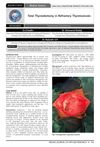
 Surgery may be needed for resistant thyrotoxicosis.
September 2019 in “Journal of Investigative Dermatology” Innate lymphoid cells type 1 may contribute to alopecia areata.
 August 2023 in “Acta Scientific Paediatrics”
 A baby from an Indian family had a rare genetic disorder causing no scalp or body hair due to a specific gene deletion.
5 citations
,
January 1999 in “Pediatric Dermatology” A young girl had both alopecia areata and immune thrombocytopenic purpura at the same time, suggesting a possible link between the two.
3 citations
,
January 2013 in “Dermatology” New genetic mutations causing hair loss were found in a Chinese family.
2 citations
,
January 2014 in “Indian Journal of Critical Care Medicine” Shock can be an early sign of Autoimmune Polyendocrine Syndrome Type II.