 May 2025 in “The Journal of Rheumatology”
 Lupus patients in Ghana face healthcare challenges, and the Oyemam Autoimmune Foundation is working to improve awareness and support.
May 2025 in “The Journal of Rheumatology” Bullous lupus can cause severe esophageal issues but responds well to corticosteroids and azathioprine.
 May 2025 in “The Journal of Rheumatology”
 Atypical symptoms in lupus can indicate different kidney issues.
 May 2025 in “The Journal of Rheumatology”
 Early recognition and a team approach are crucial for managing diffuse alveolar hemorrhage in antiphospholipid syndrome.
 May 2025 in “The Journal of Rheumatology”
 Antiphospholipid syndrome can severely damage adrenal glands, requiring early diagnosis and treatment.
 February 2025 in “American Journal of Biomedical Science & Research”
 A rare combination of hair loss and excessive fine hair growth was found in celiac disease patients.
 December 2024 in “Highlights in Science Engineering and Technology”
 Stem cells show promise for hair regrowth, but challenges remain.
 November 2024 in “Benha Journal of Applied Sciences”
 Reduced alpha smooth muscle actin may cause hair loss in androgenetic alopecia.
 September 2022 in “Institutional Repositories DataBase (IRDB)”
 3D-oxy exosomes may significantly boost hair growth, offering new treatment options for hair loss.
 January 2022 in “bioRxiv (Cold Spring Harbor Laboratory)”
 Skin lesions in Carney complex are likely caused by a specific group of skin cells that promote pigment production due to a genetic mutation.
 January 2022 in “International Journal of Biology Pharmacy and Allied Sciences”
 Autoimmune diseases cause the immune system to attack the body, and management varies as some are curable and others are not.
 December 2021 in “International Journal of Biology Pharmacy and Allied Sciences”
 Autoimmune diseases cause the immune system to attack the body, and management varies as some are curable and others are not.
 March 2021 in “Research Square (Research Square)”
 Patients with RASopathies have a higher risk of autoimmune disorders and should be routinely screened.
 February 2021 in “Journal of pharmaceutical and biological sciences”
 No cure exists for alopecia areata, and treatments are personalized.
 October 2019 in “Journal of Evolution of Medical and Dental Sciences”
 A 56-year-old man was diagnosed with Cronkhite-Canada Syndrome after showing symptoms like diarrhea, weight loss, and skin changes.
 January 2019 in “Elsevier eBooks”
 Different hair disorders have specific treatments and outcomes, with some resolving on their own and others requiring medication or emotional support.
 January 2018 in “Springer eBooks”
 Cancer treatments targeting specific cells often cause skin, hair, and nail problems, affecting patients' lives and requiring careful management.
 January 2018 in “Springer eBooks”
 Terbinafine is the most effective medicine for fungal nail infections, especially for diabetics and those with weak immune systems.
 January 2018 in “Elsevier eBooks”
 The document concludes that alopecia has various forms, each with specific treatments, but no definitive cure for certain types like CCCA has been proven.
 December 2017 in “Elsevier eBooks”
 The vitamin D receptor helps maintain hair and bone health even without binding vitamin D.
 January 2017 in “IMC Journal of Medical Science”
 A rare endocrine disorder, APS 1, was diagnosed in a 26-year-old man in Bangladesh.
 November 2013 in “John Wiley & Sons, Ltd eBooks”
 Skin symptoms can indicate endocrine disorders and have various treatments.
 January 2012 in “heiDOK (Heidelberg University)”
 Dormant melanoma cells in mice interact minimally with memory T cells due to a suppressive tumor environment.

A gluten-free diet and removing the parathyroid adenoma helped a girl with coeliac disease and high calcium levels start puberty.
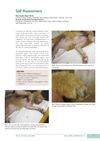 April 2008 in “Companion Animal”
 The cat's skin condition was linked to cancer and did not improve with treatment, leading to a poor outcome.
 July 2003 in “British Journal of Dermatology”
 Some skin conditions are associated with other serious diseases, and office microscopy may miss many fungal infections.
Treatments for acute leukaemia lead to high remission rates, but relapses occur, requiring ongoing advancements in care.
 May 2004 in “Pediatric Dermatology”
 Atopic dermatitis may have genetic causes and can be treated with pharmacologic methods, glycerin creams, and controlling Staphylococcus aureus colonization.
 421 citations
,
April 2012 in “The New England Journal of Medicine”
421 citations
,
April 2012 in “The New England Journal of Medicine” Alopecia Areata is an autoimmune condition causing hair loss with no cure and treatments that often don't work well.
 2 citations
,
March 2011 in “Infertility”
2 citations
,
March 2011 in “Infertility” The conclusion is that lifestyle changes and weight loss are first-line treatments for infertility due to anovulation, with various medications and assisted reproductive technologies as additional options.