The document concludes that diagnosing female hair loss requires careful examination, with treatments varying by condition and psychological support often necessary.
 December 2018 in “IntechOpen eBooks”
 Neurohormones help control skin health and could treat skin disorders.
 December 2018 in “Neuroradiology”
 MRI helps distinguish between pituitary adenomas and craniopharyngiomas, guides treatment for pediatric CNS tumors, and assesses rhinocerebral mucormycosis with a high mortality rate in transplanted patients.
 October 2018 in “InTech eBooks”
 The most effective treatments for hair loss are minoxidil, finasteride, PRP, and hair transplants, with steroids and immunosuppressants for autoimmune types.
 July 2018 in “Elsevier eBooks”
 The most common cause of hair loss in children is tinea capitis, followed by alopecia areata and telogen effluvium.
 January 2018 in “Elsevier eBooks”
 The document concludes that alopecia has various forms, each with specific treatments, but no definitive cure for certain types like CCCA has been proven.
 April 2017 in “Journal of evolution of medical and dental sciences”
 Most women with excess hair growth had Polycystic Ovary Syndrome, and severity wasn't linked to hormone levels.
 January 2017 in “Springer eBooks”
 Over 40% of postmenopausal women experience hair loss, with treatments aiming to stop further loss and possibly thicken hair.
 January 2017 in “Archives of clinical and biomedical research”
 Enhancing melanin's energy generation may help treat alopecia areata.
Orthognathic surgeons play a key role in modifying masculine facial features to be more feminine, often improving transgender women's quality of life.
 January 2016 in “Dermatology Review”
 Endocrine disorders can cause various skin and hair issues.
 January 2015 in “Journal of evolution of medical and dental sciences”
 Topical tacrolimus is effective and safe for treating alopecia areata.
The EMG-to-force model accurately predicts hip muscle forces during walking.
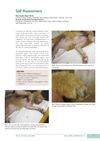 April 2008 in “Companion Animal”
 The cat's skin condition was linked to cancer and did not improve with treatment, leading to a poor outcome.
 January 2007 in “Elsevier eBooks”
 Alopecia areata is a reversible, autoimmune-related hair loss that can have significant emotional impact and uncertain treatment effectiveness.
 December 2004 in “Medicine”
 A thorough history and examination are crucial for diagnosing skin diseases, which affect up to a third of people. This includes details about skin lesions, medication, general health, lifestyle, family, and contacts, as well as examining the rash, hair, nails, and mucous membranes. Changes in hair and nails can also indicate other medical and skin disorders.
 September 2003 in “Clinics in Family Practice”
 Different hair diseases affect people during childbearing years, with treatments ranging from medication to psychological support.
 January 1995 in “Adolescent and pediatric gynecology”
 Mutations in the androgen receptor gene cause different levels of androgen insensitivity, making it hard to create simple tests for the condition.
 January 1991 in “Journal of Pediatric Health Care”
 Hair loss in children can be caused by fungal infections, trauma, autoimmune disorders, or stress, and treatments vary depending on the cause.
 79 citations
,
March 2017 in “Dermatologic clinics”
79 citations
,
March 2017 in “Dermatologic clinics” Vitiligo affects overall health and self-esteem, needing more research and awareness.
 41 citations
,
June 2010 in “Clinics in Dermatology”
41 citations
,
June 2010 in “Clinics in Dermatology” Smoking harms skin health, causing slower wound healing, more wrinkles, and worsening some skin conditions, but may protect against certain others.
 29 citations
,
March 2023 in “European Journal of Human Genetics”
29 citations
,
March 2023 in “European Journal of Human Genetics” New genetic factors linked to acne risk were discovered, highlighting the role of certain pathways and genes.
 29 citations
,
July 2010 in “Journal of Cutaneous Medicine and Surgery”
29 citations
,
July 2010 in “Journal of Cutaneous Medicine and Surgery” Treatments for Frontal Fibrosing Alopecia have not been proven effective.
 25 citations
,
October 2015 in “Dermatology”
25 citations
,
October 2015 in “Dermatology” Dapsone improved pustular psoriasis in patients who didn't respond to other treatments and is considered a well-tolerated option.
 17 citations
,
October 2017 in “Journal of Cutaneous Medicine and Surgery”
17 citations
,
October 2017 in “Journal of Cutaneous Medicine and Surgery” No treatment has been proven to effectively stop hair loss or regrow hair in Frontal Fibrosing Alopecia, and more research is needed.
 15 citations
,
July 2019 in “Lasers in surgery and medicine”
15 citations
,
July 2019 in “Lasers in surgery and medicine” The erbium-glass laser effectively promotes hair regrowth in alopecia areata.
 13 citations
,
September 2017 in “Skin appendage disorders”
13 citations
,
September 2017 in “Skin appendage disorders” Some women with Frontal Fibrosing Alopecia also have Lichen Planopilaris, which can lead to more symptoms and affect hair outside the scalp.
 12 citations
,
January 2015 in “Indian Journal of Dermatology, Venereology and Leprology”
12 citations
,
January 2015 in “Indian Journal of Dermatology, Venereology and Leprology” A mother and daughter with similar hair loss conditions and identical HLA types suggest a genetic link between the conditions.
 10 citations
,
January 2016 in “Dermatology”
10 citations
,
January 2016 in “Dermatology” People with myotonic dystrophy type 1 tend to develop basal cell carcinoma at a younger age but not more frequently than others.
 9 citations
,
September 2016 in “Dermatologic Surgery”
9 citations
,
September 2016 in “Dermatologic Surgery” New LPP subtype affects vellus hairs, mimics AGA, and needs biopsy for diagnosis.