January 2002 in “Linchuang pifuke zazhi” A young woman had a rare scalp tumor usually found in older women.
 November 2025 in “Zenodo (CERN European Organization for Nuclear Research)”
 Croton tiglium Linn. may promote hair growth but needs careful detoxification due to its toxicity.
 16 citations
,
June 2009 in “Dermatologic Surgery”
16 citations
,
June 2009 in “Dermatologic Surgery” A 17-year-old boy with Temporal Triangular Alopecia successfully grew new hair after a hair restoration surgery using follicular unit transplantation.
 January 2020 in “Przegla̧d dermatologiczny”
 A 5-year-old boy was diagnosed with congenital triangular alopecia, a type of hair loss without skin changes, usually starting between ages 2-5, with no specific treatment.
10 citations
,
January 1987 in “PubMed” Thyroid hormone and epidermal growth factor affect hair angle, tooth eruption, and ear development in rats.
93 citations
,
May 1990 in “The EMBO Journal” Mice with extra sheep genes had hair that fell out and regrew in cycles.
January 2023 in “SKIN The Journal of Cutaneous Medicine” 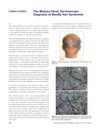 7 citations
,
January 2012 in “International Journal of Trichology”
7 citations
,
January 2012 in “International Journal of Trichology” A man with Woolly Hair Syndrome had very curly, fragile hair, and doctors used a special scalp examination to diagnose him without invasive tests.
 1 citations
,
January 2021 in “Nihon rinsho hifukaikai zasshi”
1 citations
,
January 2021 in “Nihon rinsho hifukaikai zasshi” The document provides ways to tell alopecia areata from other similar hair loss conditions, using visual checks and specific tests.
 12 citations
,
November 1945 in “Archives of dermatology”
12 citations
,
November 1945 in “Archives of dermatology” Transplanted skin on hooded rats often grows white hair instead of black.
 October 2022 in “International journal of Ayurvedic medicine”
 Karaviradya taila reduces hair growth and hair follicles.
 3 citations
,
April 2016 in “The journal of investigative dermatology/Journal of investigative dermatology”
3 citations
,
April 2016 in “The journal of investigative dermatology/Journal of investigative dermatology” Curcumin applied to the skin can start hair growth in mice.
October 2022 in “Hair Transplantation” Temporary scalp trichopigmentation creates a shaved hair look on the scalp using pigments that fade over time.
14 citations
,
September 2017 in “General and comparative endocrinology” Barn owls with smaller black spots have higher testosterone levels, which might be due to genetic effects on hormone regulation rather than hormone effects on coloration.
 December 2019 in “Journal of pediatrics & neonatology”
 A 13-year-old boy had a rare, stable type of hair loss with little chance of regrowth, but treatment is available for looks.
 9 citations
,
April 2005 in “PubMed”
9 citations
,
April 2005 in “PubMed” Older female squirrel monkeys often experience a type of hair loss similar to chronic telogen effluvium in humans.
January 2005 in “Journal of Zhejiang University(Sciences Edition)” Yuyi hairless mice lose hair after birth, develop thick, loose skin with folds, and show disorganized skin structure as they age.
1 citations
,
August 2020 The Shaven mutation in mice affects hair growth and causes a greasy coat due to abnormal lipid content.
 32 citations
,
January 2014 in “Dermatology Research and Practice”
32 citations
,
January 2014 in “Dermatology Research and Practice” Trichoscopy can effectively tell apart tinea capitis and alopecia areata in children by looking for specific hair shapes.
10 citations
,
February 2019 in “Journal of cellular physiology” TGF-β2 helps yak hair follicles enter the regression phase, while HSP70 tries to prevent it.
 December 2020 in “TURKDERM”
 A 3-year-old boy was diagnosed with a rare, non-scarring hair loss condition called temporal triangular alopecia.
 5 citations
,
June 2015 in “Journal of Investigative Dermatology”
5 citations
,
June 2015 in “Journal of Investigative Dermatology” Feathers are useful for researching growth, regeneration, and the effects of treatments like chemotherapy on hair loss.
28 citations
,
September 2013 in “European Journal of Histochemistry” Keratins in Malayan pangolins vary by region, suggesting scales evolved from the tail towards the head.
1 citations
,
January 2019 in “Journal of pharmacy & pharmacognosy research” The flavonoid-rich extract of Equisetum hyemale can help regrow hair in cases of alopecia.

Wearing a toupee makes men seem more attractive and slightly healthier, but doesn't change how confident they appear.
 2 citations
,
February 2025 in “International Journal of Molecular Sciences”
2 citations
,
February 2025 in “International Journal of Molecular Sciences” Key proteins and pathways regulate yak hair growth, with lipid metabolism aiding adaptation to high altitudes.
 2 citations
,
March 1997 in “Hair transplant forum international”
2 citations
,
March 1997 in “Hair transplant forum international” Transplanting rat whisker follicles can lead to successful hair growth after cutting them.
 6 citations
,
July 2015 in “Journal of Investigative Dermatology”
6 citations
,
July 2015 in “Journal of Investigative Dermatology” Chicken feather gene mutation helps understand human hair disorders.
335 citations
,
March 2004 in “Development” Temporary activation of β-catenin can create new hair follicles, but ongoing activation is needed to keep hair follicle tumors.
4 citations
,
January 2004 DanGuiBoHyulTangGami-Bang helps hair growth but doesn't extend the growth period or affect hair follicle cells significantly.