2 citations
,
January 2010 Tianzhu white yak hair varies in structure and density between fuzz and coarse hair.
 2 citations
,
May 2012 in “Acta pharmaceutica sinica B”
2 citations
,
May 2012 in “Acta pharmaceutica sinica B” The study found unique microscopic features for hair or feather in five animal ingredients in Shenrongbian pill.
August 2004 in “Veterinary Dermatology” The red panda's hair loss was caused by an endocrine issue linked to ovarian tumors.
578 citations
,
April 1993 in “Cell” TGFα gene mutation in mice causes abnormal skin, wavy hair, curly whiskers, and sometimes eye inflammation.
July 2025 in “Indian Dermatology Online Journal” Trichotillomania incognita can mimic hair loss patterns and requires careful diagnosis to avoid misdiagnosis.
3 citations
,
August 2018 in “Medical Journal Armed Forces India/MJAFI” Intense Pulse Light effectively reduces hair growth in faun tail nevus.
10 citations
,
October 2009 in “Photomedicine and laser surgery” IPL treatment can significantly reduce hair in faun tail but may need local anesthesia.
35 citations
,
September 2011 in “The Journal of Dermatology” Trichoscopy helps accurately diagnose temporal triangular alopecia.
December 2024 in “Veterinary Dermatology” A sugar glider had a rare skin cancer that worsened despite treatment, highlighting the need for thorough checks in exotic pets.
February 2025 in “International Journal of Research Publication and Reviews” Butterfly pea flower is valued for its health benefits, color-changing ability, and use in food and drinks.
133 citations
,
August 1969 in “Science” Melatonin causes weasels to grow white fur and become reproductively inactive.
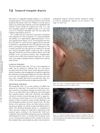 April 2012 in “Informa Healthcare eBooks”
 Temporal triangular alopecia is a lifelong condition with hairless patches on the side of the head that may be present from birth.
32 citations
,
August 2016 in “Journal of the American Academy of Dermatology” Temporal triangular alopecia is a non-scarring hair loss in children, often linked to other health conditions.
3 citations
,
January 2021 in “Veterinary dermatology” A litter of cats had a hair condition similar to a mouse mutation, leading to hair loss and abnormal hair and skin.
 2 citations
,
August 2020 in “Natural Product Communications”
2 citations
,
August 2020 in “Natural Product Communications” A mix of Platycladus orientalis leaf extract and alpha-terpineol helps mice grow hair by increasing growth factors and cell growth.
December 2025 in “International Journal of Advanced Biochemistry Research” Malvi cattle hair varies in color and pattern across different body regions.
 39 citations
,
April 2015 in “Regeneration”
39 citations
,
April 2015 in “Regeneration” Lizards can regrow their tails, and studying this process helps understand scar-free healing and limb regeneration.
1 citations
,
April 2018 in “Journal of Investigative Dermatology” The Trichodysplasia spinulosa virus protein can cause abnormal hair growth in mice.
6 citations
,
November 2020 in “bioRxiv (Cold Spring Harbor Laboratory)” Gene expression, especially Dkk4, is key to cat color patterns.
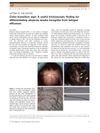 2 citations
,
March 2018 in “The Journal of Dermatology”
2 citations
,
March 2018 in “The Journal of Dermatology” The "color-transition sign" helps tell apart alopecia areata incognita from telogen effluvium by looking at hair color changes.
 6 citations
,
April 1996 in “Journal of histochemistry and cytochemistry/The journal of histochemistry and cytochemistry”
6 citations
,
April 1996 in “Journal of histochemistry and cytochemistry/The journal of histochemistry and cytochemistry” TGF-alpha is present in sheep and ferret skin and may affect hair growth without directly stimulating cell proliferation.
 2 citations
,
March 2014 in “Veterinary World”
2 citations
,
March 2014 in “Veterinary World” Indian bison, black buck, and nilgai have distinct hair follicle patterns useful for species identification.
73 citations
,
December 2015 in “Nature Genetics” Mutations in TBX3 cause horses to have more even hair color instead of Dun camouflage.
October 2025 in “Diagnostics” Temporal triangular alopecia is a harmless, non-progressive hair loss condition.
January 2023 in “Indian Dermatology Online Journal” A 23-year-old man has a benign, non-progressive hair loss patch that doesn't respond to treatment but can be cosmetically treated.
 2 citations
,
March 2023 in “Skin research and technology”
2 citations
,
March 2023 in “Skin research and technology” Temporal triangular alopecia in infants is mostly seen in males at birth, with unique features that help with diagnosis.
 54 citations
,
January 2013 in “BMC Complementary and Alternative Medicine”
54 citations
,
January 2013 in “BMC Complementary and Alternative Medicine” Thuja orientalis hot water extract may help hair grow by starting the growth phase and improving hair follicle development.
 March 2021 in “Research Society and Development”
 A blue Staffordshire Bull Terrier had hair loss due to color dilution alopecia, confirmed by tests, but no treatment was pursued.
 October 2025 in “HAL (Le Centre pour la Communication Scientifique Directe)”
 Variegated coat color in cats is linked to the Silver locus.
 8 citations
,
July 2014 in “Anais Brasileiros de Dermatologia”
8 citations
,
July 2014 in “Anais Brasileiros de Dermatologia” A man's scalp condition was misidentified as hair loss dots but was actually a common follicular disorder.