Search
for
Sort by
Research
330-360 / 1000+ results
research Temporal Triangular Alopecia: Report of an African‐American Child with TTA Misdiagnosed as Refractory Tinea Capitis
A child was initially wrongly diagnosed with a fungal scalp infection but actually had a non-scarring hair loss condition called Temporal Triangular Alopecia.

research 5α-Reductase underscores the development of pectoral fin breeding tubercles in zebrafish
The development of breeding tubercles in male zebrafish relies on a specific enzyme that processes hormones.
research Multicolor Cell Barcoding Technology for Long-Term Surveillance of Epithelial Regeneration in Zebrafish
Zebrafish skin regeneration relies on cell behaviors and reactive oxygen species, with antioxidants reducing and hydrogen peroxide increasing regeneration.

research Hair-tourniquet syndrome ??? multiple toes and bilaterality
Hair-tourniquet syndrome can cause serious toe injuries in infants but can be treated if found early.
research Characterization of Growth Secondary Hair in Min Pig Activated by Follicle Stem Cell Stimulated by Wnt and BMP Signaling Pathway
Wnt and BMP pathways stimulate hair growth in Min pigs, with Wnt being more effective.
research Temporal Triangular Alopecia – A Diagnostic Dilemma: Case Series of Six Patients
Trichoscopy effectively diagnoses temporal triangular alopecia in children.

research The Friar Tuck sign in trichotillomania
An 8-year-old boy with hair-pulling disorder had a bald patch that was confirmed not to be a fungal infection and was treated with therapy.

research Microscopical characterization of known postmortem root bands using light and scanning electron microscopy
The research found that postmortem root bands in hair are likely caused by the breakdown of a specific part of the hair's inner structure after death.

research Hair-thread tourniquet syndrome of labia: A case report
Removing hair wrapped around the labia quickly prevents serious tissue damage.

research From laboratory to operating room: Innovative use of manual blood cell counting machine for counting follicular grafts
A manual blood cell counter was effectively used to count hair follicles during surgery, being user-friendly and cost-effective but limited by a three-digit display.

research Negative pressure wound therapy augmented full-thickness free skin grafting in the cat: outcome in 10 grafts transferred to six cats
Negative pressure wound therapy is effective for skin grafts in cats.

research Standardizing the Classification and Description of Follicular Unit Transplantation and Mini-Micrografting Techniques
Surgeons suggested a standard system for hair transplant methods to improve communication and results.
research Body Focused Repetitive Behavior at an Unusual Site and in an Unusual Pattern - Symmetrical Trichotillomania
Trichotillomania can occur in unusual patterns and sites, highlighting the need for awareness and treatment options.

research Follicular Unit Transplantation
Follicular Unit Transplantation (FUT) can give great results and patient satisfaction when done carefully and by a skilled surgeon.

research Comparison of a Novel Silicone Gel Wound Dressing vs Bacitracin After Follicular Unit Extraction Hair Transplantation
The new silicone gel wound dressing may speed up early healing after hair transplant surgery compared to Bacitracin.
research Clinical and trichoscopic characteristics of temporal triangular alopecia: A multicenter study
Temporal triangular alopecia is a non-scarring hair loss in children, often linked to other health conditions.
research Platelet-rich gel versus external tissue expansion technique in treating scalp defects: A retrospective study
Platelet-rich gel is a simpler, cheaper, and painless option for scalp defects, but tissue expansion offers better hair growth despite more pain.

research The First Report of Isolated Clitoral Hood Hair-Thread Tourniquet Syndrome: A Study of Six Patients
Early detection and treatment of hair-thread tourniquet syndrome in young girls is important to prevent serious harm.

research Hair Tourniquet Syndrome, A missed diagnosis: Review of Literature
Doctors often miss Hair Tourniquet Syndrome, which can lead to serious damage if not treated quickly.
research Evaluation of acaricide treatments to experimentally reduce winter tick load on moose
The combination treatment effectively reduced winter tick load on moose.

research Wound healing mechanism in Mongolian gerbil skin
Mongolian gerbils heal wounds differently than mice, with unique protein levels and gene expression that affect skin repair.
research Group Treatment for Trichotillomania: Behavior Therapy Versus Supportive Therapy
Group behavior therapy reduces hair-pulling symptoms more than supportive therapy but has limited long-term effectiveness.
research Hormonal control of pelage cycles in the short tailed weasel (Mustela erminea bangsi)
The pituitary gland controls seasonal fur color changes in weasels.
research Hair tourniquet syndrome
Hair tourniquet syndrome is a rare condition where hair wraps around an infant's body part, needing quick removal to prevent damage.
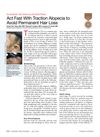
research Act Fast With Traction Alopecia to Avoid Permanent Hair Loss
Act quickly to prevent permanent hair loss from tight hairstyles.

research Advanced Use of Tissue Adhesive in Hair Transplantation
Using tissue adhesive in hair transplants improves results and patient satisfaction, with fewer complications.

research The triple rotation scalp flap revisited: a case of reconstruction of cicatricial pressure alopecia
The triple rotation scalp flap technique successfully reconstructed a man's scalp with natural-looking hair growth and minimal scarring.
research Upper and Lower Trichophytic Closure with Wavy Two-Layered Closure for Optimal Hair Transplantation Scar
A wavy two-layer closure in hair transplants makes scars nearly invisible for most patients.

research Fixed focal alopecia for 20 years
The man has Temporal Triangular Alopecia, a stable, non-scarring hair loss condition best treated with hair transplantation.