16 citations
,
December 2020 in “PloS one” Researchers found WNT10A to be a key gene in developing goat hair follicles.
9 citations
,
November 2024 in “Biotechnology for Sustainable Materials” Keratin-based biomaterials are promising for wound healing, drug delivery, and nerve regeneration due to their biodegradability and biocompatibility.
8 citations
,
February 2021 in “Journal of Clinical Medicine” Hair follicle stem cells are promising for blood vessel formation and tissue repair.
 6 citations
,
December 2004 in “Anais Brasileiros de Dermatologia”
6 citations
,
December 2004 in “Anais Brasileiros de Dermatologia” Some family members had a condition with both loose hair and unique eye changes, possibly indicating a new type of ectodermal dysplasia.
5 citations
,
April 2024 in “ACS Chemical Neuroscience” A new method accurately measures nine neuroactive steroids in small blood samples, helping to study brain diseases.
3 citations
,
July 2024 in “Animals” Tail tip lesions in dairy cows may be caused by reduced blood flow to the skin.
2 citations
,
January 2024 in “Pharmaceuticals” Deep eutectic solvents are eco-friendly and effective for extracting useful pharmaceutical compounds.
2 citations
,
December 2023 in “Pharmaceutics” Inhaling medicine may reduce side effects and improve treatment for a major lung cancer type.
2 citations
,
May 2021 in “International journal of molecular sciences” Stem cells from hair follicles in a special gel show strong potential for bone regeneration.
October 2025 in “The Laryngoscope” The Endotine Forehead-mini effectively lowers the hairline with lasting results and minimal risks.
 May 2025 in “Journal of International Medical Research”
 Micrografting may improve healing and hair growth, but more research is needed.
 April 2025 in “BMC Chemistry”
 Thiadiazole chitosan conjugates improve hair manageability, moisture, and protection in conditioners.
 January 2022 in “Sustainable development goals series”
 The document concludes that significant investment in agricultural innovation is necessary to achieve global food security and nutrition.
December 2022 in “Molecular Pharmaceutics” Latanoprost-loaded nanotransfersomes could help treat hair loss by promoting hair growth.
196 citations
,
November 2014 in “PubMed” Tinea infections need proper diagnosis and treatment with topical or oral antifungals based on severity and location.
 156 citations
,
September 2014 in “British journal of dermatology/British journal of dermatology, Supplement”
156 citations
,
September 2014 in “British journal of dermatology/British journal of dermatology, Supplement” Accurate diagnosis and effective oral treatment are key to managing tinea capitis and preventing its spread.
125 citations
,
May 2010 in “Pediatric dermatology” Systemic treatment is necessary for tinea capitis in children, with griseofulvin preferred for Microsporum infections.
 108 citations
,
March 2011 in “Archives of Dermatology”
108 citations
,
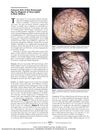
March 2011 in “Archives of Dermatology” Corkscrew hair may be a new sign for quickly diagnosing scalp fungus in black children.
84 citations
,
January 1987 in “The Pediatric Infectious Disease Journal” Griseofulvin is more effective than ketoconazole for treating tinea capitis in children.
 65 citations
,
January 2005 in “American journal of clinical dermatology”
65 citations
,
January 2005 in “American journal of clinical dermatology” Children with scalp fungal infections need proper diagnosis and treatment, usually with antifungal medications, and newer drugs may offer quicker recovery.
52 citations
,
April 2000 in “International Journal of Dermatology” Tinea capitis in Benghazi mainly affects children under 10, with Trichophyton violaceum as the leading cause.
46 citations
,
January 2002 in “Paediatric drugs” Tinea capitis, a scalp fungal infection in children, is best treated with newer antifungal agents for shorter periods.
 41 citations
,
September 2007 in “Pediatric emergency care”
41 citations
,
September 2007 in “Pediatric emergency care” Oral medication is necessary to treat scalp fungus in children, with griseofulvin being the usual choice.
37 citations
,
October 2010 in “JDDG Journal der Deutschen Dermatologischen Gesellschaft” Griseofulvin is the best treatment for tinea capitis in children, but more research is needed on other treatments and safety.
 36 citations
,
October 2016 in “Medical mycology”
36 citations
,
October 2016 in “Medical mycology” PCR-ELISA is better for identifying the fungus causing scalp infections in Ugandan children than traditional methods.
 35 citations
,
January 1996 in “Dermatologic clinics”
35 citations
,
January 1996 in “Dermatologic clinics” Tinea capitis is a common scalp infection causing hair loss, mostly in young children.
 33 citations
,
December 2013 in “Journal of cutaneous pathology”
33 citations
,
December 2013 in “Journal of cutaneous pathology” A fungal infection can look like a different scalp condition in teens, leading to wrong treatment until proper tests are done.
 32 citations
,
January 2014 in “Dermatology Research and Practice”
32 citations
,
January 2014 in “Dermatology Research and Practice” Trichoscopy can effectively tell apart tinea capitis and alopecia areata in children by looking for specific hair shapes.
 32 citations
,
August 2003 in “Journal of the American Academy of Dermatology”
32 citations
,
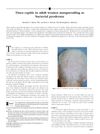
August 2003 in “Journal of the American Academy of Dermatology” Tinea capitis can be misdiagnosed as bacterial infection in adult women but is treatable with antifungal medication.
 29 citations
,
April 2013 in “Mycoses”
29 citations
,
April 2013 in “Mycoses” A young man was initially misdiagnosed with a scalp condition but was found to have a fungal infection, which improved with antifungal treatment.