
The woman has unexplained hair loss and it's unclear what her condition is or how to treat it.
 March 2012 in “Journal of The American Academy of Dermatology”
 Dermoscopy helps diagnose different hair loss conditions, and characteristics vary among ethnicities and individual cases.
 March 2012 in “Journal of The American Academy of Dermatology”
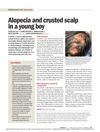
 A 7-year-old boy's unusual hair loss was caused by a herpes infection and healed after treatment.
January 2012 in “Journal of Islamic International Medical College” Using topical steroids for acne is a bad idea and causes many skin problems.
 January 2012 in “Yearbook of Dermatology and Dermatologic Surgery”
 Some African American women experience central scalp hair loss, often linked to a history of fungal scalp infection.
 January 2012 in “Postgraduate obstetrics & gynecology”
 Up to 50% of women may experience significant hair loss by age 50, with various causes and treatments available.
Trichoscopy is a useful tool for monitoring hair and scalp diseases.
Higher iodine levels in children's hair may help cure tinea capitis during puberty.
Trichorrhexis nodosa causes hair to break easily, often affecting young to middle-aged black women.
 December 2005 in “Journal of the American Academy of Physician Assistants”
 The woman was diagnosed with lichen planopilaris and can be treated with corticosteroids.
Hair loss in women can be caused by different conditions like hormonal changes, infections, or stress.
 September 2003 in “Current Paediatrics”
 The document concludes that accurate diagnosis and understanding the type of hair disorder are crucial for treating hair loss in children.
Fungal infections like ringworm affect skin, hair, and nails in humans and animals, requiring culture for diagnosis and specific treatments.
 January 1998 in “Current Therapeutics”
 Different causes of hair loss require specific treatments, and most men and women will experience some form of hair thinning as they age.
 November 1995 in “Journal of Pediatric Health Care”
 Most hair loss in kids and teens is due to common conditions, and hair usually grows back within 6 months.
 January 1991 in “Journal of Pediatric Health Care”
 Hair loss in children can be caused by fungal infections, trauma, autoimmune disorders, or stress, and treatments vary depending on the cause.
April 1946 in “Archives of Dermatology” One child resisted treatment, while the other was successfully treated for scalp ringworm.
4 citations
,
January 2018 in “Indian dermatology online journal” Trichoscopy helped diagnose and cure a child's hair loss caused by a fungal infection.
 19 citations
,
August 2010 in “Journal der Deutschen Dermatologischen Gesellschaft”
19 citations
,
August 2010 in “Journal der Deutschen Dermatologischen Gesellschaft” Certain plant extracts can effectively treat skin conditions like athlete's foot, chronic vein problems, sun damage, skin growths, vitiligo, and hair loss, and may also improve skin appearance.
2 citations
,
December 2021 in “Journal of Drugs in Dermatology” Early diagnosis and treatment of alopecia in children are crucial for managing physical and psychological impacts.
1 citations
,
April 2022 in “Frontiers in Microbiology” Amputation stump skin disease worsens life quality, especially in men during summer, and long prosthesis use increases fungal infection risk.
 March 2026 in “Open MIND”
 Early treatment of scalp infections can prevent permanent hair loss.

The model accurately classifies hair conditions with 97% accuracy.

The conclusion is that dermatologists need to improve prescription practices to reduce errors and drug interaction risks.
April 1992 in “Pediatrics in Review” Quick, simple tests help diagnose children's skin fungal infections.
1 citations
,
March 2024 in “Oxford Medical Case Reports” Moth-eaten hair loss can be a sign of syphilis.
 September 2024 in “The Professional Medical Journal”
 Infectious skin diseases like scabies and fungal infections are common but treatable in Lahore, especially in summer.
June 2023 in “The Journal of Family Practice” The hair loss is likely due to a fade haircut.
 September 2021 in “CRC Press eBooks”
 Lichen planopilaris causes permanent hair loss and scarring due to damage to hair follicles and can be mistaken for other hair loss conditions.
January 1999 in “대한피부과학회지” Stress management is important for hair loss conditions like alopecia areata and androgenetic alopecia.