1 citations
,
April 2024 in “Cells” Corneal cells can potentially revert to stem cells, aiding in repair and regeneration.
 June 2022 in “Scientific Reports”
 Prevelex, a polyampholyte, can create a cell-repellent coating on microdevices, which can be useful in biomedical applications like hair follicle regeneration.
 January 2013 in “프로그램북(구 초록집)”
 Hair restoration surgery is improving, with less painful techniques like FUE and robotic systems, but they can be costly and require training.
October 2005 in “Faculty Opinions – Post-Publication Peer Review of the Biomedical Literature” Activating telomerase can boost hair follicle stem cell growth and hair production.
 5 citations
,
May 2020 in “Dermatologic Therapy”
5 citations
,
May 2020 in “Dermatologic Therapy” 5-alpha reductase inhibitors might worsen lung recovery in COVID-19 patients, suggesting a pause in their use.
 January 2006 in “Advances in developmental biology”
 The Hairless gene is crucial for healthy skin and hair growth.
 29 citations
,
December 2016 in “The EMBO Journal”
29 citations
,
December 2016 in “The EMBO Journal” Gata6 is important for protecting hair growth cells from DNA damage and keeping normal hair growth.
 99 citations
,
August 2009 in “Nature Genetics”
99 citations
,
August 2009 in “Nature Genetics” Removing both Atr and Trp53 genes in adult mice causes severe tissue damage and death due to DNA damage.
 84 citations
,
December 2017 in “EMBO Reports”
84 citations
,
December 2017 in “EMBO Reports” Circadian rhythms are crucial for stem cell function and tissue repair, and understanding them may improve aging and regeneration treatments.
 14 citations
,
April 2017 in “Scientific Reports”
14 citations
,
April 2017 in “Scientific Reports” Using a perfusion system and 3D spheroid culture improves the growth of corneal cell layers for tissue engineering.
 2 citations
,
May 2023 in “bioRxiv (Cold Spring Harbor Laboratory)”
2 citations
,
May 2023 in “bioRxiv (Cold Spring Harbor Laboratory)” Stem cells help remove dead cells to keep tissues healthy by balancing cell replacement and clearance.
 June 2026 in “Frontiers in Immunology”
 Understanding tissue remodeling can help create precise treatments for various organ issues.
 71 citations
,
September 2006 in “Cell Transplantation”
71 citations
,
September 2006 in “Cell Transplantation” Fetal skin cells from a cell bank heal wounds faster and with less scarring than adult cells.
 17 citations
,
January 1997 in “Cell and Tissue Research”
17 citations
,
January 1997 in “Cell and Tissue Research” Scientists developed a method to grow human fetal skin and digits in a lab for 3-4 weeks, which could help study skin features and understand genetic interactions in tissue formation.
 6 citations
,
January 2023 in “npj regenerative medicine”
6 citations
,
January 2023 in “npj regenerative medicine” Transplanting growing hair follicles into scars can help regenerate and improve scar tissue.
 132 citations
,
January 2017 in “International Journal of Molecular Sciences”
132 citations
,
January 2017 in “International Journal of Molecular Sciences” Fat-derived stem cells show promise for skin repair and reducing aging signs but need more research for consistent results.
 67 citations
,
January 2020 in “Cellular & Molecular Immunology/Cellular & molecular immunology”
67 citations
,
January 2020 in “Cellular & Molecular Immunology/Cellular & molecular immunology” Tissue-resident memory T cells can protect against infections and cancer but may also contribute to autoimmune diseases.
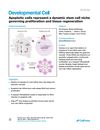 25 citations
,
June 2021 in “Developmental Cell”
25 citations
,
June 2021 in “Developmental Cell” Dying cells can help with faster healing and new hair growth by releasing a growth-promoting molecule.
 24 citations
,
May 2016 in “Stem Cell Reviews and Reports”
24 citations
,
May 2016 in “Stem Cell Reviews and Reports” The document concludes that understanding how adult stem and progenitor cells move is crucial for tissue repair and developing cell therapies.
 2 citations
,
January 2008 in “Elsevier eBooks”
2 citations
,
January 2008 in “Elsevier eBooks” Humans have limited regenerative abilities, but new evidence shows the adult brain and heart can regenerate, and future treatments may improve this by mimicking stem cell environments.
 40 citations
,
March 2019 in “Nature Communications”
40 citations
,
March 2019 in “Nature Communications” CRAC channels are crucial for the development and function of specialized immune cells, preventing severe inflammation and autoimmune diseases.
 33 citations
,
January 2018 in “The International Journal of Developmental Biology”
33 citations
,
January 2018 in “The International Journal of Developmental Biology” Cell aging can be both good and bad for tissue repair.
 18 citations
,
July 2021 in “Molecular Medicine Reports”
18 citations
,
July 2021 in “Molecular Medicine Reports” The WNT signaling pathway is crucial for mesenchymal stem cells' function and therapy success.
 421 citations
,
January 2015 in “Chemical Society Reviews”
421 citations
,
January 2015 in “Chemical Society Reviews” Improving artificial vascular grafts requires better materials and surface designs to reduce blood clotting and support blood vessel cell growth.
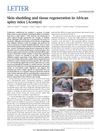 418 citations
,
September 2012 in “Nature”
418 citations
,
September 2012 in “Nature” African spiny mice can regenerate skin, hair, and cartilage, but not muscle, and their unique abilities could be useful for regenerative medicine.
 295 citations
,
June 2009 in “Science”
295 citations
,
June 2009 in “Science” Stromal stem cells may help heal wounds by becoming structural cells or affecting the immune system, but more research is needed to understand how.
 228 citations
,
September 2012 in “Trends in Neurosciences”
228 citations
,
September 2012 in “Trends in Neurosciences” Nerves are crucial for the regeneration of various body parts in many animals.
 188 citations
,
March 2018 in “Frontiers in Immunology”
188 citations
,
March 2018 in “Frontiers in Immunology” Regulatory T-cells are important for healing and regenerating tissues in various organs by controlling immune responses and aiding stem cells.
 184 citations
,
December 2018 in “Nature Communications”
184 citations
,
December 2018 in “Nature Communications” Researchers created human hair follicles using a new method that could help treat hair loss.
 165 citations
,
January 2008 in “Journal of biomaterials science. Polymer ed.”
165 citations
,
January 2008 in “Journal of biomaterials science. Polymer ed.” The peptide GHK-Cu helps heal and remodel tissue, improves skin and hair health, and has potential for treating age-related inflammatory diseases.