 5 citations
,
February 2017 in “Biomolecules & Therapeutics”
5 citations
,
February 2017 in “Biomolecules & Therapeutics” 4-O-Methylhonokiol helps protect skin cells from growth-stopping effects of a protein by regulating growth-related pathways.
2 citations
,
June 2025 in “Drug Testing and Analysis” The method effectively detects MeT and TP in dried blood spots after cream application.
 March 2020 in “Section 5: Patient safety and quality assurance”
 Tofacitinib and baricitinib had an acceptable level of side effects in rheumatoid arthritis patients.
 January 2021 in “ABC Heart Failure & Cardiomyopathy”
 A 90-year-old man was diagnosed with heart failure due to wild-type transthyretin cardiac amyloidosis.
 1 citations
,
May 2025 in “Frontiers in Medicine”
1 citations
,
May 2025 in “Frontiers in Medicine” Dual-targeted therapy is effective and safe for difficult-to-treat inflammatory bowel disease.
 16 citations
,
April 2014 in “Expert Opinion on Pharmacotherapy”
16 citations
,
April 2014 in “Expert Opinion on Pharmacotherapy” Teriflunomide is an effective and safe first-line oral treatment for relapsing multiple sclerosis.
September 1994 in “Hair transplant forum international” The document's conclusion cannot be provided because the content is not available to parse.
July 2024 in “Journal of Investigative Dermatology” DS-2325a is safe and well-tolerated, supporting further development for Netherton Syndrome treatment.
 5 citations
,
September 2021 in “Journal of Medical Biochemistry”
5 citations
,
September 2021 in “Journal of Medical Biochemistry” wAMD patients have higher oxidative stress, suggesting antioxidant treatment may help.
 13 citations
,
March 2002 in “Pediatric Dermatology”
13 citations
,
March 2002 in “Pediatric Dermatology” A child was initially wrongly diagnosed with a fungal scalp infection but actually had a non-scarring hair loss condition called Temporal Triangular Alopecia.

There is no cure for myotonic dystrophy type 1, so treatment focuses on managing symptoms and complications.
11 citations
,
March 2002 in “Pediatric Dermatology” Temporal triangular alopecia is a non-scarring hair loss seen in some Asian children.
The treatment was not recommended due to limited effectiveness and significant side effects.
 14 citations
,
January 2017 in “Pharmacological Reports”
14 citations
,
January 2017 in “Pharmacological Reports” TP0427736 may help treat hair loss by blocking a specific protein and promoting hair growth.
1 citations
,
January 2016 in “Dermatology Online Journal” Triangular temporal alopecia can occur in adults and should be correctly identified to prevent misdiagnosis.
 7 citations
,
October 2019 in “Clinical, Cosmetic and Investigational Dermatology”
7 citations
,
October 2019 in “Clinical, Cosmetic and Investigational Dermatology” Certain gene variations in the Vitamin D receptor may increase the risk of chronic hair loss.
22 citations
,
May 2011 in “European Journal of Cancer” The drug combination was safe and showed promise in treating advanced tumors.
2 citations
,
January 2018 in “International Journal of Trichology” Two sisters had a rare hair condition without other usual symptoms.

Tofacitinib significantly improved symptoms in a patient with overlapping autoimmune disorders.
 January 2026 in “Clinical Chemistry and Laboratory Medicine (CCLM)”
 The procedure accurately measures 5-alpha-dihydrotestosterone in blood, useful for standard tests.
4 citations
,
January 2023 in “Journal of Clinical Investigation” Specific mutations in a receptor cause facial abnormalities and hair loss.
4 citations
,
July 2024 in “Radiotherapy and Oncology” A standardized scoring system is needed to improve model reliability for predicting hair loss in brain tumor patients treated with proton therapy.
 April 2026 in “Human Genome Variation”
 The MBTPS2 gene variant c.970+5G>A is a common mutation causing IFAP syndrome.
45 citations
,
February 2011 in “IOP Conference Series Materials Science and Engineering” The sensor accurately measures thallium ions in solutions with high selectivity.
 5 citations
,
January 1998 in “Clinical and experimental dermatology”
5 citations
,
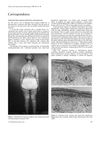
January 1998 in “Clinical and experimental dermatology” Myotonic dystrophy should be considered in patients with hair thinning, and genetic counseling is important.
 October 2023 in “Spectrochimica acta. Part A, Molecular and biomolecular spectroscopy”
 New, eco-friendly methods accurately measure TDF and FNS in a new urologic medication.
 September 2024 in “Journal of the American Academy of Dermatology”
 The new hair treatment significantly reduces hair shedding safely.
 September 2024 in “Complementary Medicine Research”
 Traditional Persian medicine helped a woman with resistant hyperthyroidism improve and stabilize her condition.
May 2005 in “Molecular Carcinogenesis” mrp/plf-mRNA can indicate tumor-promoting effects in skin.
September 2024 in “Journal of Cosmetic Dermatology” The new hair product quickly reduces hair shedding in women.