 30 citations
,
December 2017 in “Journal of The American Academy of Dermatology”
30 citations
,
December 2017 in “Journal of The American Academy of Dermatology” New criteria for diagnosing frontal fibrosing alopecia include specific scalp and eyebrow hair loss as major factors and other hair loss areas and hair analysis as minor factors.
23 citations
,
January 2017 in “BMC Medical Genetics” A new CDH3 gene mutation was found in a Spanish patient with sparse hair and eye issues.
March 2013 in “Pigment Cell & Melanoma Research” A gene called Taqpep affects cat coat patterns like stripes and blotches.
 13 citations
,
July 2012 in “Pigment Cell & Melanoma Research”
13 citations
,
July 2012 in “Pigment Cell & Melanoma Research” A mutation in the Adam10 gene causes freckle-like spots on Hairless mice.
 40 citations
,
September 2018 in “Journal of the American Academy of Dermatology”
40 citations
,
September 2018 in “Journal of the American Academy of Dermatology” Tofacitinib helped some young children with severe hair loss grow their hair back without bad side effects.
 339 citations
,
February 2014 in “Journal of The American Academy of Dermatology”
339 citations
,
February 2014 in “Journal of The American Academy of Dermatology” Most patients with frontal fibrosing alopecia are postmenopausal women, and treatments like finasteride and dutasteride can improve or stabilize the condition.
20 citations
,
April 2014 in “Autoimmunity” A specific gene variant (rs4833095) is linked to a higher risk of alopecia areata in Koreans.
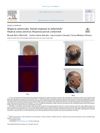 1 citations
,
July 2019 in “Medicina Clínica (English Edition)”
1 citations
,
July 2019 in “Medicina Clínica (English Edition)” Tofacitinib partially improved hair regrowth in a patient with severe hair loss.
 5 citations
,
June 2019 in “Open Forum Infectious Diseases”
5 citations
,
June 2019 in “Open Forum Infectious Diseases” Six African American women experienced hair loss after switching to a new HIV medication.
 September 2025 in “Digital Commons - RU (Rockefeller University)”
 Nfib in hair follicle stem cells boosts melanocyte stem cell growth and differentiation.
3 citations
,
June 2017 in “Reproductive biomedicine online” A certain mutation in the fetal alpha 5-reductase gene is linked to a higher risk of late miscarriage.
 September 2022 in “XXXIX Congresso Brasileiro de Reumatologia”
 Tofacitinib may effectively treat skin symptoms in difficult cases of dermatomyositis.
 222 citations
,
September 2016 in “JCI insight”
222 citations
,
September 2016 in “JCI insight” Tofacitinib is safe and effective for severe alopecia areata, but hair loss may return 2 months after stopping treatment.
 April 2025 in “Journal of Investigative Dermatology”
 Fibronectin is essential for hair follicle regeneration by supporting stem cells.
11 citations
,
October 2007 in “Journal of Investigative Dermatology” Mutations in the Sgk3 gene cause fuzzy hair in mice.
 September 2017 in “Journal of Investigative Dermatology”
 Finasteride helps female-pattern hair loss.
2 citations
,
February 2024 in “Indian Dermatology Online Journal” Tofacitinib effectively improved hair regrowth and skin condition in a woman with alopecia totalis and lichen planus hypertrophicus.
 2 citations
,
March 2022 in “Portuguese Journal of Nephrology & Hypertension”
2 citations
,
March 2022 in “Portuguese Journal of Nephrology & Hypertension” A rare EGFR mutation in newborns leads to severe health issues and early death.
53 citations
,
May 1996 in “The Journal of Clinical Endocrinology & Metabolism” Different mutations in the 5 alpha-reductase-2 gene were found in affected individuals in the Dominican Republic, suggesting no common ancestry.
 18 citations
,
November 2012 in “Australasian Journal of Dermatology”
18 citations
,
November 2012 in “Australasian Journal of Dermatology” A 66-year-old man with a rare case of male frontal fibrosing alopecia did not regrow hair despite treatment.
8 citations
,
July 2020 in “Clinical, cosmetic and investigational dermatology” Excessive sun protection might cause frontal fibrosing alopecia by disrupting skin immune balance.
7 citations
,
March 2004 in “Journal of the American Academy of Dermatology” Tiger tail banding and hair abnormalities are reliable indicators for diagnosing trichothiodystrophy.
 July 2022 in “International Journal of Trichology”
 Tofacitinib helped an 8-year-old child recover from a type of hair loss that is hard to treat.
2 citations
,
June 2013 in “Journal of Clinical Pathology” The LMNA mutation affects skin structure even in asymptomatic carriers.
January 2016 in “Indian dermatology online journal” The patient has frontal fibrosing alopecia (FFA).
 11 citations
,
September 2010 in “American Journal of Medical Genetics - Part A”
11 citations
,
September 2010 in “American Journal of Medical Genetics - Part A” A Turkish family with sparse hair and eyebrow loss has a mutation in the U2HR gene linked to Marie Unna hereditary hypotrichosis.
 July 2024 in “Research Square (Research Square)”
 SIRT3 and SIRT7 decrease, while NFATC1 and PDL-1 increase in Androgenetic Alopecia.
68 citations
,
December 2010 in “The journal of investigative dermatology/Journal of investigative dermatology” HOXC13 is essential for hair and nail development by regulating Foxn1.
2 citations
,
May 2019 in “Small ruminant research” Mutations in specific llama genes may affect fiber quality for textiles.
June 2025 in “British Journal of Dermatology” Frontal fibrosing alopecia can occur in men and may be linked to immune triggers like vaccines.