May 2023 in “Clinical and translational neuroscience” Tailored neurorehabilitation programs improve life quality for post-COVID-19 patients.
4 citations
,
June 2022 in “Journal of food bioactives” Eating plant-based anti-inflammatories and antioxidants may help manage long-term COVID-19 health issues.
May 2026 in “Zenodo (CERN European Organization for Nuclear Research)” May 2026 in “Zenodo (CERN European Organization for Nuclear Research)” 
Dupilumab improved hair and skin in a woman with Netherton syndrome.
 October 2023 in “Journal of the Endocrine Society”
 Machine learning identified three unique subtypes of androgen excess in women with PCOS, each with different metabolic risks.
 April 2016 in “Expert opinion on orphan drugs”
 There are various treatment options for frontal fibrosing alopecia.
 17 citations
,
June 2019 in “BMC genomics”
17 citations
,
June 2019 in “BMC genomics” Non-coding RNAs help control hair growth in cashmere goats.
 1 citations
,
January 2023 in “Revista da Associação Médica Brasileira”
1 citations
,
January 2023 in “Revista da Associação Médica Brasileira” Experts agree on the need for standardized definitions and education for post-COVID-19 conditions.
October 2022 in “Amplla Editora eBooks” 2 citations
,
October 2015 in “Mikrobiyoloji bülteni” A woman in Turkey with a scalp infection was cured using oral and topical antifungals after a recurrence due to not following the treatment properly.
 41 citations
,
December 2015 in “JAMA Dermatology”
41 citations
,
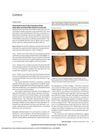
December 2015 in “JAMA Dermatology” Tofacitinib citrate improved nail dystrophy and pain in patients with alopecia universalis without causing side effects.

Dupilumab improved hair and skin in a woman with Netherton syndrome.
 9 citations
,
July 2021 in “Frontiers in Pharmacology”
9 citations
,
July 2021 in “Frontiers in Pharmacology” Cholesterol-modified siRNAs targeting certain genes increased hair growth in mice.
 24 citations
,
April 2013 in “PLOS ONE”
24 citations
,
April 2013 in “PLOS ONE” TNFα, IFNγ, and Substance P significantly affect prolactin levels in human skin, suggesting new treatments for skin and hair conditions.
July 2022 in “Zenodo (CERN European Organization for Nuclear Research)”  3 citations
,
April 2021 in “Revista da Sociedade Portuguesa de Dermatologia e Venereologia”
3 citations
,
April 2021 in “Revista da Sociedade Portuguesa de Dermatologia e Venereologia” Some people who got COVID-19 experienced temporary hair loss starting around 10 weeks after infection, with many seeing improvement within about 25 days.
 5 citations
,
August 2018 in “PubMed”
5 citations
,
August 2018 in “PubMed” An 8-year-old with severe hair loss regrew all hair after six months of tofacitinib treatment.
 1 citations
,
September 2022 in “International Journal of Trichology”
1 citations
,
September 2022 in “International Journal of Trichology” Tofacitinib can be effective in treating hair loss caused by alopecia areata.
 January 2021 in “Journal of Pakistan Association of Dermatology”
 COVID-19 recovery can lead to temporary hair loss called telogen effluvium.
 2295 citations
,
August 2012 in “The international journal of transgenderism/International journal of transgenderism”
2295 citations
,
August 2012 in “The international journal of transgenderism/International journal of transgenderism” The guidelines recommend informed consent for gender-affirming treatments and stress the importance of personalized, culturally sensitive care for transgender individuals.
 November 2025 in “Stem Cell Reviews and Reports”
 The error in figures didn't affect the study's results or conclusions.
 May 2014 in “Hair transplant forum international”
 The document's content couldn't be processed to provide a conclusion.
 March 2026 in “bioRxiv (Cold Spring Harbor Laboratory)”
 The Enriched-GF method efficiently produces high-yield growth factors for tissue repair.
 September 2021 in “Revista Interdisciplinar em Saúde”
 Oral isotretinoína effectively stabilizes frontal fibrosing alopecia.
 11 citations
,
August 2014 in “PLoS ONE”
11 citations
,
August 2014 in “PLoS ONE” GFRα2 is essential for controlling neuron size but not for target innervation in certain sensory neurons.
December 2020 in “The journal of investigative dermatology/Journal of investigative dermatology” Papulopustular rosacea is an inflammatory skin condition treatable with lifestyle changes and medications.
2 citations
,
June 2025 in “Journal of Investigative Dermatology”  1 citations
,
November 2022 in “Anais Brasileiros de Dermatologia”
1 citations
,
November 2022 in “Anais Brasileiros de Dermatologia” Many hospitalized children with COVID-19 had skin, mouth, or nail changes, with skin rashes being common.
 October 2025 in “Cermin Dunia Kedokteran”
 Early detection, prevention, and proper management can reduce TB-IRIS complications and deaths in HIV patients.