 15 citations
,
December 2014 in “PLoS ONE”
15 citations
,
December 2014 in “PLoS ONE” A mutation in the iRhom2 gene causes hairless mice due to abnormal hair follicle development.
July 1997 in “JEADV. Journal of the European Academy of Dermatology and Venereology/Journal of the European Academy of Dermatology and Venereology” 42 citations
,
August 1995 in “British journal of dermatology/British journal of dermatology, Supplement” RXR-alpha is strongly expressed in both normal and psoriatic skin and may help in skin cell differentiation and hair growth.
 June 2024 in “Archives of Medical Science”
 Telitacicept effectively improved hair regrowth in a woman with lupus and alopecia.
September 2023 in “Journal of the American Academy of Dermatology” Increased Treg cells and IL-10 may help quick recovery in acute diffuse and total alopecia.
211 citations
,
February 1994 in “Proceedings of the National Academy of Sciences” Too much parathyroid hormone-related protein in skin disrupts hair growth in mice.
25 citations
,
July 1994 in “Journal of Cell Science” Immortalized rat dermal papilla cells can still induce hair growth.
18 citations
,
July 2013 in “Journal of Leukocyte Biology” Nonimmunogenic forms of keratins K71 and K31 can delay and prevent alopecia areata.
 November 2022 in “Journal of the Endocrine Society”
 Immunotherapy for cancer caused a patient to develop a condition affecting hormone production, requiring ongoing hormone replacement therapy.
43 citations
,
December 2012 in “The Journal of Steroid Biochemistry and Molecular Biology” Progesterone protects neurons from damage by converting to allopregnanolone, which works through GABAA receptors.
May 2021 in “The journal of investigative dermatology/Journal of investigative dermatology” Nicastrin deficiency may cause skin cell damage and pigmentation disorders in humans, similar to effects seen in fish.
 1 citations
,
March 2015 in “Journal of the European Academy of Dermatology and Venereology”
1 citations
,
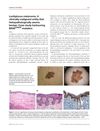
March 2015 in “Journal of the European Academy of Dermatology and Venereology” A clinically suspected melanoma appeared benign under the microscope but was confirmed by specific tests and a rare mutation.
 86 citations
,
August 2011 in “Toxicological sciences”
86 citations
,
August 2011 in “Toxicological sciences” TCDD speeds up skin barrier formation by increasing certain gene expressions.
 47 citations
,
June 2019 in “Nature Communications”
47 citations
,
June 2019 in “Nature Communications” Noncoding dsRNA boosts hair growth by activating TLR3 and increasing retinoic acid.
1 citations
,
January 2024 in “Pharmaceuticals” A new carrier improves skin delivery of tofacitinib for treating inflammatory skin diseases.
September 2025 in “International Journal of Molecular Sciences” Bacteroides fragilis and Microbacterium sp. T32 may be linked to autoimmune activity in Hashimoto's thyroiditis and alopecia areata.
October 2009 in “The American Journal of Gastroenterology” Excessive selenium intake can cause liver damage.
TNFα and interleukin-1 blockers reduce skin inflammation from EGFR antibody therapy.
 8 citations
,
September 2002 in “Genes to Cells”
8 citations
,
September 2002 in “Genes to Cells” Killing specific cells in hair follicles can lead to hair growth problems in mice.
12 citations
,
November 2024 in “International Journal of Molecular Sciences” Hydroxytyrosol helps reduce liver injury by blocking certain inflammation pathways.
 69 citations
,
January 2013 in “Frontiers in Immunology”
69 citations
,
January 2013 in “Frontiers in Immunology” The FOXN1 gene is crucial for developing immune cells and preventing immune disorders.
TNFα and interleukin-1 blockers reduce skin inflammation from EGFR antibody therapy.
53 citations
,
June 1983 in “Journal of Investigative Dermatology” The enzyme is crucial for skin cell development and can be activated without proteolytic activation.
148 citations
,
September 2003 in “Journal of Investigative Dermatology Symposium Proceedings” Alopecia areata is an autoimmune disorder causing hair loss, linked to specific hair follicle antigens and genetic factors.
1 citations
,
November 2024 in “Neuro-Oncology” Temozolomide can cause severe bone marrow suppression, leading to life-threatening complications.
2 citations
,
November 2024 in “JAAD Case Reports” Anti-PD-L1 immunotherapy can cause hair loss and unexpected hair color change, but treatment can restore hair growth and color.
Newer retinoid drugs are effective for skin conditions but have significant side effects.
18 citations
,
August 2024 in “eLife” JAK inhibition may help manage autoimmune conditions in Down syndrome.
 April 2018 in “Radiotherapy and Oncology”
 Mitochondria may influence how cells respond to radiation, affecting nearby non-irradiated cells.
88 citations
,
August 1998 in “Carcinogenesis” High levels of ODC and a mutant Ha-ras gene cause tumors in mice.