 1 citations
,
July 2017 in “Journal der Deutschen Dermatologischen Gesellschaft”
1 citations
,
July 2017 in “Journal der Deutschen Dermatologischen Gesellschaft” Topical caffeine improves hair loss intensity, speed, and shedding, and works better with minoxidil/azelaic acid.
10 citations
,
July 2021 in “European journal of pharmaceutics and biopharmaceutics” Nanoparticles sized between 470 and 750 nm are best for delivering substances like caffeine into hair follicles for absorption.
December 2022 in “Clinical and experimental dermatology and therapies” Adding the topical gel improved hair growth more than using minoxidil or finasteride alone.
1 citations
,
February 2020 in “PubMed” The topical solution improved hair density and appearance in men with androgenetic alopecia.
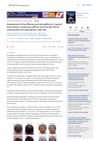 November 2023 in “Journal of Cosmetic Dermatology”
 The topical treatment with caffeine and Procapil 3% improved male pattern hair loss and was well tolerated after 12 weeks.
 7 citations
,
October 2024 in “AAPS PharmSciTech”
7 citations
,
October 2024 in “AAPS PharmSciTech” CA-SLN-Ngel significantly reduces cellulite more effectively than regular caffeine gel.
 21 citations
,
January 2017 in “Skin Pharmacology and Physiology”
21 citations
,
January 2017 in “Skin Pharmacology and Physiology” Caffeine-based liquid 0.2% is as effective as minoxidil 5% for treating male hair loss.
 August 2025 in “Journal of Cosmetic Dermatology”
 The shampoo with DMG-Na and caffeine effectively reduces hair loss and improves hair density in men.
 31 citations
,
February 2019 in “International Journal of Cosmetic Science”
31 citations
,
February 2019 in “International Journal of Cosmetic Science” Caffeine applied to the scalp can protect hair follicles from UV damage.
 April 2019 in “Journal of Investigative Dermatology”
 Caffeine can protect scalp hair follicles from damage caused by UV radiation.
 5 citations
,
January 2020 in “Journal of Dermatology and Dermatologic Surgery”
5 citations
,
January 2020 in “Journal of Dermatology and Dermatologic Surgery” Caffeine may benefit skin and hair health but more research is needed to confirm its effectiveness in dermatology.
 October 2025 in “Journal of Drugs in Dermatology”
 Topical caffeine can help with hair growth and reduce hair loss safely.
Removing follicular plugging is crucial for effective alopecia treatment.
 182 citations
,
December 2007 in “BJCP. British journal of clinical pharmacology/British journal of clinical pharmacology”
182 citations
,
December 2007 in “BJCP. British journal of clinical pharmacology/British journal of clinical pharmacology” Hair follicles significantly increase the speed and amount of caffeine absorbed through the skin.
 8 citations
,
January 2020 in “Skin Pharmacology and Physiology”
8 citations
,
January 2020 in “Skin Pharmacology and Physiology” Caffeine improves hair growth, thickness, and reduces shedding.
 September 2014 in “Hair transplant forum international”
 Caffeine, niacinamide, and panthenol may improve hair growth, fullness, and healing when applied to the scalp.
 November 2013 in “Journal of Mazandaran University of Medical Sciences”
 Minoxidil with caffeine works better for hair loss than minoxidil alone.
93 citations
,
January 2007 in “Skin Pharmacology and Physiology” Caffeine in shampoo quickly enters the body through hair follicles.
 July 2022 in “http://isrctn.com/”
 Adding a cosmetic gel with caffeine, taurine, and growth factors to standard hair loss treatments could improve results.
 January 2022 in “DOAJ (DOAJ: Directory of Open Access Journals)”
 Argan oil-based nano carriers could potentially deliver caffeine to hair follicles to treat hair loss.
 November 2021 in “Research Square (Research Square)”
 The new caffeine cream works better for hair growth than existing products.
 14 citations
,
October 2020 in “Natural Products and Bioprospecting”
14 citations
,
October 2020 in “Natural Products and Bioprospecting” Various treatments, including FDA-approved drugs, natural products, and oral supplements, can help with hair loss, but a patient's medical history and potential allergies should be considered when choosing a treatment.
 3 citations
,
April 2019 in “Journal of Dermatological Treatment”
3 citations
,
April 2019 in “Journal of Dermatological Treatment” Caffeine shows promise for treating some types of hair loss, but more research is needed.
 2 citations
,
January 2012 in “International Journal of Trichology”
2 citations
,
January 2012 in “International Journal of Trichology” Coffee and tea might help hair growth in balding individuals, but side effects and alternative uses are being considered.
 1 citations
,
July 2023 in “Cureus”
1 citations
,
July 2023 in “Cureus” Some treatments for hereditary hair loss are effective but vary in results and side effects; new therapies show promise but need more research.
Integrative hair therapy improved hair loss and regrowth.
 December 2024 in “Skin Appendage Disorders”
 Non-prescription products can help manage androgenic alopecia.
 September 2022 in “Polish Hyperbaric Research”
 Some treatments for hair loss, like finasteride, biotin, and minoxidil, can be effective, but their success varies by individual case.
 2 citations
,
July 2021 in “Dermatologic Therapy”
2 citations
,
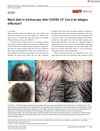
July 2021 in “Dermatologic Therapy” A woman's hair loss after COVID-19 was likely due to a mix of pressure-induced alopecia and acute telogen effluvium.
1 citations
,
February 2025 in “Supportive Care in Cancer” Safe treatments like minoxidil and spironolactone can help manage hair loss in breast cancer patients without increasing cancer risk.