 17 citations
,
January 1995 in “The American Journal of Medicine”
17 citations
,
January 1995 in “The American Journal of Medicine” The document concludes that proper diagnosis and tailored long-term treatment can effectively manage androgenic disorders in women, improving patient care outcomes.
 15 citations
,
November 2002 in “Cardiology in Review”
15 citations
,
November 2002 in “Cardiology in Review” Cardiovascular drugs can cause various skin problems, so recognizing these reactions is important.
 12 citations
,
October 2004 in “Experimental Gerontology”
12 citations
,
October 2004 in “Experimental Gerontology” Changes in testosterone and estrogen receptor genes can affect how men age, influencing body fat, hair patterns, and possibly leading to skin disorders.
 9 citations
,
January 1997 in “Gynecological Endocrinology”
9 citations
,
January 1997 in “Gynecological Endocrinology” The document concludes that treating androgen excess needs patience, managing expectations is important, and many drugs used are not officially approved, suggesting cosmetic options for mild cases.
 4 citations
,
August 2017 in “The Nurse Practitioner”
4 citations
,
August 2017 in “The Nurse Practitioner” Secondary amenorrhea has many causes and requires thorough evaluation to treat and restore menstrual cycles.
 3 citations
,
November 1999 in “Journal of Cutaneous Medicine and Surgery”
3 citations
,
November 1999 in “Journal of Cutaneous Medicine and Surgery” AGA is a genetic, hormonal hair loss treated with finasteride, minoxidil, and supplements, but new compounds are being developed.
 1 citations
,
November 2018 in “Therapeutic Delivery”
1 citations
,
November 2018 in “Therapeutic Delivery” New partnerships, clinical trials, and drug approvals marked progress in therapeutic delivery in July 2018.
 1 citations
,
October 2018 in “InTech eBooks”
1 citations
,
October 2018 in “InTech eBooks” Only minoxidil and finasteride are FDA-approved for hair loss, with other treatments available but less effective or with side effects.
 1 citations
,
May 2009 in “Wiley-Blackwell eBooks”
1 citations
,
May 2009 in “Wiley-Blackwell eBooks” Early treatment of PCOS in teens is crucial to prevent long-term health issues like diabetes and heart disease.

Combining nanotechnology with herbal medicine may improve PCOS treatment.
 October 2024 in “Irish Journal of Medical Science (1971 -)”
 Continuous glucose monitoring and GLP-1 receptor agonists improve diabetes management, but personalized care and education are crucial.

Dianabol boosts muscle growth but has serious health risks and legal issues.
 May 2019 in “The Journal of Sexual Medicine”
 Drinking alcohol before taking flibanserin does not increase the risk of severe low blood pressure or fainting.
 May 2019 in “The Journal of Sexual Medicine”
 Flibanserin's effectiveness for low sexual desire in premenopausal women may vary based on hormone levels, with normal hormone levels showing better responses.
 November 2016 in “Elsevier eBooks”
 Genetic mutations can affect female sexual development, requiring personalized medical care.
 February 2014 in “Medicine - Programa De Formación Médica Continuada Acreditado”
 The document concludes that non-scarring alopecias can be reversed, but scarring alopecias cause permanent hair loss.
 November 2013 in “John Wiley & Sons, Ltd eBooks”
 The document concludes that accurate diagnosis of male and female gonadal disorders is crucial for effective treatment and better patient outcomes.
 December 2010 in “Jurnal Natural (Faculty of Mathematics and Natural Science, Syiah Kuala University)”
 Age, race, family history, and certain genetic factors increase prostate cancer risk.
 July 2010 in “British Journal of Dermatology”
 Hair loss in women may have multiple causes, and eyebrow regrowth possible with specific injections.
 36 citations
,
April 1990 in “Dermatologic Clinics”
36 citations
,
April 1990 in “Dermatologic Clinics” Most pregnant women experience skin changes like darkening and stretch marks, and some may have skin conditions that usually get better after giving birth.
 1 citations
,
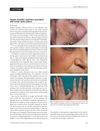
February 2004 in “Journal of The European Academy of Dermatology and Venereology”
1 citations
,
February 2004 in “Journal of The European Academy of Dermatology and Venereology” Hair loss improved with treatment and successful transplant.
 February 2026 in “Ciencia Latina Revista Científica Multidisciplinar”
 Early recognition of skin issues in immunocompromised patients is crucial for better outcomes.
 January 2025 in “Universidad de Córdoba Insitutional Repository (Universidad de Córdoba)”
 An imbalanced scalp microbiome may worsen alopecia areata severity and inflammation, but treatment can partially restore balance.

Personalized, multidisciplinary care improves skin condition management and patient outcomes.
 April 2026 in “International Journal of Drug Delivery Technology”
 Alopecia can often be managed effectively with various treatments, but early diagnosis is crucial for preventing permanent hair loss.
 January 2025 in “Journal of Pharmaceutical Research Science & Technology”
 Dissolving microneedles offer efficient, minimally invasive drug delivery through the skin.
 658 citations
,
June 2003 in “Endocrine reviews”
658 citations
,
June 2003 in “Endocrine reviews” Male hormones may play a role in the development of heart disease, and more research is needed to understand their effects.
 137 citations
,
March 2006 in “Cns Drug Reviews”
137 citations
,
March 2006 in “Cns Drug Reviews” Finasteride treats enlarged prostate and hair loss, but may cause side effects in some patients.
 68 citations
,
May 2011 in “European Journal of Dermatology”
68 citations
,
May 2011 in “European Journal of Dermatology” Acne is caused by genetics, diet, hormones, and bacteria, with treatments not yet curative.
 54 citations
,
April 2010 in “Baillière's best practice and research in clinical endocrinology and metabolism/Baillière's best practice & research. Clinical endocrinology & metabolism”
54 citations
,
April 2010 in “Baillière's best practice and research in clinical endocrinology and metabolism/Baillière's best practice & research. Clinical endocrinology & metabolism” Impaired androgen production in 46,XY DSDs causes ambiguous genitalia and requires long-term care.